Navigator
- Concept
- Northern Liang and Northern Wei
- Sui Dynasty and Early Tang
- Tang Zenith
- Late Tang, Five Dynasties
- Western Xia, Yuan
- Conclusion
Concept
I am infinitely drawn to Chinese culture in all its facets: its music, traditions, mentality, literature, cinema, and, of course, its art—the forms in which it manifests, the styles, the creators, the context, and the fate of motifs that arrived from India with Buddhism. All of these things resonate deeply with my soul, and it was impossible to pass by such an inexhaustible source of vivid imagery as the «Grottoes of a Thousand Buddhas.»
The core objective of this research is to trace the evolution of the depiction of flying celestial beings—the Feitian—in the Mogao Caves: from the Western and Northern Wei through the Sui and Tang dynasties, up to the Yuan dynasty.
Over ten centuries, this image transforms from a heavy, «Western» figure into the ethereal Tang maiden, reflecting the gradual Sinicization of the entire Buddhist iconographic canon across China.
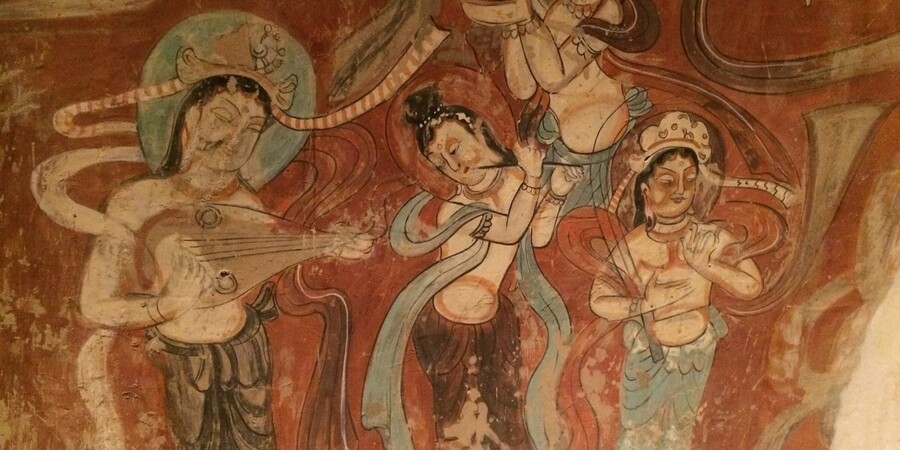
Zhang Peng. Dunhuang, Gansu Province, China, June 6, 2018.
First and foremost, we need to clarify: what is feitian, and what are the Mogao Caves?
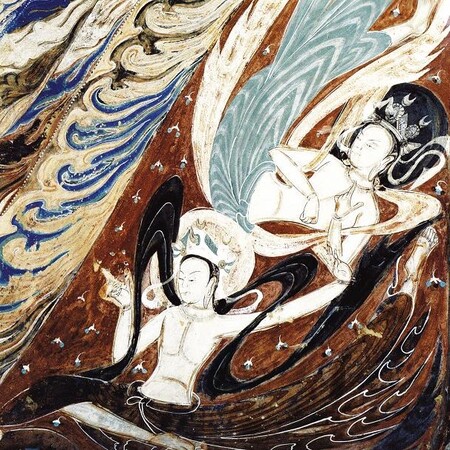
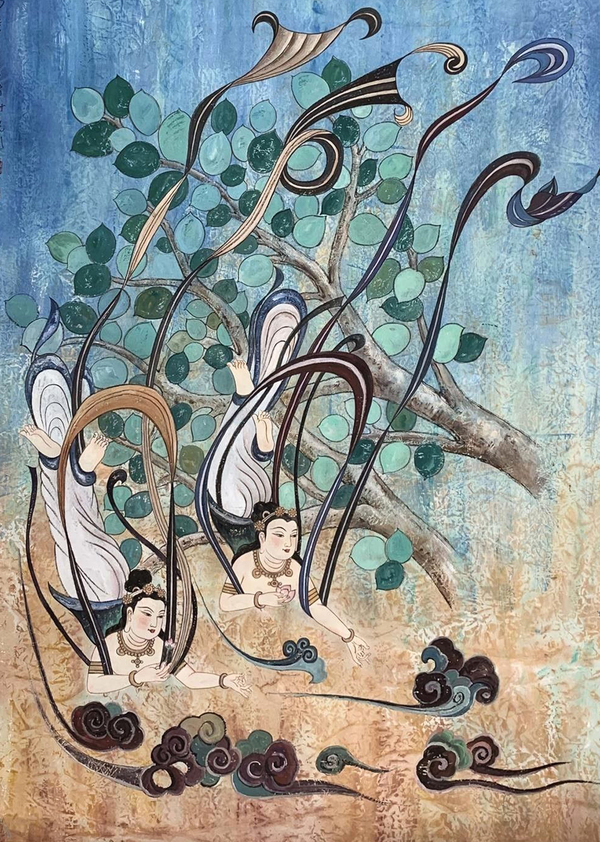
Feitian are the Chinese iteration of the Indian Apsaras—celestial dancers and enchantresses who accompany Gandharva musicians. They are all demigods from Hindu mythology. Frescoes in the Mogao Caves depict numerous figures from the pantheon and common people, but the Feitian stand out with their flowing silk ribbons and dynamic poses. They are often shown in playful flight, holding musical instruments, or dancing while offering dishes.
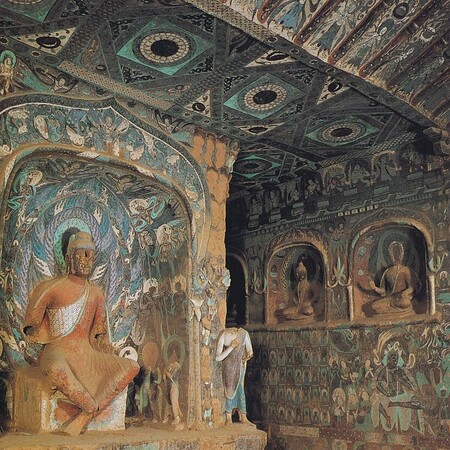
The Mogao Grottoes are a complex of nearly five hundred sanctuaries located near Dunhuang County in Gansu Province.
The «Cave of a Thousand Buddhas» is a significant archaeological site, partly because it clearly illustrates how Buddhist teachings traveled along the Silk Road into China, how their images transformed, absorbed new meanings, and ultimately Sinicized.
Having permeated China, the image of flying Apsaras merged with the local Taoist culture of immortals, gradually losing its Indian religious specificity and developing a distinct Chinese artistic identity, which allowed it to become deeply rooted in the local tradition [1].
Zhang Peng. Dunhuang, Gandu Province, China, June 6, 2018.
I have studied numerous caves and the frescoes depicted within them, as well as read several articles analyzing the Buddhist pantheon represented in these murals. I analyzed and grouped the key Feitian figures from several significant caves based on characteristics such as: dating, gender, flight, posture, physique, headwear, costume, attributes, and silk sashes. In my opinion, these parameters provide insight into how the very image of the celestial dancers evolved: wings gave way to sashes, androgynous bodies feminized, «Western» faces became distinctly Chinese, and the costume ultimately began to reflect the fashion of the Tang Dynasty. The visual study is divided into several historical periods, which, in my view, provides a clear chronological representation of the changes that occurred and allows for a comparative analysis.
Western and Northern Way
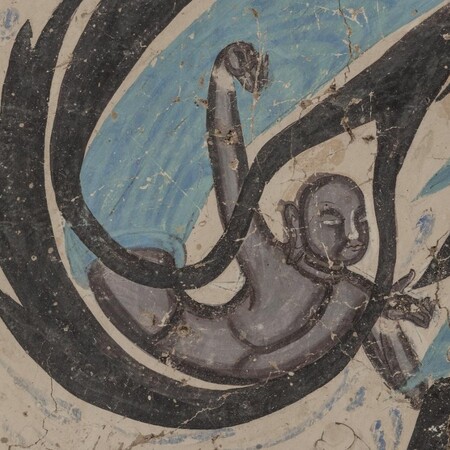
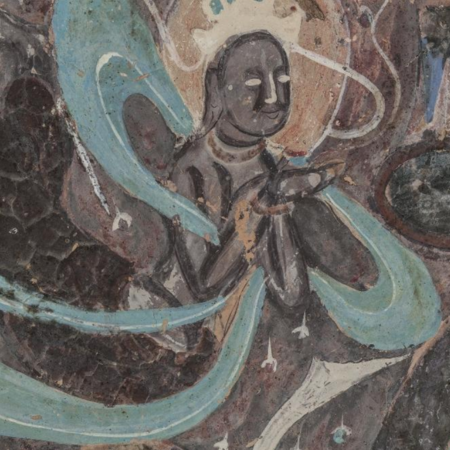
Digital Dunhuang. Cave 249. South Wall. Western Wei Dynasty (535–556 AD) Digital Dunhuang. Cave 254. South Wall. Northern Wei Dynasty (368–534 AD)
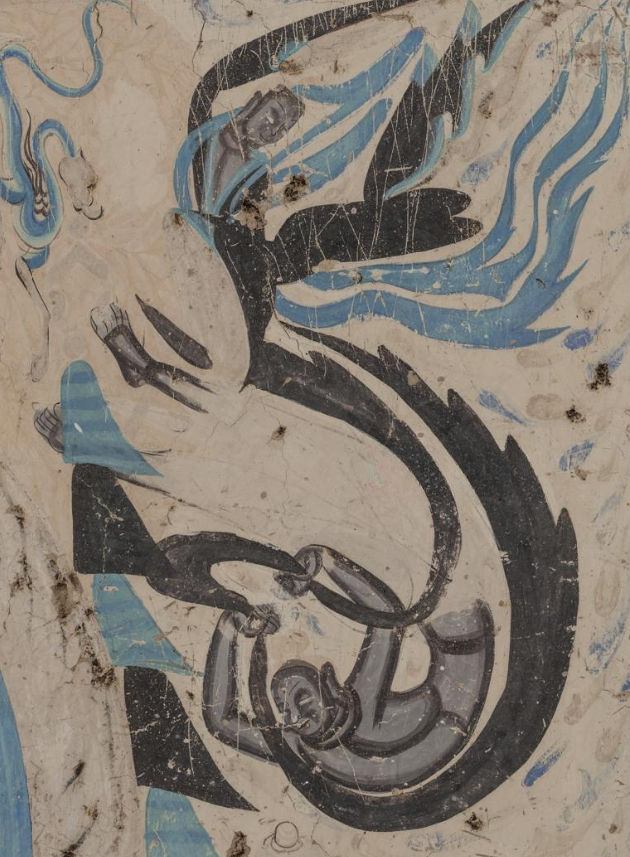
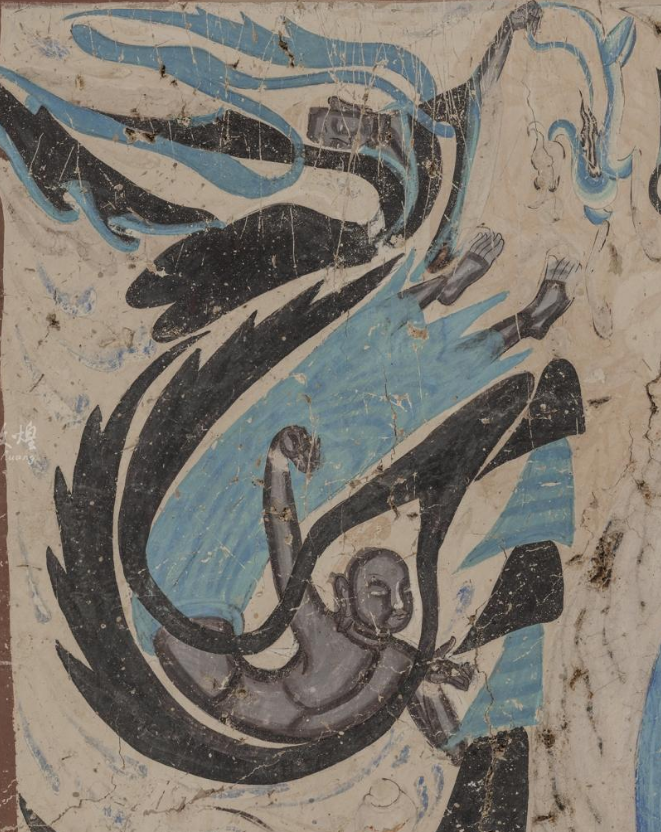
The Sui Dynasty and Early Tang
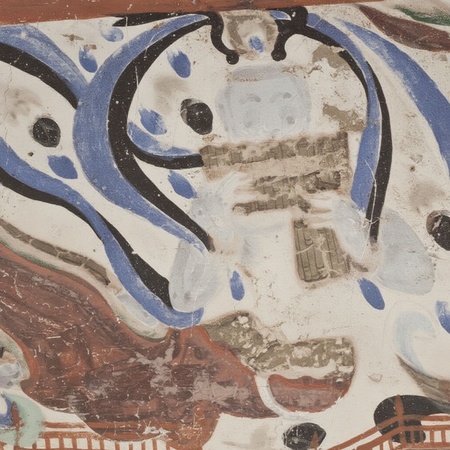
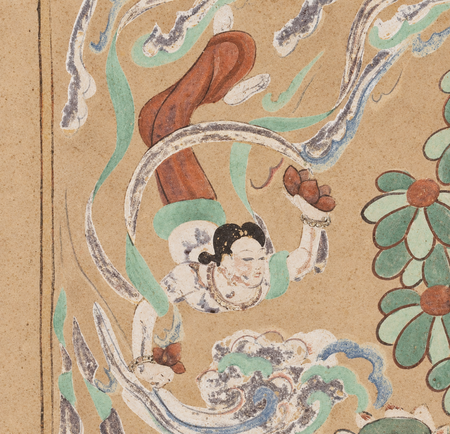
Digital Dunhuang. Cave 303. East Wall. Sui Dynasty (581–618 CE) Digital Dunhuang. Cave 322. South Wall. Early Tang Dynasty (618–712 CE)
The Flourishing of the Tang
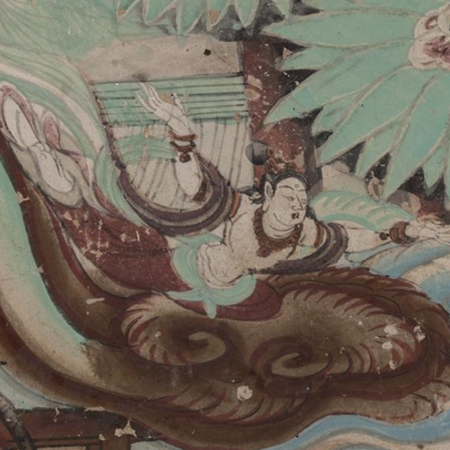
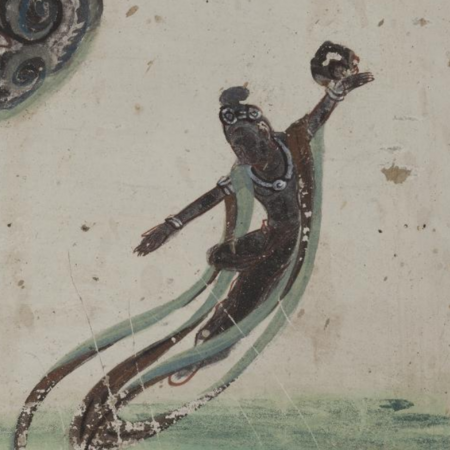
Digital Dunhuang. Cave 025. South Wall. High Tang Dynasty (A.D. 713–766) Digital Dunhuang. Cave 172. North Wall. High Tang Dynasty (A.D. 713–766)
Late Tan, Five Dynasties
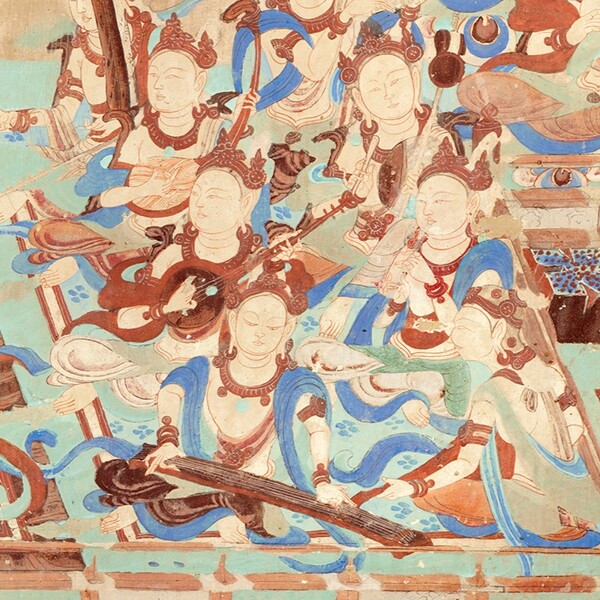
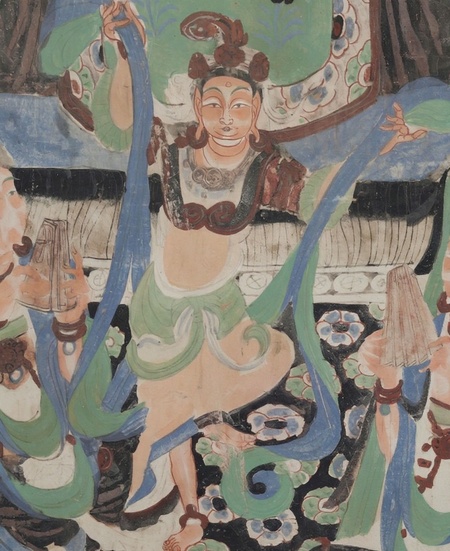
Courtesy of the Dunhuang Academy. Cave 85. Late Tang Dynasty (848–907 CE) Digital Dunhuang. Cave 061. South Wall. Five Dynasties (A.D. 907–960)
Western Xia, Yuan
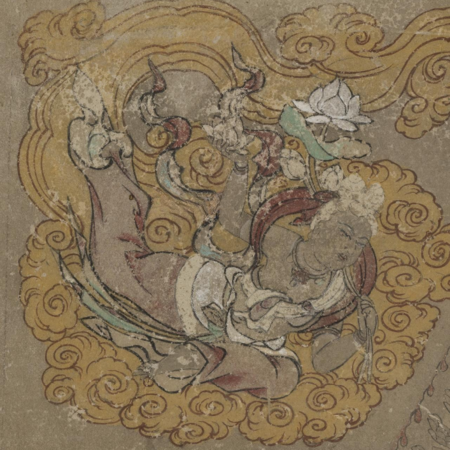
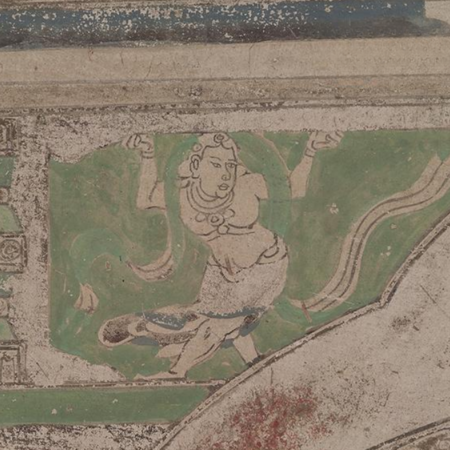
Digital Dunhuang. Cave 003. East Wall. Western Xia Regime (A.D. 1038–1227) Digital Dunhuang. Yulin Cave 003. South Wall. Yuan Dynasty (A.D. 1279–1368)
https://burganova-text.com/wp-content/uploads/2026/10/Kong-Jinxin.pdf (Accessed: November 8, 2026)
https://www.e-dunhuang.com/section.htm? (Accessed: November 7, 2026)