Categories
— Concept
— Early Period of Creativity (1987–1994)
— Creativity After Disease Diagnosis
— Conclusion
— Bibliography
— Image Sources
Concept
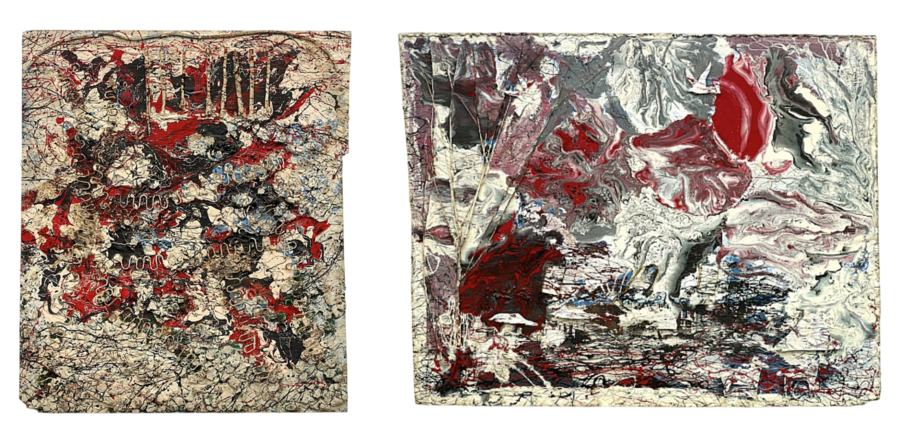
(1) Civil Rights Marchers (48×48.5×4.5 inches) 1988 (2) Poison River (48.5×61.25 inches) 1988 Photography by: (1) high.org (2) Souls Grown Deep Foundation
The creativity of Ronald Lockhart (1965–1998) interests me in terms of the relationship between the artist’s personal experiences and changes in his approach to creating works. His works frequently explore themes such as social injustice, memory, the fragility of nature and humanity, and the inevitability of death. In his relatively short career (about ten years), he developed a recognizable visual language, primarily utilizing materials found in his surroundings, such as rusted metal, sheet iron, wood, and wire mesh. The American artist transformed discarded, unwanted old objects into quite expressive imagery. However, the period following his terminal diagnosis in 1994 is particularly compelling for study. After this diagnosis, the artist significantly reevaluated his methods of creation and the content of his work. The selection of this topic stems from the opportunity to trace the changes in the artwork and creation methods in connection with the author realizing the approaching end of his life and his reluctance to reconcile with it.
«Once Something Has Lived It Can Never Really Die”—this is the title of one of the later works created after Lockett was diagnosed with a serious illness. I believe this title acts as a specific key to understanding the American artist’s creativity.
The material for the visual investigation was selected chronologically. The visual investigation will be divided into two parts. The first part will focus on the beginning of Ronald Locke’s creative journey, the formation of his artistic language, and a brief analysis of his early works and their primary motifs. The second part will be significantly larger. It covers works created after his diagnosis. This structure allows for a tracing of changes in his imagery and materials.
During the process of this visual research, I analyzed a large number of digital sources. These included biographical and art historical articles, as well as official materials taken from the websites of art collectives and galleries. Each source was compared with other materials, which allowed me to identify the main trends in the evolution of the American artist’s style and to verify the accuracy of the information about the author’s biography. Of course, it was also important to distinguish documented facts from various authorial interpretations.
In my visual research, I want to address the question: «How did the awareness of impending death influence Ronald Locke’s approach to his work?»
If we discuss the hypothesis, it is suggested that the diagnosis of AIDS marked a turning point in Locke’s understanding of his work. The realization of impending death influenced the way he worked with materials and, more broadly, his approach to creating pieces and the themes within them. Thus, I propose that Ronald Locke’s later work encompasses more personal themes and reflections on the finiteness of his existence, and the very act of creation serves as a means of leaving a material trace of himself.
Early Creative Period (1987–1994)
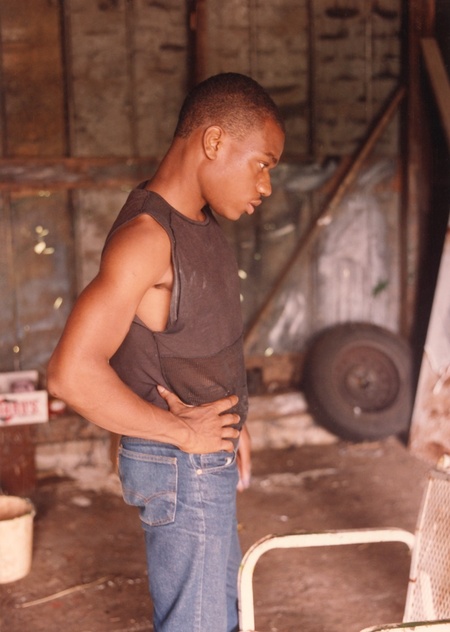
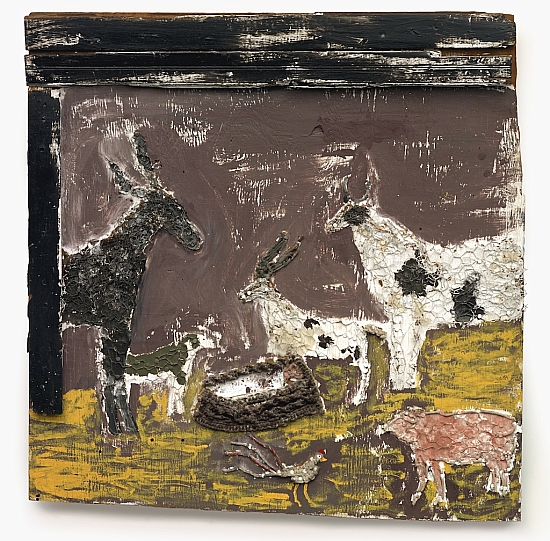
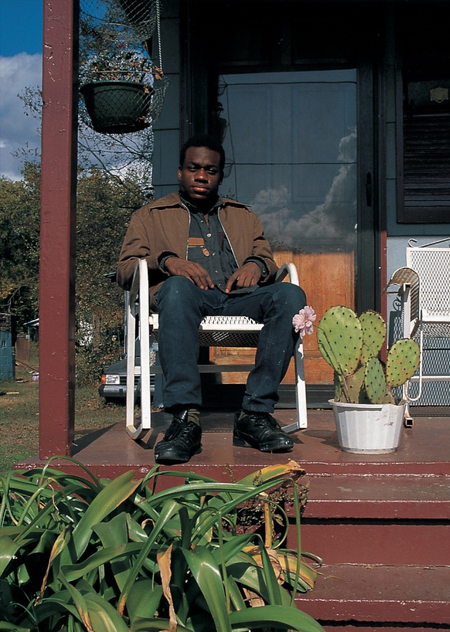
(1) Photograph by Ronald Lockhart, 1988 (2) Morning Of Peace (48×47 inches), 1988 Photography by: (1) Larry Hilton (2) Souls Grown Deep Foundation
Ronald Lockhart (1965–1998) was born and raised in Bessemer, Alabama, in a rather impoverished area called Pipe Shop. The challenging circumstances surrounding Lockhart were compounded by the limited opportunities in the mining industry of his hometown; he did not master any traditional craft. Ronald Lockhart spent his entire life in his mother’s home—who, incidentally, passed away shortly before the artist himself. From childhood, Lockhart was fascinated by art, and his older relative, the artist Thornton Dyle, became his mentor. This convergence of factors—specifically, the influence of Thornton Dyle and his hometown—had a profound impact on Ronald Lockhart’s artistic style.
(1) The Good Shepherd (54.5×12×9 inches) 1987 (2) Sacrifice (28×13.25×1.5 inches) 1987 Photo Credit: (1)Souls Grown Deep Foundation (2)Souls Grown Deep Foundation
Lockett was born a year before the Civil Rights movement achieved its major victories. In my view, this context largely informs his work, which conveys the everyday coming-of-age of a Black man, his struggle for peace and equality, and the traumatic memory of the African American community. Examples of his pieces dedicated to historical tragedies and social injustice include «Holocaust» (1988) and «Homeless» (1989).
In his early work, the artist primarily utilized wood, enamel, wire, and small metal fragments. The representation gradually ceased to be purely pictorial—individual details began projecting off the surface, complicating the composition.
Homeless (48×41.5 inches), 1989 Photography by Souls Grown Deep Foundation
One of the early works that, in my view, helps to understand the further development of Ronald Locke’s artistic style is «Rebirth.» At the center of the composition is the skeleton of an animal; it is painted primarily, but upon closer inspection, one can discern wire and nails within the skeleton’s form. The figure moves from the light section of the painting into absolute darkness. The title of the piece, «Rebirth, ” contradicts the usual association of a skeleton with death. However, this contradiction becomes a vital element in understanding Ronald Locke’s creative output. Indeed, even in his early works, he begins to interpret death as a transition into another state of being.
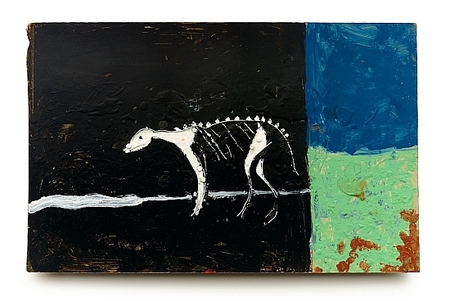
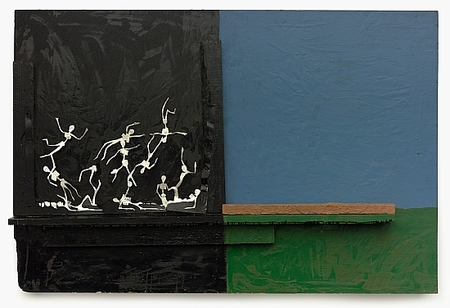
(1) Rebirth (12×18.5 inches) 1987 (2) Holocaust (48×72×5 inches) 1988 Photo Credit: (1)Souls Grown Deep Foundation (2)Souls Grown Deep Foundation
A Place In Time (48×79,5×4.5 inches), 1989 Photography by Souls Grown Deep Foundation
At the same time, the image of the deer occupies a special place in Ronald Locke’s creative work. It appeared to me most frequently while studying his art, leading me to believe that the author largely associates himself with this animal. The animal is often depicted in scenarios where it is under threat or its freedom is restricted by a net or a cage. The deer typically embodies the freedom and independence that society constantly constrains.
One piece from the Traps series (1992). Photography by: Collection of William S. Arnett
In one piece from the «Traps» series (1992), a deer stands behind a cage made of rusty tin; a distant, bright natural landscape is visible through a single cutout window. In the works «Instinct for Survival» (1990, one piece from the series) and «Vanishing Breed» (1993), the viewer can see animals blending into the background. It seems to me that in these works, Lockeett creates a kind of self-portrait (or is simply sharing his own experiences about the lives of African Americans).
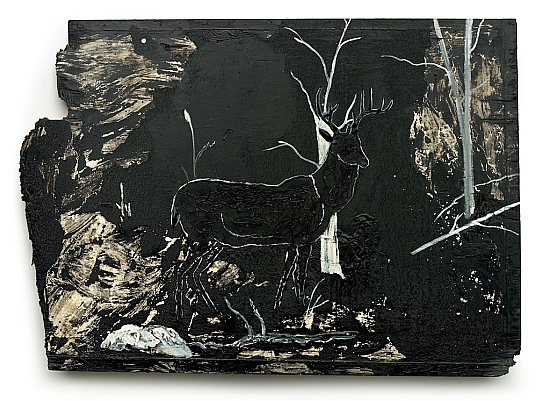
(1) Vanishing Breed, 1993 (2) Instinct For Survival (48×68 inches), 1990 Photography by: (1)folkartmuseum.org (2)Souls Grown Deep Foundation
Creativity After Diagnosing an Illness
Photo by Ronald Locke Photo credit: William Arnett
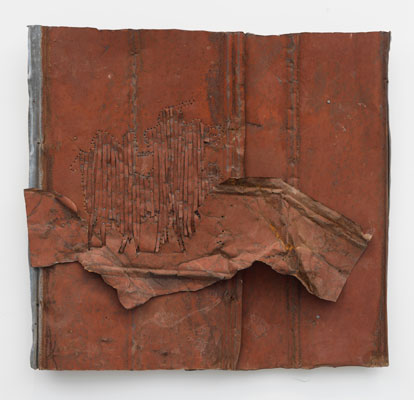
In the mid-1990s, Ronald Lockhart’s work reached a turning point—the diagnosis of a fatal illness.Lockhart moved away from painting on wood and began to use rusted sheet metal more actively in his pieces, sourcing much of this material from his hometown. It is important to note, however, that Ronald Lockhart made metal collages even before receiving the diagnosis. Therefore, it seems to me that the shift in his artistic technique coincided with that critical moment, and over time, this method of creation acquired new, personal meanings for the artist.
It is also important to note the change in Ronald Locke’s working method. At the beginning of his artistic career, he meticulously and slowly created his works; however, after discovering his illness, his approach to the process shifted. The artist did not give up—with this unique temporal constraint, he moved away from finer details, began stripping rusty sheets of tin from shed walls, cutting them, and letting the rust serve as a substitute for paint, adding an extra accent to his pieces. The oxidation on the metal perfectly reflects his philosophy, for rust is a trace left by time, independent of the artist’s intervention.
Photo by Ronald Locke Photo credit: Karekin Goekjian
The material chosen by the artist can also be interpreted as maintaining a «familial language, ” if one can say so, because generations of his family men worked with metal in factories and on construction sites. In this way, the material becomes a metaphor for memory and continuity. Ronald Locke’s art literally conveys surrounding reality; the artist gives new life to damaged, discarded materials. This approach intersects with his reluctance to accept death as a final endpoint.
One of the central pieces in Ronald Locke’s work, in my opinion, is «Once Something Has Lived It Can Never Really Die.» The title itself can be seen as a kind of statement that encompasses several themes Locke explored throughout his career.