
Architecture in video games often serves not only a utilitarian or decorative function but also becomes a crucial tool for shaping atmosphere, narrative, and the emotional perception of space. This is particularly evident in games where the environment replaces traditional storytelling and becomes the primary means of conveying world information. One such example is Spirit of the North—a game inspired by northern folklore and Scandinavian landscapes, where architecture primarily exists in the form of ruins, wooden structures, ritual objects, and construction elements integrated into the natural surroundings.
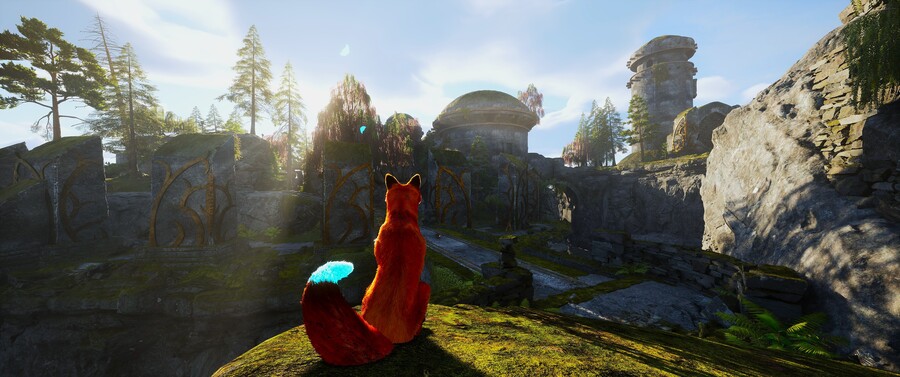
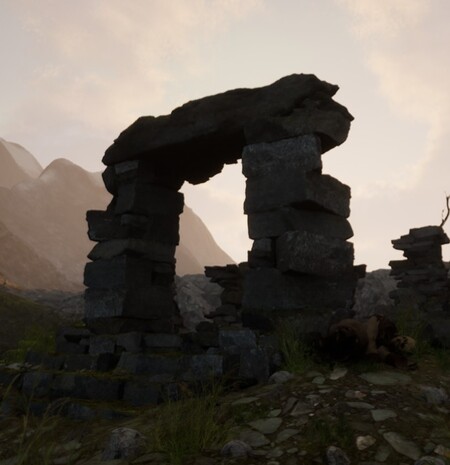
Despite the visual simplicity of the architectural forms, the game’s surrounding objects evoke a pronounced sense of sacredness and mythologizing. This feeling is achieved not through elaborate decoration or realistic historical architectural reconstruction, but rather through specific visual mechanisms: accentuated verticals, massive wooden supports, arched entrances, rhythmic repetition of structures, runic symbols, and the interplay between the architecture and the landscape. The structural elements within the game cease to be purely functional and begin to operate as carriers of symbolic meaning.

In Spirit of the North, the sacredness of architecture is formed primarily through its structural elements and the ways these elements are visually emphasized. The architecture in the game functions not as a historically accurate reconstruction of northern structures, but as a system of symbolic forms that evokes a sense of antiquity, ritual, and a lost civilization.
How does architecture immerse the viewer in the intended atmosphere?
The object of this visual study is the architectural structures and ruins within the game Spirit of the North. The subject of the research is the process of architectural sacralization through constructive elements and visual techniques. The study focuses on how simple architectural forms and structural details generate a sense of ritual, memory, and connection to mythological space.
Art or game mechanics?
For the study, objects were selected in which architectural elements function as independent carriers of visual meaning, rather than merely being part of a game environment.
When selecting game environments, the following criteria were considered: — the presence of a distinct structural accent; — the visual dominance of architectural elements within the composition; — the interaction between the architecture and the natural environment; — the use of symbolic and ornamental elements; — recurring visual devices that establish a sense of sacred space.
Research Methods
The primary methodology will be formal analysis, which encompasses an examination of the composition, silhouette, material, rhythm, and scale of architectural objects. Comparative analysis will also be employed, allowing for a juxtaposition of the game’s architectural forms against the iconography of Northern and Scandinavian architectural traditions, megalithic structures, and ritual sites. Furthermore, iconographic analysis will be utilized to study symbolic elements—runic signs, ornamentation, and visual markers of sacred space.
- Introduction
- Hypothesis
- Construction as Symbol
- The Vertical as a Sacred Marker
- Ornamentation Over Simple Form
- Conclusion
- Bibliography and Image Sources
In Spirit of the North, the structural elements are rarely concealed. On the contrary—they are intentionally brought to the forefront, forming the foundation of the architecture’s visual language. Massive dry-stone masonry, corbelled (false) vaults, arched openings, and forms integrated into the landscape cease to be merely utilitarian; they transform into symbols of sacredness, ritual, and connection to an ancient mythological past. The simplicity of the form underscores the permanence and organic quality of the structure, making it part of the living landscape rather than something opposed to it.
Fog Harbor Monastery
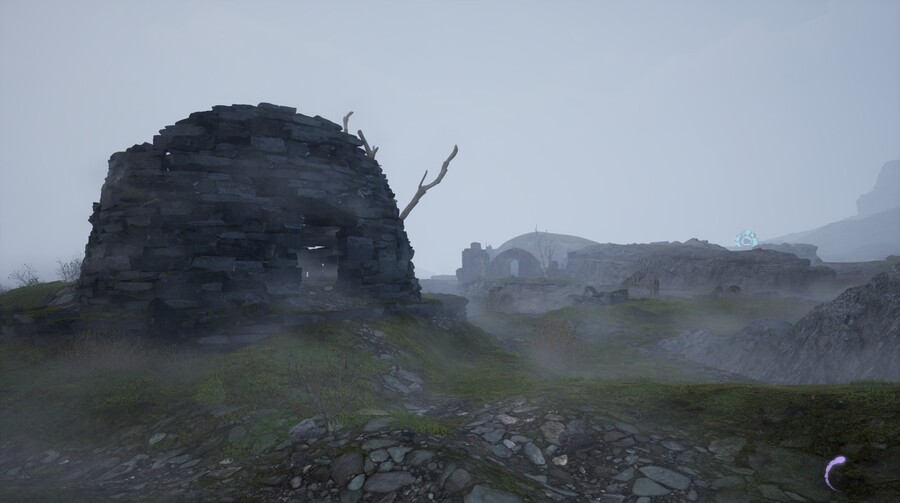
Mist Harbor Monastery
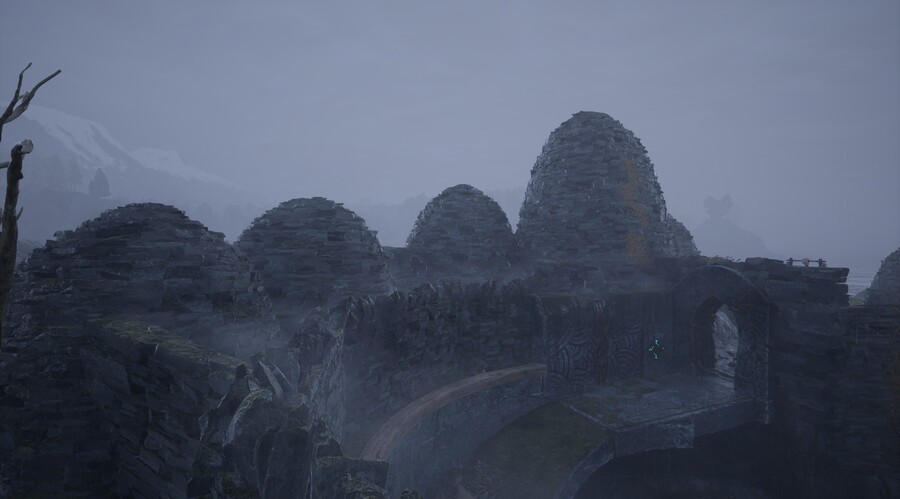
The Monastery of the Fog Harbor presents a classic example of a corbelled domed construction—a circular stone structure built from roughly hewn dark slabs without visible mortar. The masonry progresses in horizontal courses with a gradual inward taper, forming a characteristic «beehive» shape. The complex of these structures forms a chain of domed and semicircular ruins, connected by arched passageways and bridges. Here, the architecture functions as a rhythmic sequence, where the repeated domes and massive walls create a sense of procession or an ancient sanctuary. The arches and passages guide the player’s (and viewer’s) movement, enhancing the narrative. Symbolic details (runes, moss, spiderwebs) are layered onto the basic construction, but it is their simplicity and integration with nature (fog, water, mountains) that make the space sacred.
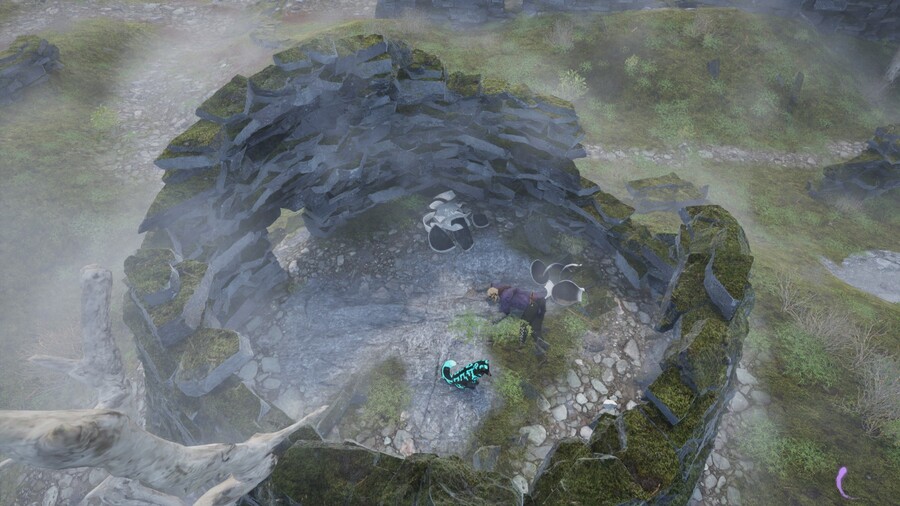
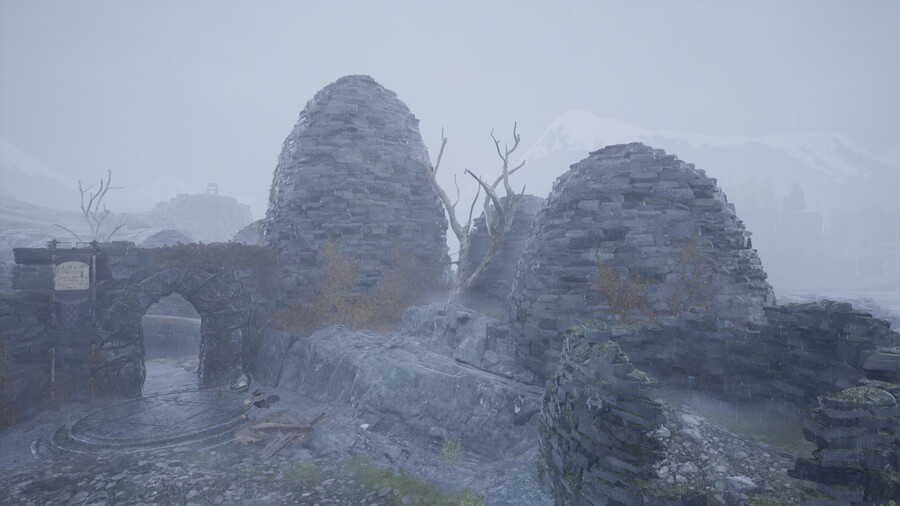
Mist Harbor Monastery
Creating Sacredness
Massive Stone Masonry — heavy stones evoke a sense of antiquity, permanence, and connection to the earth. The ruins appear as if they are part of the landscape itself, intensifying the feeling of a sacred place. Rhythm of Repeating Domes — suggests an ancient ritual complex. Dome Shape — the rounded silhouette and central entrance give the structure the appearance of a ritual or funerary edifice. It suggests stability and protection from the chaos of nature or darkness. Arched Openings — represent transitions between worlds (the living and the spiritual). Connection to the Landscape— the building is situated on a prominence, standing out against the backdrop of empty, misty space. This creates a feeling of isolation, abandonment, and spiritual presence.
Real-world parallels
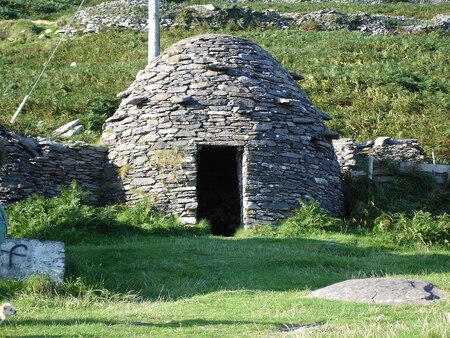
This structure directly references the Celtic (Irish) monastic tradition—clocháin (beehive huts). Such buildings were used by early Christian hermits on islands like Skellig Michael (6th–12th centuries). They were built using dry-stone masonry from local stone, mortared with a corbeling method, without wood or mortar, which ensured durability in the harsh climate.
A clochán on the Dingle Peninsula, Kerry, Ireland.
Nuemhuk Ruins
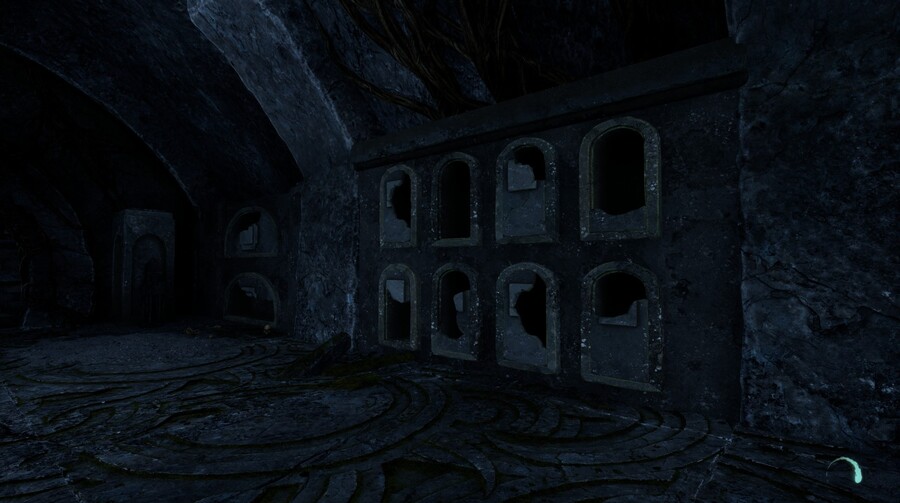
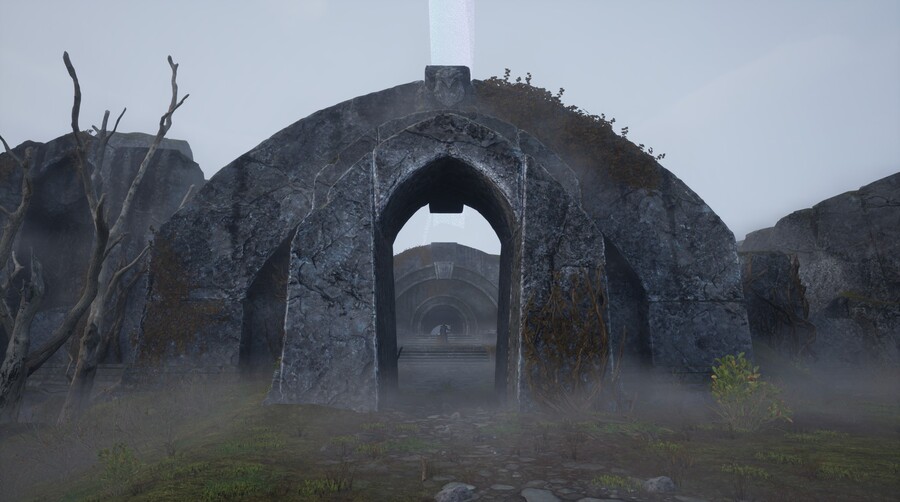
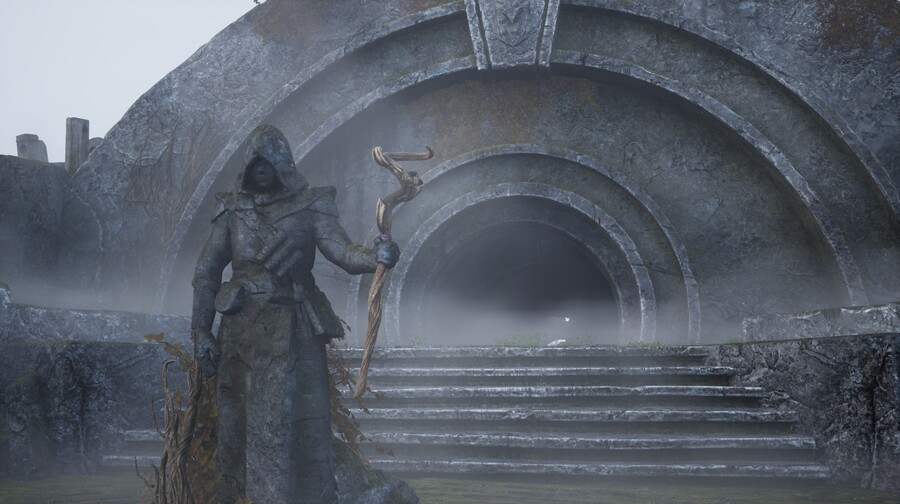
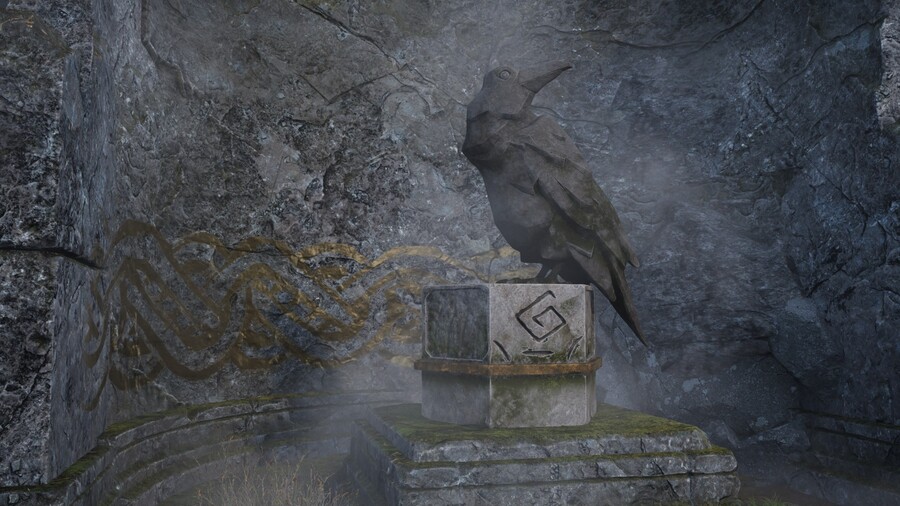
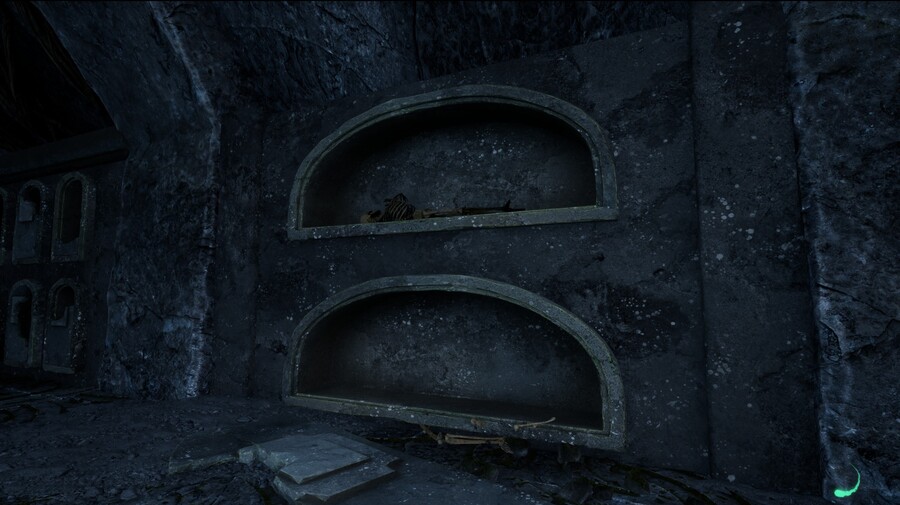
Niumhuk Ruins
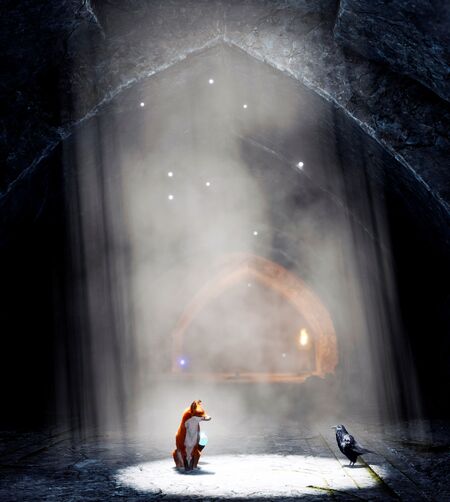
The ruins of Nymhuk are another example of a structure functioning as a symbol. The interior detailing reveals that the building was used as a mausoleum (indicated by the internal alcoves containing remains and ashes). At the entrance, a statue of the deceased greets the visitor. Arch forms are repeated in the niches and passageways, lending a rhythmic quality to the space, as if one were walking along an ancient ritual path. The corbeled vaults give the room a cavernous quality, lending an air of mystery to the structure. Together, all of this transforms an ordinary building into a symbol of burial and ancestral veneration. This was where people were laid to rest—a place of power and memory.
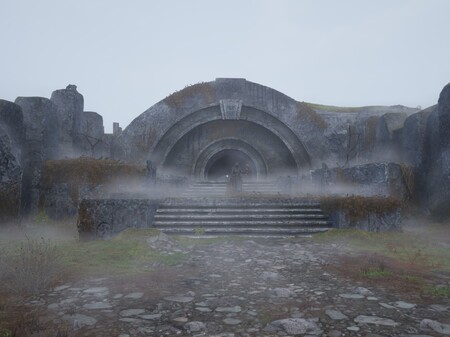
It is noticeable that many elements in the game are over-exaggerated. Supports often appear more massive than is utilitarianly necessary, and the entrance structures are deliberately highlighted against the rest of the building’s volume. Because of this, the architecture acquires a sense of monumentality even when using simple materials—wood, stone, and straw.
Real-world analogues
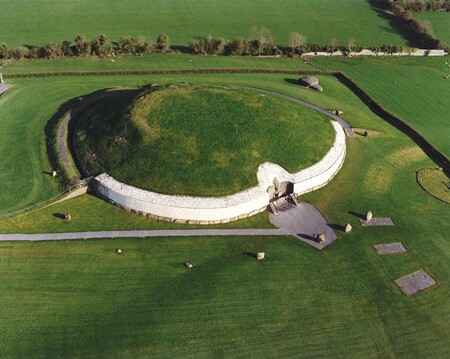
Such structures exist in real history. They resemble ancient Celtic and Neolithic chambered cairns in Ireland.
In the game, the developers took these ancient techniques and made them darker and more atmospheric, fitting northern folklore. A simple stone construction, bones in niches—the feeling of a sacred burial site.
Newgrange (Ireland, c. 3200 BCE)—a large passage grave with a corbelled vault and interior niches.