Navigation:
[0] Concept[1] Image versus text: Irony and contradiction[2] Image + text: Supplementation and functional distribution[3] Image as an independent semantic level[4] Conclusion
Concept
Comics are typically defined as a synthesis of word and image; however, within the research and reading tradition, this formula has long favored the text. The image was perceived as an illustration, and meaning was believed to be conveyed by speech bubbles and captions. This study operates from a different perspective. Mass-market comics, throughout the 20th century, developed techniques in which the image ceased to be a carrier of secondary information and began to generate meaning autonomously—entering into dialogue, alliance, or opposition with the word. The interest of this work lies in examining this autonomy within pop comics—specifically, where visual decisions were constrained by the limitations of mass production and remained outside theoretical scrutiny for a long time. The novelty of this approach is that the autonomy of the image is viewed as a historical and industrial variable, rather than as an inherent property of the medium itself.
In what cases and through what means does an image in mass comics retain semiotic autonomy—that is, create meaning that cannot be reduced to or derived from the text? The working hypothesis suggests that autonomy is not a constant quality. It emerges at points of tension between the verbal and visual sequences, and its character is determined by the conditions of the comic’s creation and publication (format, genre, production model).
In early newspaper strips and genre magazines, visual autonomy manifested intuitively; by the 1980s, however, authors began using it consciously, transforming the organization of the page and individual visual details into a statement.
The principle for selecting visual material is based on four criteria. First, the work must belong to the mass tradition of the United States or the Franco-Belgian school, excluding authorial graphic prose. Second, it must be significant to the history of the genre. Furthermore, it must feature a stable technique that clearly demonstrates the relationship between word and image. Finally, high-quality reprints that preserve the original page format are necessary, as the analysis requires working with the spread, not merely summarizing the plot.
Comics in the original language were selected for analysis, supplemented by consultation of Russian translations to clarify the content. This is essential for preserving the author’s phrasing and for a more precise study of the interplay between text and image.
The principle for selecting textual sources involves three groups. The theoretical foundation is built upon Roland Barthes’ semiotics of the image, particularly his concepts of fixation and relay; the concept of creolized text by Yu. Sorokin and E. Tarasov; and the typologies of McCloud and the comic system by T. Grønsten.
Historical and contextual works, along with authors' biographies, will help reconstruct the conditions under which the works were created. Interviews and books by the artists themselves serve as evidence from those who drew these pages, validating the analytical conclusions.
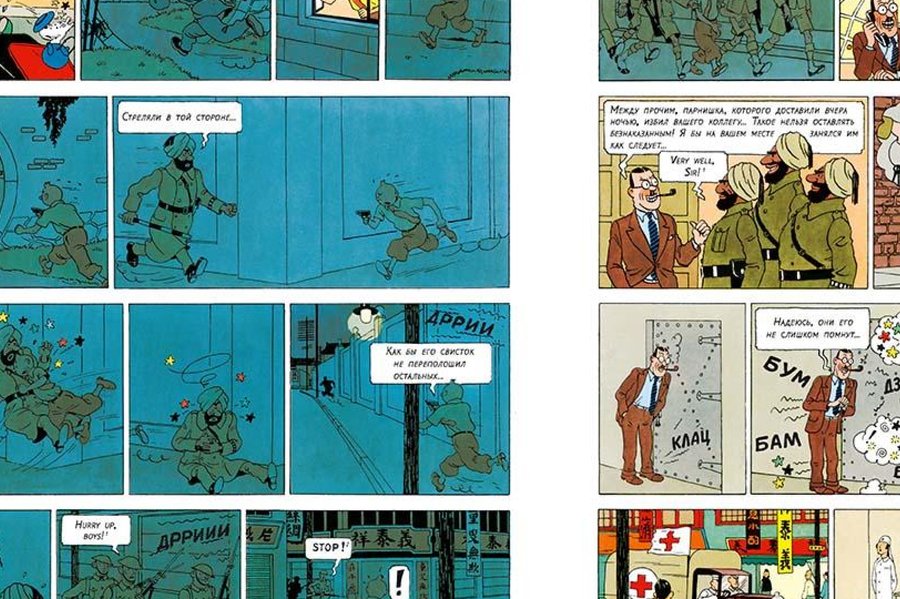
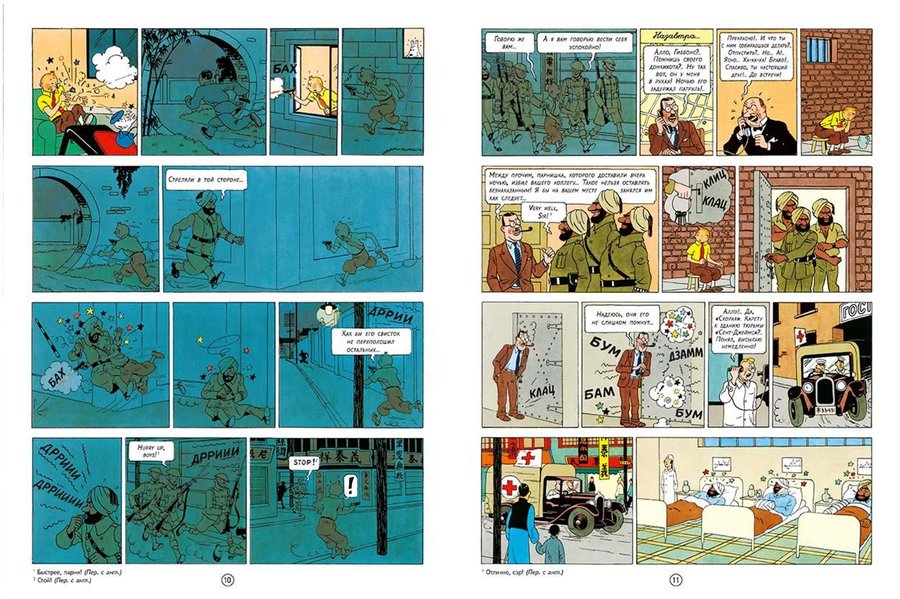
The research structure is built upon the relationship between image and text, as this attribute defines the form of autonomy and establishes a scale ranging from tension to independence. The first section addresses the conflict between word and image, using George Herriman’s «Krazy Kat» and Alan Moore and Dave Gibbons’s «Watchmen» as primary examples. A comparative example is EC Comics' «Tales from the Crypt,» which features an ironic narrator against a backdrop of visual horror. The second section describes partial autonomy, where word and image share narrative functions. Its foundation includes Hergé’s «Tintin» and Hal Foster’s «The Valiant Prince, ” contrasted by Stan Lee and Jack Kirby’s „Marvel Method“ exemplified in „Fantastic Four.“ The third section examines full autonomy, where the image constructs meaning either without words or atop them, relying on Winsor McCay’s „Little Nemo“ and Will Eisner’s „The Spirit.“ A comparative study is Frank Miller’s „Sin City“ with its use of black-and-white contrast.
Image versus text: irony and contradiction
The contradiction between word and image becomes one of the first ways to manifest visual autonomy in mass-market comics. The drawing does not always confirm the content of the dialogue and may offer an alternative interpretation of the events. This interaction relates to Roland Barthes' concept of fixation, according to which text limits the ambiguity of the image and directs its reading. In comics, this dependency can be violated when the visual sequence retains a meaning that does not align with the verbal one. The reader is compelled to compare both levels of narrative, since neither conveys what is happening completely.
In early newspaper comic strips, this principle can be seen in George Herriman’s «Krazy Kat.» The foundation of many strips is a recurring episode in which the mouse Ignatz throws a brick at Krazy Cat. For Ignatz, this gesture expresses aversion, whereas Krazy perceives it as an expression of affection. The image depicts an aggressive action, yet the cat’s dialogue offers a completely different interpretation.
Irony arises from the discrepancy between one character’s intention and another’s perception.
Ignatz’s character is revealed primarily through the posture of his figure, rather than through his facial expressions. His cunning is conveyed through his cautious poses and movements—there is a sense in them of an intention to sneak up on the cat or catch it off guard. Even with minimal rendering of his face, the body’s stance allows the reader to recognize the mouse’s intent before it is executed. The visual narrative thus communicates Ignatz’s intentions more effectively than his dialogue.
The recurring brick toss gradually acquires a stable meaning for the reader—a meaning that does not align with Crazy’s perceptions. Herrmann uses the recognizable action to reinterpret the disconnect between the image and the character’s words anew each time.
In Allan Moore and Dave Gibbons' «Watchmen,» the contradiction between word and image moves from a single action to the composition of the page itself. Even in the beginning of the first issue, a bloody, smiling icon appears, and subsequent pages unfold Rorschach’s grim observations on the state of society. The smile contradicts the depicted violence, and within the context of diary entries, it becomes an ironic symbol of well-being concealing brutality.
A more complex variation of semantic dissonance is presented at the beginning of the third installment. On a city street with a newspaper kiosk, signs for a radiation shelter appear, related to the threat of a nuclear disaster. Overlaid on these shots are fragments of text from «The Black Schooner’s Tales, ” a fictional comic book being read by one of the characters. The words relate to a maritime adventure, but they accompany images of everyday city life, acquiring an added meaning within this new visual context.
A similar principle is employed in the horror comics «Tales from the Crypt, ” published by EC Comics. In the story „’Tain’t the Meat… It’s the Humanity!“, the Crypt Keeper makes a pun about humanity while holding a bloody saw. In the finale, he invites the reader to an „official banquet“ of monsters who trade in human bodies. The polite tone of the invitation sharply contrasts with the depicted remains of the victims. Unlike in „The Mad Cat, ” where irony arises from a mistaken perception of a character, in EC comics, it is intentionally built into the narrative style. The storyteller turns the brutality into a joke, while the illustration retains its horrifying content.
The examples examined show that visual autonomy does not require the complete separation of image and text. On the contrary, it can arise in the moment of their contradiction. In «The Mad Cat, ” the drawing retains the meaning of action despite the character’s words, while in „The Guardians, ” the visual context alters the perception of text belonging to a different narrative. In „Tales from the Crypt, ” the image conflicts with the narrator’s intonation. In all three cases, meaning is formed not through the simple juxtaposition of verbal and visual elements, but through the tension between them. This tension reveals the image’s ability to produce meaning that goes beyond what is written.
Image + Text:
additions and distribution of functions
The interplay between word and image in mass-market comics is not always built on contradiction. Frequently, two panels complement each other, distributing narrative functions between them. This relationship is close to Roland Barthes' concept of retransmission, where meaning emerges from the sequential connection of verbal and visual information. Unlike fixation, the text does not fully explain the image; rather, it conveys only a portion of the necessary content. The illustration, in turn, is responsible for conveying what cannot be reconstructed from the dialogue alone.
In a comic, this interaction is particularly noticeable when considering the sequence of panels, as the meaning is formed during the transition to the next one.