Concept.
In the 13th and 14th centuries, funerary sculpture held a significant place in medieval European art. Tombstones were created for members of various social strata: monarchs, aristocracy, knights, and clergy. They served to preserve the memory of the deceased, and their decoration allowed one to judge their social standing and the era’s religious beliefs.
Despite this shared function, the tombstones differed in their appearance. The deceased’s social status was conveyed through the materials, size, and decoration of the monument, along with the clothing and attributes depicted. Kings and nobility were shown with symbols of power, knights in armor, and clergy in ecclesiastical vestments.
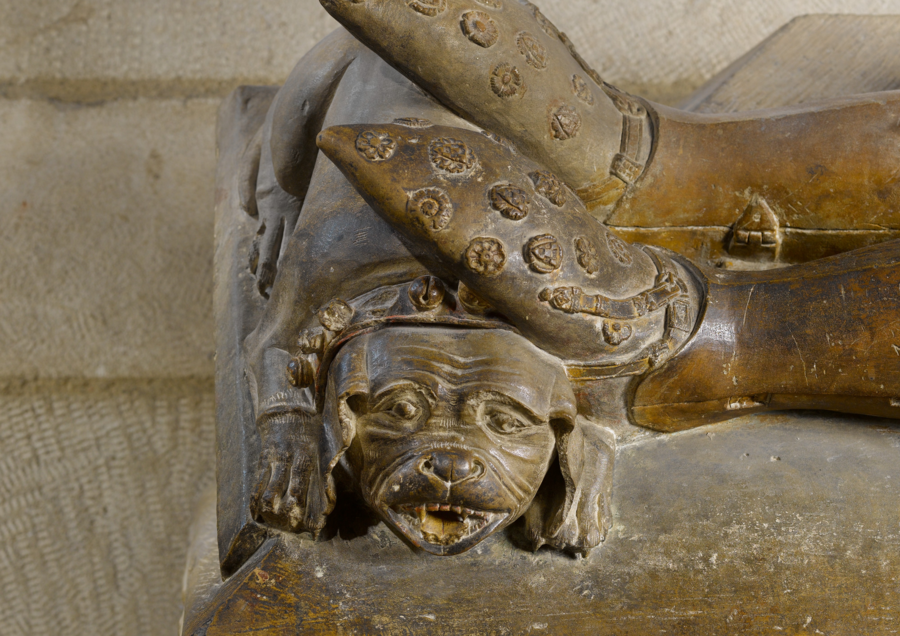
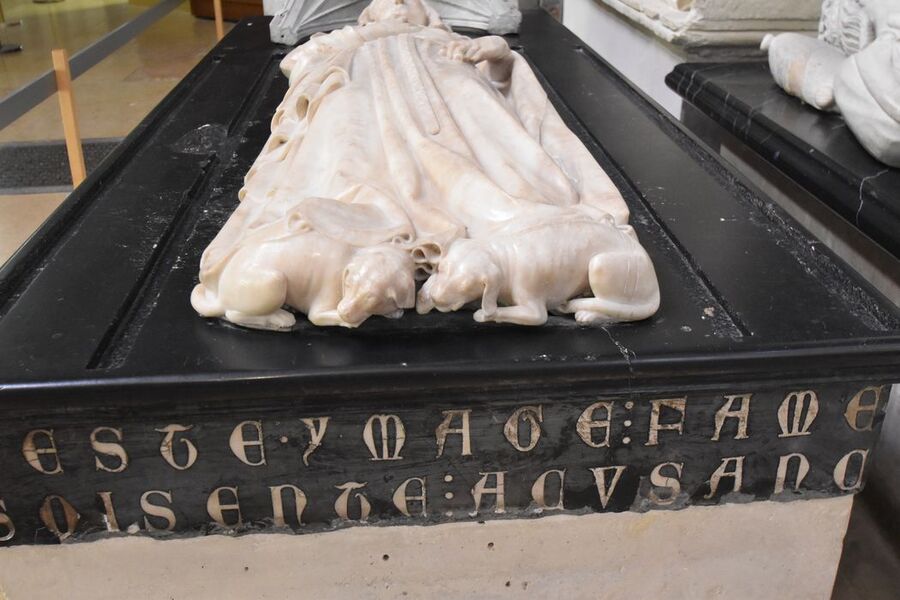
However, regardless of their social class, similar Christian motifs appeared in the decoration of the tombstones—such as the gesture of prayer or depictions of religious figures. Certain details were repeated due to their significance, for instance, animals at the feet of the deceased, or imagery associated with faith.
Primary Goal — to investigate how the social status of the deceased was reflected in the artistic ornamentation of medieval tombstones, and to determine what visual details were employed to convey their standing in society.
Key Question: How did the social status of the deceased determine their visual representation on a medieval tombstone?
Hypothesis: Social status was reflected not only in the material of the monument and the depiction of the person itself, but also in its scale, decorative embellishment, and surrounding figures. At the same time, certain elements, such as a gesture of prayer or the posture of a reclining figure, appeared on gravestones of representatives from various social classes.
For comparison, grave markers from the 13th and 14th centuries belonging to representatives of three social groups—the high nobility, knighthood, and clergy—were selected. The selection of monuments took into account their preservation, the availability of visual materials, and the ability to trace specific indicators of social status: clothing, attributes, heraldry, scale, and architectural design.
The research utilized the works of historians and art critics dedicated to medieval funerary sculpture and the traditions of memorializing the deceased. Additionally, museum catalogs and materials from cultural institutions were used to refine the dating, origin, and specific characteristics of individual objects.
The work is divided into thematic sections dedicated to monarchs and the high nobility, knighthood, and the clergy. Within each section, the characteristic features of the grave markers are examined: the figure’s posture, attire, objects and symbols, as well as the monument’s overall design.
Gravestones were meant to prompt people to pray for the soul of the deceased, while simultaneously reflecting their social status and standing.
Starting around the mid-12th century, tombstones began appearing that depicted the deceased themselves. Initially, such monuments were commissioned primarily by members of the high clergy and the aristocracy. Among the early patrons were bishops, abbots, and representatives of noble families. Gradually, this practice spread to other social groups. The proliferation of sculptural depictions of the dead broadened the capabilities of the tomb as a memorial that preserved information about the individual and their place in society. Now, a person could be represented in a recognizable social persona—in clerical vestments, formal attire, or later, in armor.
Chapter 1. High Society.
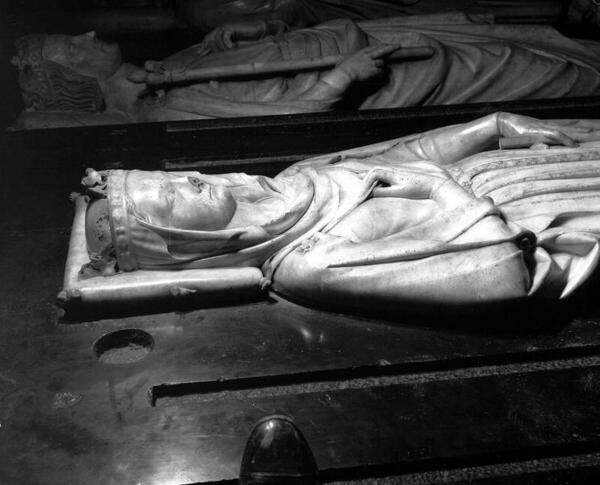
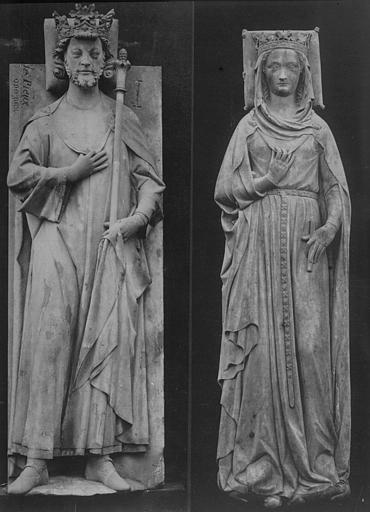
Tombstone: Isabella of Aragon, first wife of Philip III, King of France. Saint-Denis Basilica near Paris. 1275 (unknown artist)
The development of sculptural funerary monuments in medieval Europe originated with the gravestones of members of royal dynasties and the high nobility. Initially, this form of memorialization was accessible primarily to the wealthiest and most influential strata of society, as the creation of such tombs demanded considerable resources and the engagement of skilled artisans. Sculptures served not only as a memorial to the deceased but also as a means to emphasize their power, wealth, and high social standing. Such monuments were often distinguished by their scale, expensive materials, and intricate architectural detailing. This section examines how the image of the elite in medieval society was formed through clothing, royal regalia, coats of arms, and other elements.
Chapter 2. Knights and the Military Nobility.
Chapter 3. Church Representatives and Clergy.
Conclusion.