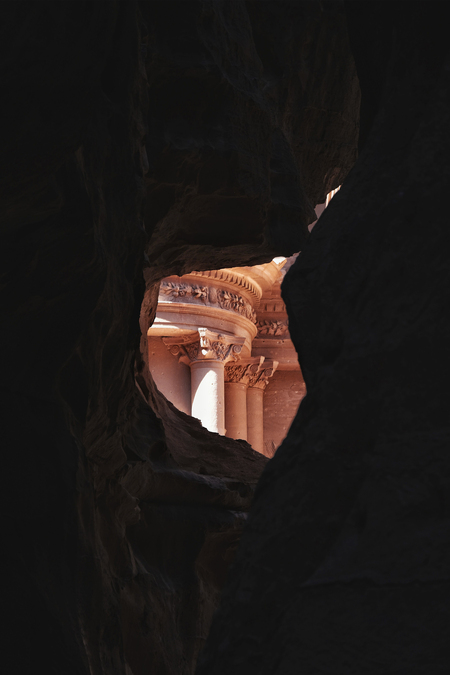
PetraIts architecture is astonishing: ancient structures were carved directly into the rock face, and the facades appear to be an extension of the stone itself.
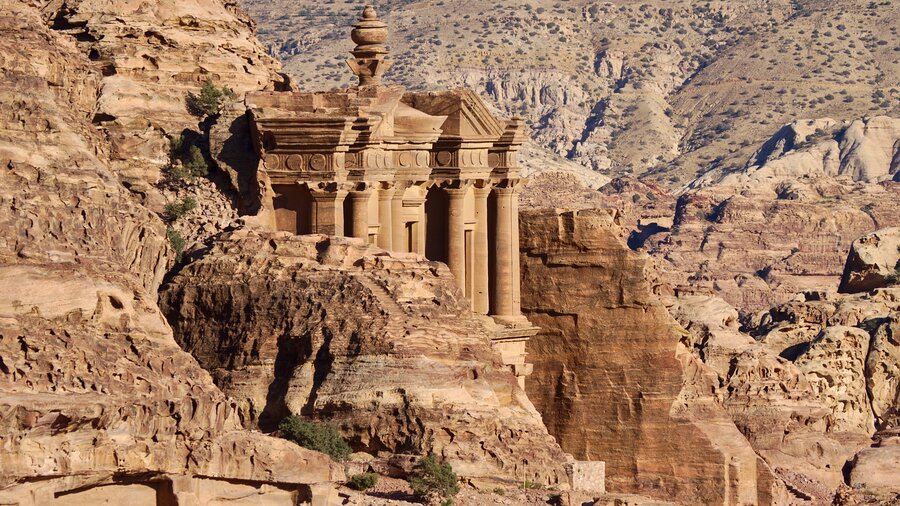
Ad Deir («Monastery»), Petra, Jordan. 1st–2nd centuries CE.
Even two millennia later, the former capital of the Nabataean kingdom continues to hold countless secrets.
Research Concept
Rationale for Topic Selection
It is still not fully known what ancient technologies the Nabataeans utilized to construct their monumental structures. However, the mineral composition of the rocks and how that composition dictates the aesthetic of Petra has played a vital role in shaping its architectural character.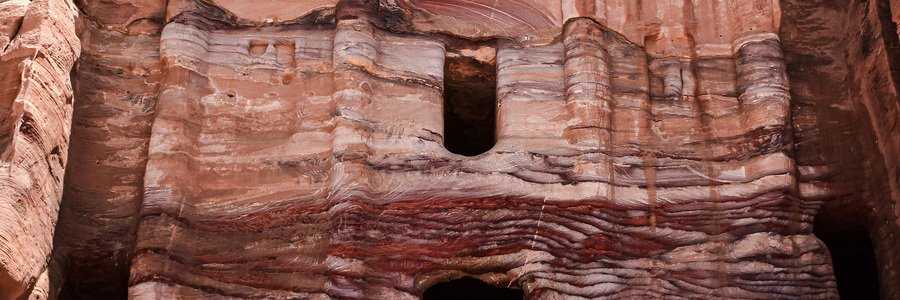
Silk Tomb. Sandstone Polychromy
Ancient monuments were carved into multicolored, vibrant sandstone of various types. Their natural properties can be explored in the context of art.
The choice of this topic is driven by the fact that modern perception of Petra’s architecture may differ significantly from the Nabataeans' original vision, which presents a unique area of interest.
Stepped ornament
Material Selection
The visual investigation is based on images of six structures: • Al-Khazneh • Ad-Deir • The Great Temple • Tomb No. 826 • Little Petra • The Tomb of the ObelisksFrom these, one can understand how the natural polychromy is expressed in Nabataean architecture, along with the rhythms of the forms and reliefs.
Images of Qasr al-Bint and other structures may also be used separately.
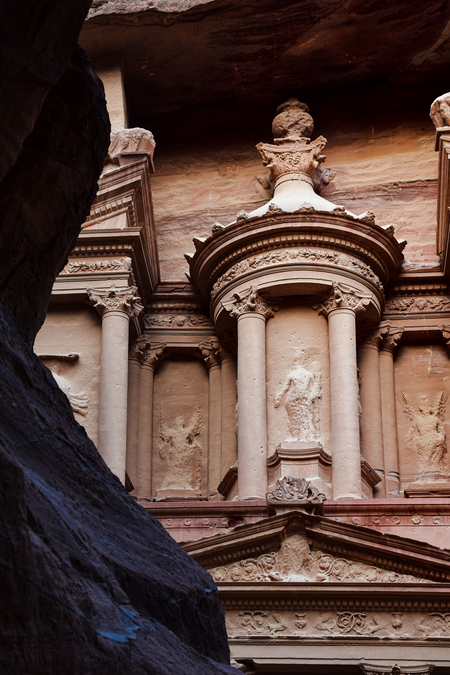
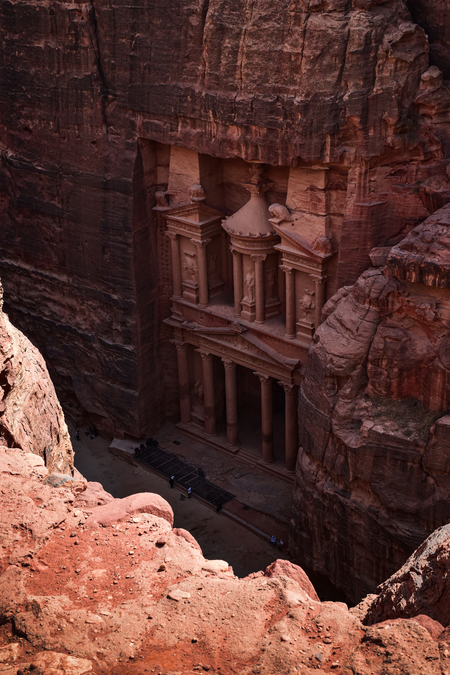
El-Khazneh («The Treasurer of the Pharaoh»), Petra, Jordan. 1st–2nd centuries CE. Close-up and distant views
Selection of Textual Sources
The foundation for the visual research was the 2005 doctoral dissertation by architect-restorer Mei Shear, «The Decorative Architectural Surfaces of Petra» (original title *The Decorative Architectural Surfaces of Petra*), along with studies on sandstone weathering and Nabataean architecture.All quotes have been translated.
Petras, David Roberts 1839
Rubrication Principle
The study is divided into four sections that illuminate the specific characteristics of Petra’s architecture:Material — the natural properties of sandstone as the primary construction resource
Architectural Form and Styles — the city carved into the rock, and the borrowing of styles from other cultures
Influence of Time — the impact of weather and weathering on the condition of the structures
Perception of Architecture — a comparison between the original and modern appearance
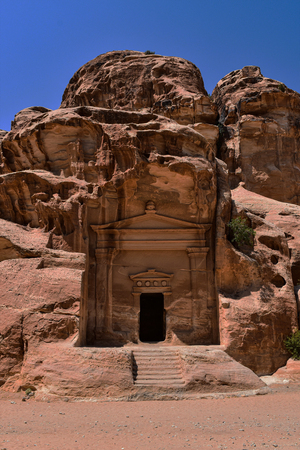
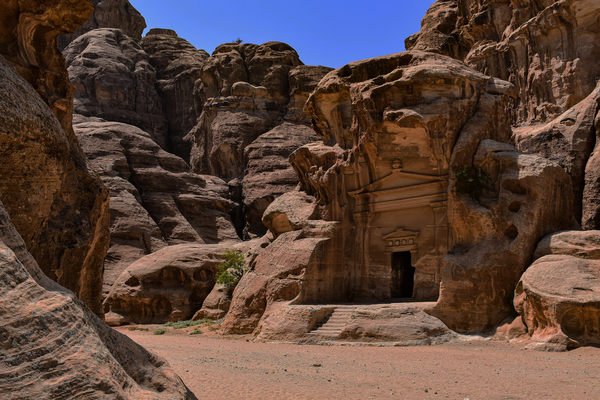
Rock Triclinium. Little Petra (Siq el Barid), Jordan
Key Question and Hypothesis
How do the natural properties of sandstone influence the color and form of the architectural structures in Petra, and how does their modern appearance differ from the original Nabataean design?
The natural colors and sandstone patterns that largely define the appearance of Petra today may have played a lesser role for the Nabataeans previously. Originally, decorative cladding on some structures concealed the stone’s surface and emphasized architectural elements. As a result of the coatings' deterioration and centuries of weathering, the natural texture of the sandstone became more prominent and gained a new perception.
Ad Deir. Petra, David Roberts 1839
Material
UNESCO describes Petra as a city that was simultaneously built and carved into the rock. The rocks in this region consist primarily of sandstone. This stone became the main material for the Nabataeans when constructing their buildings. In addition to the structures carved directly into the cliffs, there are also monuments that were constructed from pre-worked stone blocks, such as the Great Temple.Most monuments at Petra were carved from the Umm Ishrin formation sandstone (Middle–Late Cambrian, 540–520 million years ago) because it was better suited for construction than the Disi formation sandstone (Late Cambrian–Early Ordovician, 520–490 million years ago). The latter is characterized by low strength and high susceptibility to weathering. The Umm Ishrin sandstone consists of at least 90% quartz. [1, p. 56]
Geomorphologist Tom Paradice’s Diagram: Disi, Umm-Ishrin, Granite
Due to the iron compounds in the Umm Ishrin sandstone, the structures built from it will possess a palette of rosy hues.
Rock Tombs of Petra. Example of the Umm Ishrin formation.
Thanks to the natural durability of Umm Ishrin stone, the monuments carved from it have preserved better than others. Despite the restoration work being carried out on the structures, the material plays a significant role in their preservation.
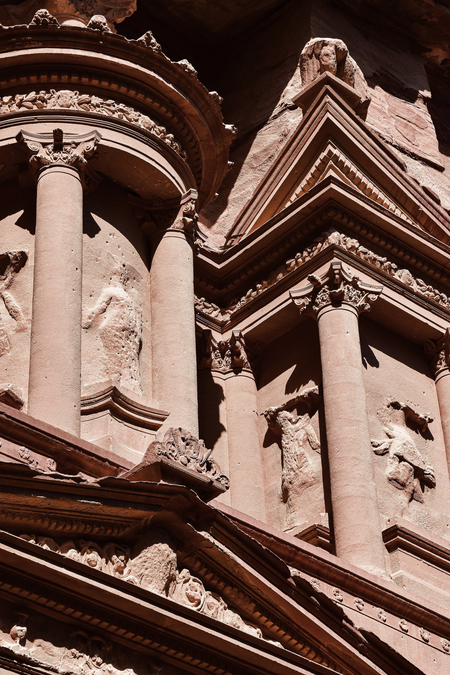
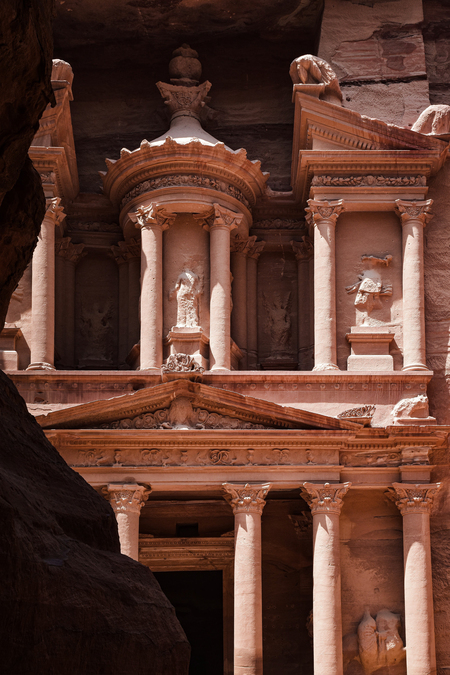
Al-Khazneh
The Disi Formation sandstone is characterized by its light, yellowish hues and low resistance to weathering.
It was not used for fine decorative carving. The images show signs of deterioration: the edges and details have lost their original sharpness.
Geomorphologist Thomas Paradise investigated the erosion of surfaces carved from Disy sandstone and determined that the rate of recession ranged from 10 to 220 mm per millennium. The researcher attributes this to solar radiation and the stone’s wetting and drying cycles. [2, 176]
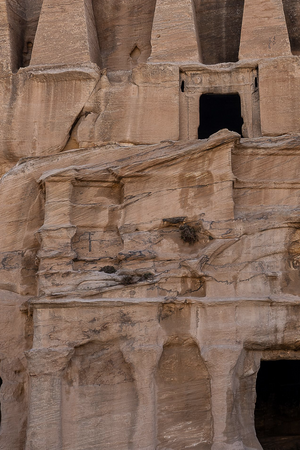
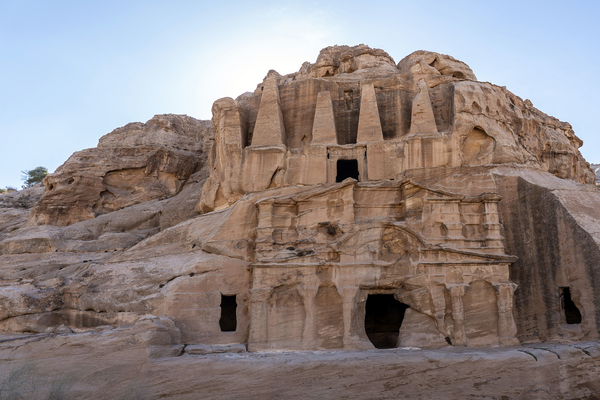
Obelisk Tomb
Architectural Form
The contrast between the natural topography and the rigid architectural form lends Petra its great expressiveness.The genius of the Nabataean masters transformed entire sections of mountains into monumental facades. The compositions of columns, pediments, and cornices resemble freestanding buildings, although they remain part of the rock mass.
To carve the stone, the builders used picks, and for detailed finishing, they used chisels. With pointed chisels, they created characteristic parallel grooves.
Little Peter