1. Introduction


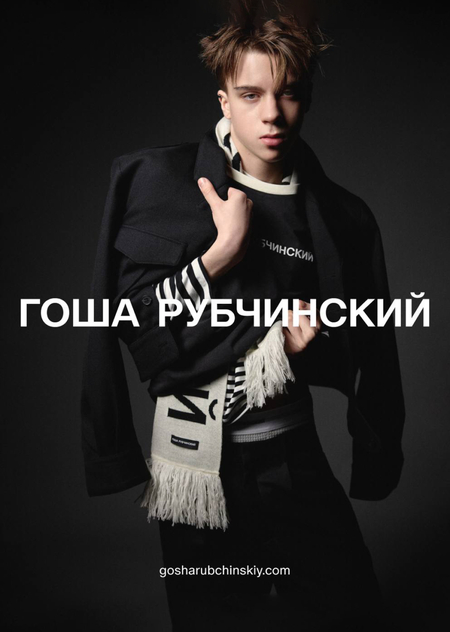
Gosha Rubchinskiy, Tsvetnoy (2026) Gosha Rubchinskiy, Tsvetnoy (2026)
In contemporary fashion, brands compete not only through products but also through the cultural meanings and identities they create. One of the most influential examples of this phenomenon is Gosha Rubchinskiy. Founded in 2008 by Russian designer Gosha Rubchinskiy, the brand gained international recognition for its distinctive representation of post-Soviet youth culture. Through streetwear aesthetics, Cyrillic typography, documentary-style photography, and references to skateboarding and football communities, it introduced a new visual language to global fashion. Rather than simply selling clothing, the brand communicated ideas about identity, belonging, and cultural authenticity. In 2018, Gosha Rubchinskiy paused its traditional seasonal collections, marking the end of its first stage. In 2025, it was relaunched as a renewed cultural project that combines fashion, art, photography, and community-building while preserving its recognizable visual identity. *Instagram and other Meta services are recognised as extremist organisations and are banned on the territory of the Russian Federation. This analysis refers to these platforms for academic purposes only.
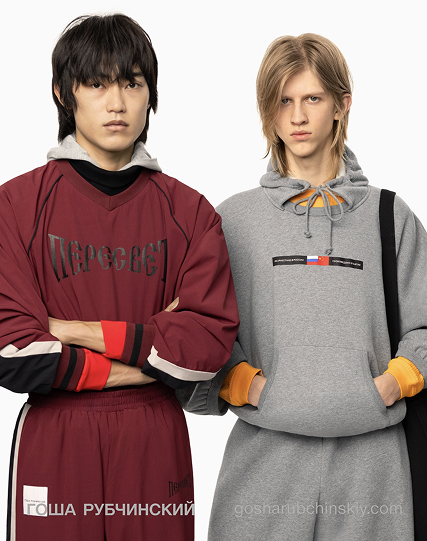
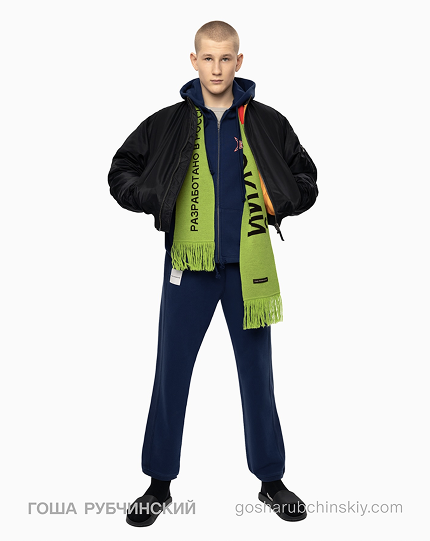
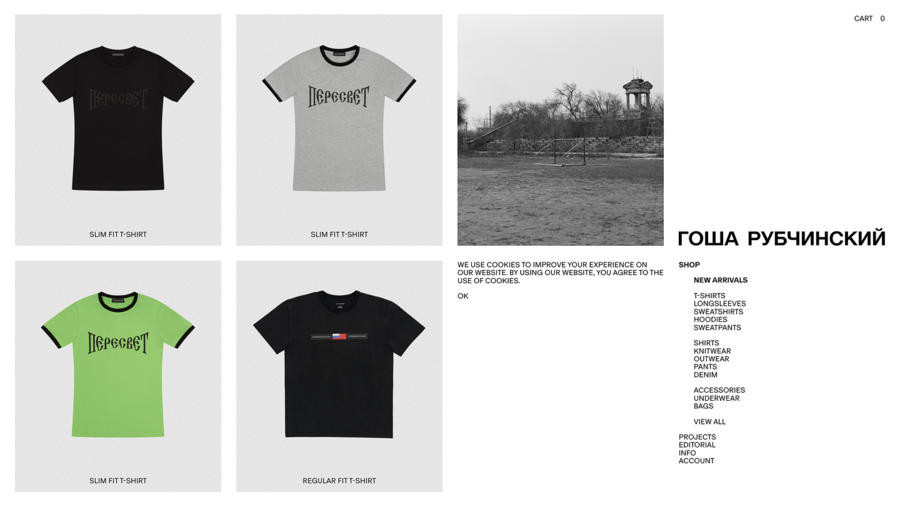
Gosha Rubchinskiy, New Arrivals (2026) Gosha Rubchinskiy, New Arrivals (2026)
The brand primarily targets young, culturally engaged consumers interested in streetwear, contemporary culture, and alternative forms of self-expression. For many followers, Gosha Rubchinskiy represents more than fashion; it functions as a cultural symbol and a way of expressing personal identity. For this reason, the brand provides an especially relevant case for communication analysis. Its success is based not only on its products but also on its ability to create meanings, shape perceptions, and build a strong cultural community around the brand.
2. Communication Channels
The communication strategy of Gosha Rubchinskiy is based on visual storytelling, cultural symbolism, and community engagement rather than traditional advertising. The brand promotes not only products but also values, identities, and cultural meanings through several interconnected communication channels.
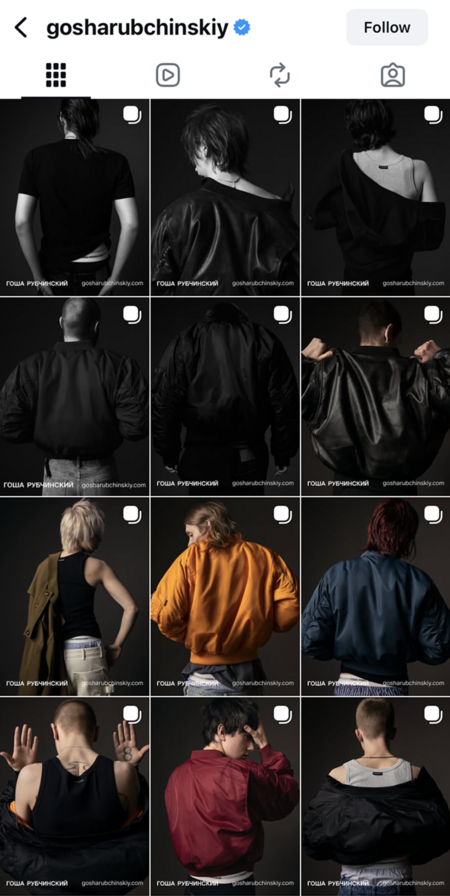

Gosha Rubchinskiy instaram, main page (2026) Gosha Rubchinskiy instaram, screenshot from reel (2026)
Social media, particularly Instagram, has been one of the brand’s key communication platforms. Instead of focusing on direct product promotion, Gosha Rubchinskiy creates a distinctive visual world through documentary-style photography, youth culture, urban environments, skateboarding, and post-Soviet aesthetics. This symbolic content encourages audience interpretation and strengthens emotional engagement with the brand.
The official website supports this strategy by providing information about collections, collaborations, and projects while maintaining a minimalist design. Through carefully curated imagery and limited commercial messaging, the website reinforces the brand’s image of authenticity, exclusivity, and cultural value.

Gosha Rubchinskiy, official website, main page (2026) Gosha Rubchinskiy, official website, Editorial (2026)
Collaborations with brands such as Adidas, Burberry, and Comme des Garçons have significantly expanded the visibility of Gosha Rubchinskiy. These partnerships function not only as commercial projects but also as communication events that generate media attention, social media discussion, and audience engagement.
Visual campaigns, including lookbooks and editorials, further support the brand’s identity. Using ordinary locations, natural poses, and realistic portrayals of young people, these campaigns communicate themes of youth, freedom, identity, and belonging while emphasizing authenticity.
Gosha Rubchinskiy x Adidas (2017)


Gosha Rubchinskiy instaram, New Arrivals (2026) Gosha Rubchinskiy instaram, New Arrivals (2026)
The brand’s public relations strategy relies on cultural relevance, artistic projects, collaborations, fashion shows, and media coverage rather than traditional promotional campaigns. This approach positions Gosha Rubchinskiy as a cultural phenomenon rather than simply a fashion label.
Across all channels, the brand maintains a consistent communication style based on visual symbolism, minimal text, and strong cultural references. By encouraging audiences to interpret messages independently, Gosha Rubchinskiy increases audience involvement and builds a loyal community connected by shared cultural values and aesthetics.


Gosha Rubchinskiy, New Arrivals (2026) Gosha Rubchinskiy, New Arrivals (2026)
Overall, the brand demonstrates how contemporary fashion companies can use digital media, visual culture, and symbolic communication to maintain cultural relevance and build strong relationships with audiences.
3. Theoretical Framework
This section combines the theoretical framework with the analysis of Gosha Rubchinskiy’s brand communication. The project uses two communication theories: the Elaboration Likelihood Model and Uses and Gratifications Theory. These theories were selected because they allow us to analyze not only what the brand communicates, but also how the audience interprets and engages with these messages.
Gosha Rubchinskiy is a fashion brand whose communication is built around visual identity, cultural references, youth aesthetics, and symbolic meanings.
Gosha Rubchinskiy SS18 Lookbook (2018)
The brand does not rely only on direct product descriptions or regular advertising. Instead, it creates a specific atmosphere around clothing: post-Soviet references, young male models, streetwear silhouettes, urban locations, and a feeling of subcultural authenticity. This makes the brand communication especially interesting for theoretical analysis, because the value of the brand is created not only through the product itself, but also through the cultural code around it.
Another important feature of the brand is its selective and rather rare communication. Gosha Rubchinskiy does not communicate as actively as many commercial fashion brands that post daily and constantly explain their products. Instead, the brand usually appears rarely but precisely. This makes every new post, campaign, collaboration, or retail update feel more meaningful. The lack of constant communication creates a sense of mystery and makes the audience follow the brand more carefully.
3.1. Elaboration Likelihood Model: Visual Persuasion
The Elaboration Likelihood Model explains how persuasive messages influence people’s attitudes. According to this theory, audiences can process messages through two main routes: the central route and the peripheral route. The central route involves careful analysis of the message, while the peripheral route is based on quick emotional reactions and external cues such as style, atmosphere, status, or symbolic associations.
In Gosha Rubchinskiy’s communication, the peripheral route is especially important. The brand often persuades through visual codes rather than direct product arguments. Young male models, simple styling, urban backgrounds, sportswear elements, and post-Soviet aesthetics create an emotional response before the viewer even analyzes the clothes in detail. The audience quickly understands the brand’s mood: restrained, mysterious, street-based, and culturally specific.


Gosha Rubchinskiy, New Arrivals (2026) Gosha Rubchinskiy, Tsvetnoy (2026)
At the same time, the central route also works for a more involved audience. People who are familiar with fashion, youth culture, or post-Soviet aesthetics may interpret the brand more deeply. For them, ordinary urban images, Cyrillic elements, oversized silhouettes, and everyday-looking models become not just visual choices, but signs of a broader cultural statement. In this sense, Gosha Rubchinskiy transforms familiar street aesthetics into a fashion language.
Gosha Rubchinskiy, Peresvet (2026)
The designer’s personal brand also strengthens the persuasive effect. Gosha Rubchinskiy is perceived not only as a designer, but also as a cultural figure connected with photography, youth culture, and global fashion. His work with Yeezy and Ye/Kanye West adds symbolic value to the brand and increases its status. For some audiences, this works as a quick peripheral cue: the brand feels more relevant and important because of this association. For others, it becomes a deeper argument that Rubchinskiy’s visual language has influence beyond the Russian fashion context.


Gosha Rubchinskiy x YZY (Kanye West) Collaboration (2024) Gosha Rubchinskiy x YZY (Kanye West) Collaboration (2024)
The brand’s presence in the Tsvetnoy department store in Moscow also supports this image. Tsvetnoy is associated with contemporary fashion, urban taste, and cultural selectivity. This retail context makes the brand feel local, but at the same time curated and culturally significant. It adds to the impression that Gosha Rubchinskiy is not a mass-market brand, but part of a more specific fashion and cultural environment.
3.2. Uses and Gratifications Theory: Audience Engagement