From Magic to Power: How the Flower Stopped Being a Plant and Became Text (Monuments from the Paleolithic to the 14th Century)
Concept:
The plant world is humanity’s first and most ancient language. From cave spirals to Gothic stained glass, the flower remains an unchanging companion to humankind, yet its meaning shifts. In this work, I explore how the plant transforms from simple decoration into a complex semiotic code reflecting the worldview of each era.
Material Selection Principle:
The material covers the period from the Paleolithic to the 14th century, inclusive. Only works where the plant motif is structural or carries symbolic weight (sacred, political, or romantic), rather than merely serving as background ornamentation, are selected.
Key research question:
How has the function of the floral motif evolved in art—from a magical amulet to a theological metaphor?
Hypothesis:
The color code in pre-14th-century art developed through a path of dematerialization: from realistic depictions of plants as sources of life (fertility) to their conventional, symbolic representation as a reflection of divine order (Paradise, Christ, the Virgin Mary).
Lotus in Ancient Egypt
The lotus was one of the most recognizable plant motifs of Ancient Egypt. It was associated with the sun, birth, and the renewal of life. The flower was widely used in religious art and in the decorative design of objects.
Flowers were frequently depicted in people’s hands, in festive scenes, and in religious compositions. Their elongated petals and stems became important elements of the rhythm in ancient Egyptian painting.
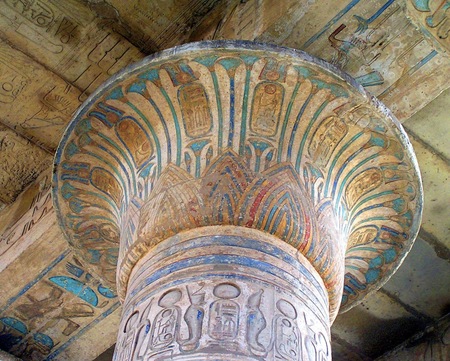
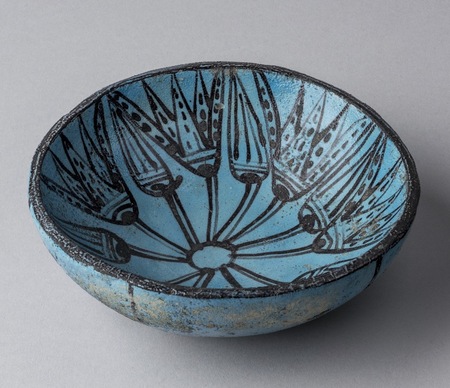
The lotus motif was utilized in the design of ceramics, jewelry, amulets, and vessels. Gradually, the natural form of the flower transformed into a symmetrical ornament built upon the repetition of buds and open blossoms. In architecture, the lotus form was used to create column capitals. The upper portion of the column resembled an opened flower, while the shaft represented its stem. Thus, the botanical motif became an integral part of the architectural structure.
Flowers in Ancient Greek Art
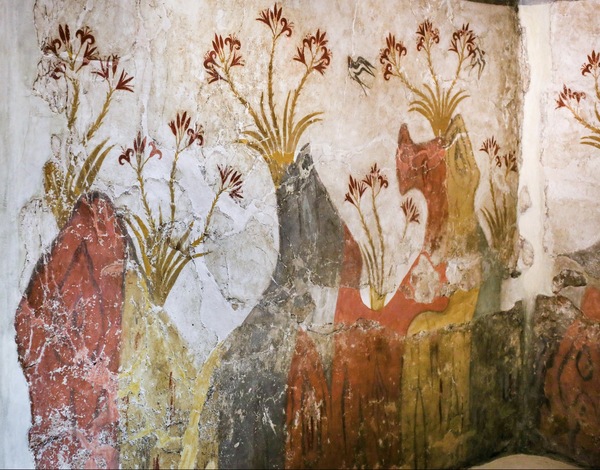
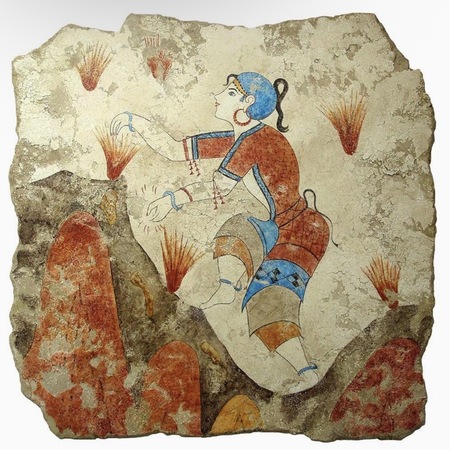
In Minoan mural painting, flowers were often depicted alongside birds and other elements of nature. Artists used rich shades of blue, red, yellow, and white. Plants became independent elements within the composition, rather than merely background details.
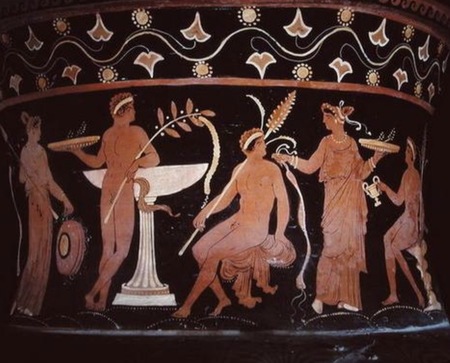
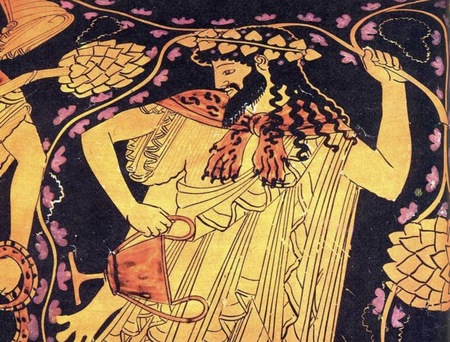
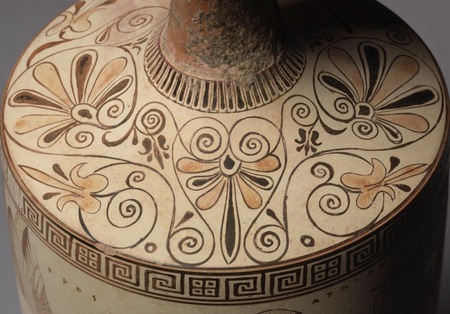
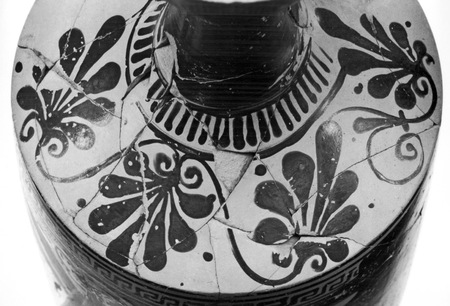
The flowers and plant ornaments on the vases were complemented by scenes from mythology and everyday life. Especially interesting are the white-ground Lekythoi—vessels used in funeral rites.
Rose and Aphrodite — love and beauty
The rose in ancient culture was associated with Aphrodite—the goddess of love, beauty, and sensual attraction. Its fragrance, delicate petals, and ephemeral nature made the flower a symbol not only of beauty but also of the fragility of love. It is especially fascinating that behind this gentle image lies a myth of love, loss, and blood.
This is an ancient Greek terracotta relief tablet from Medmy. Aphrodite is depicted wearing a floral wreath and pointing to a rose; Eros is located nearby.