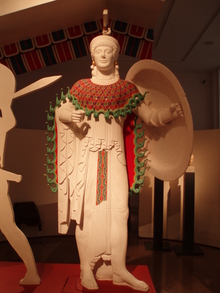
Concept
Draping is one of the fascinating features of ancient sculpture. I was drawn to how sculptors managed to convey the softness and fluidity of fabric using hard materials. At first glance, the clothing might seem to simply follow the form of the human body, but upon closer inspection, one can notice how differently the folds, tension, and movement of the fabric are rendered.
I found it particularly interesting to examine this feature using examples from ancient sculpture dating from the 5th to 2nd centuries BCE. This period allows one to look at works from various stages of ancient art development and observe the diversity of approaches to depicting fabric. I am interested in how sculptors conveyed its softness, volume, and movement by exploiting the characteristics of stone carving.
Chapter I. Body and Fabric
When clothing mirrors the shape of the body
One feature of ancient sculpture that has captured my attention is how clothing can communicate the form of the human body. Even when the figure is fully or partially covered by fabric, we can still discern the curves of the torso, the position of the arms and legs. It gives the impression that the sculptor is revealing the body through the clothing.
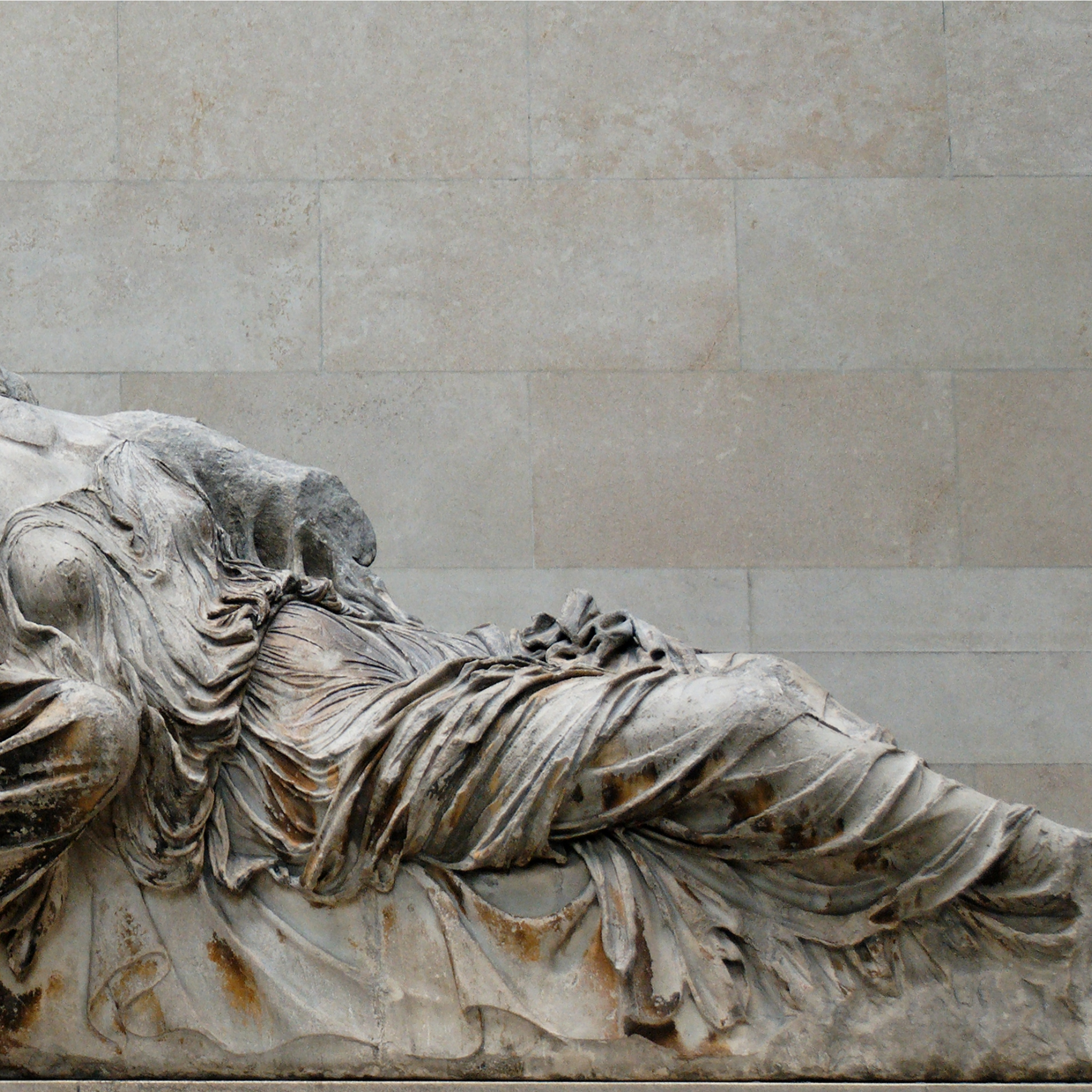
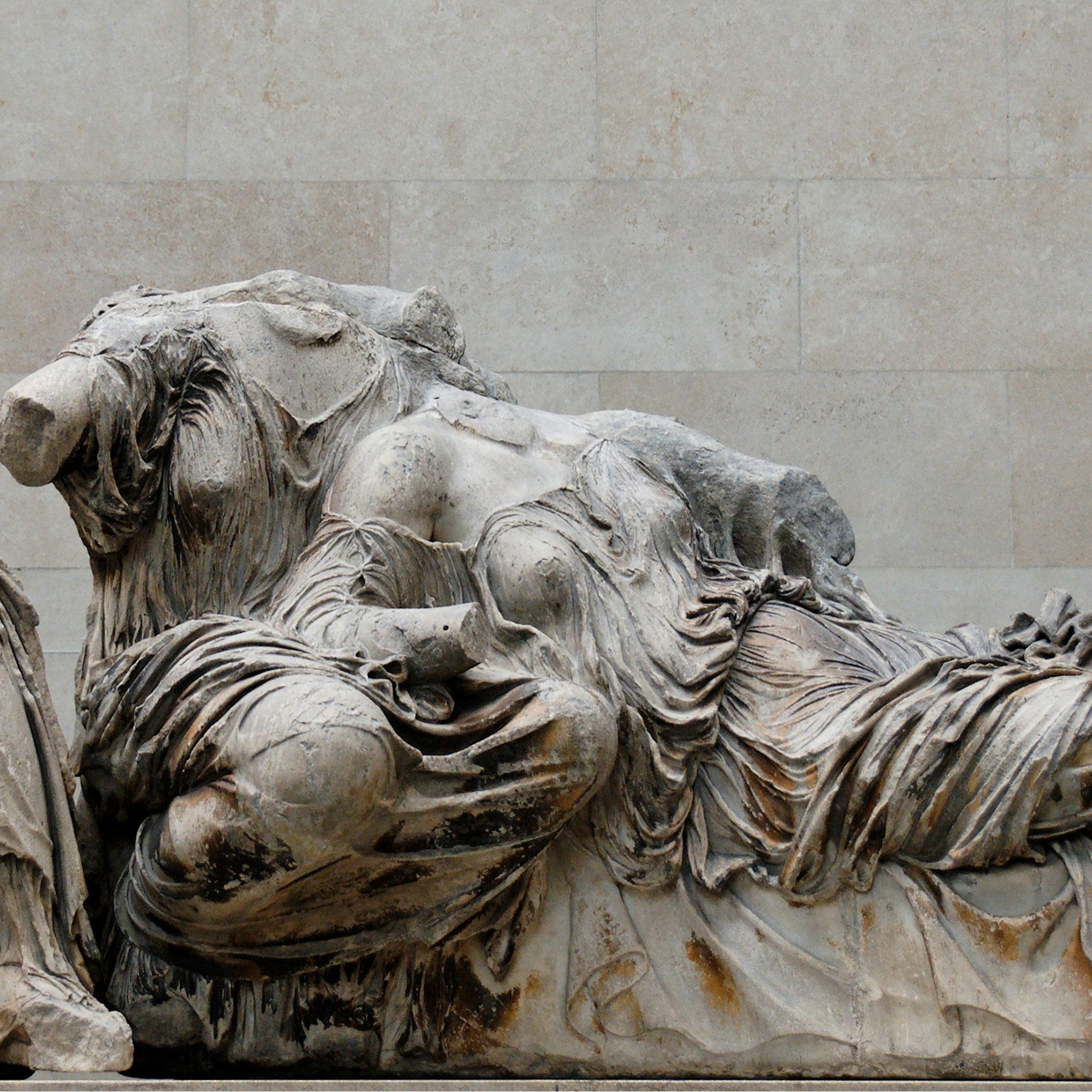
Particularly interesting is the technique known as «wet drapery.» With this method of depiction, the fabric appears as if it has become wet and clings tightly to the body. It traces the contours of the figure, emphasizes the anatomy, yet retains its own folds.
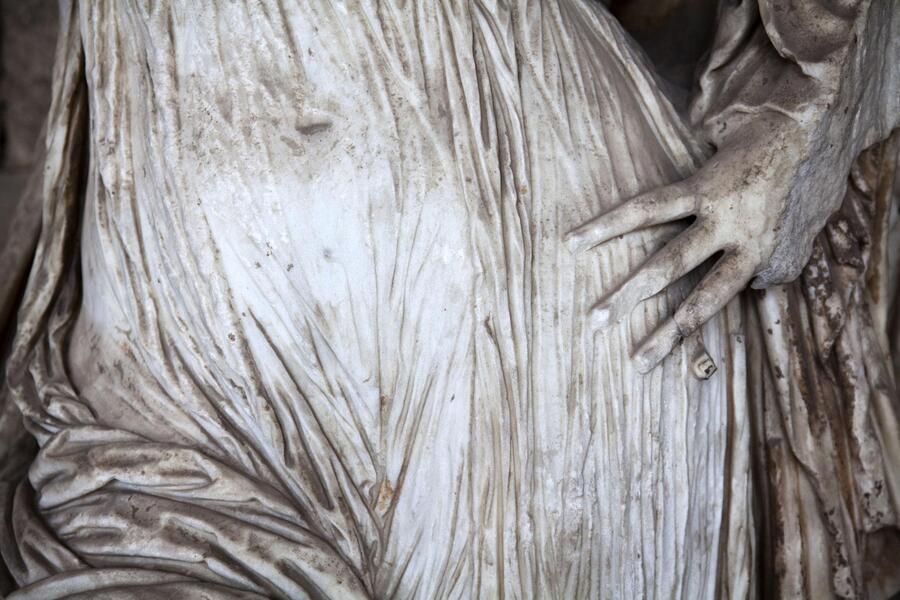
Statue of a goddess. An example of «wet drapery» in ancient Greek sculpture. The fabric mirrors the contours of the body yet retains the relief of the folds.
I find it interesting that in this case, the clothing simultaneously conceals the body while helping to better reveal its form. The sculptor had to convey the sensation of thin, soft fabric using hard marble. For this, the placement of the folds, their depth, and their interaction with the surface of the body were of great importance. It is worth noting that «wet drapery» does not necessarily mean depicting actually wet clothing. It is rather an artistic technique used to create the effect of thin fabric tightly clinging to the figure.
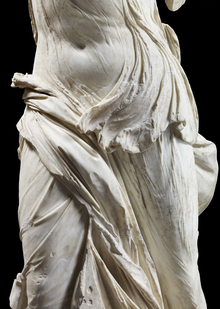
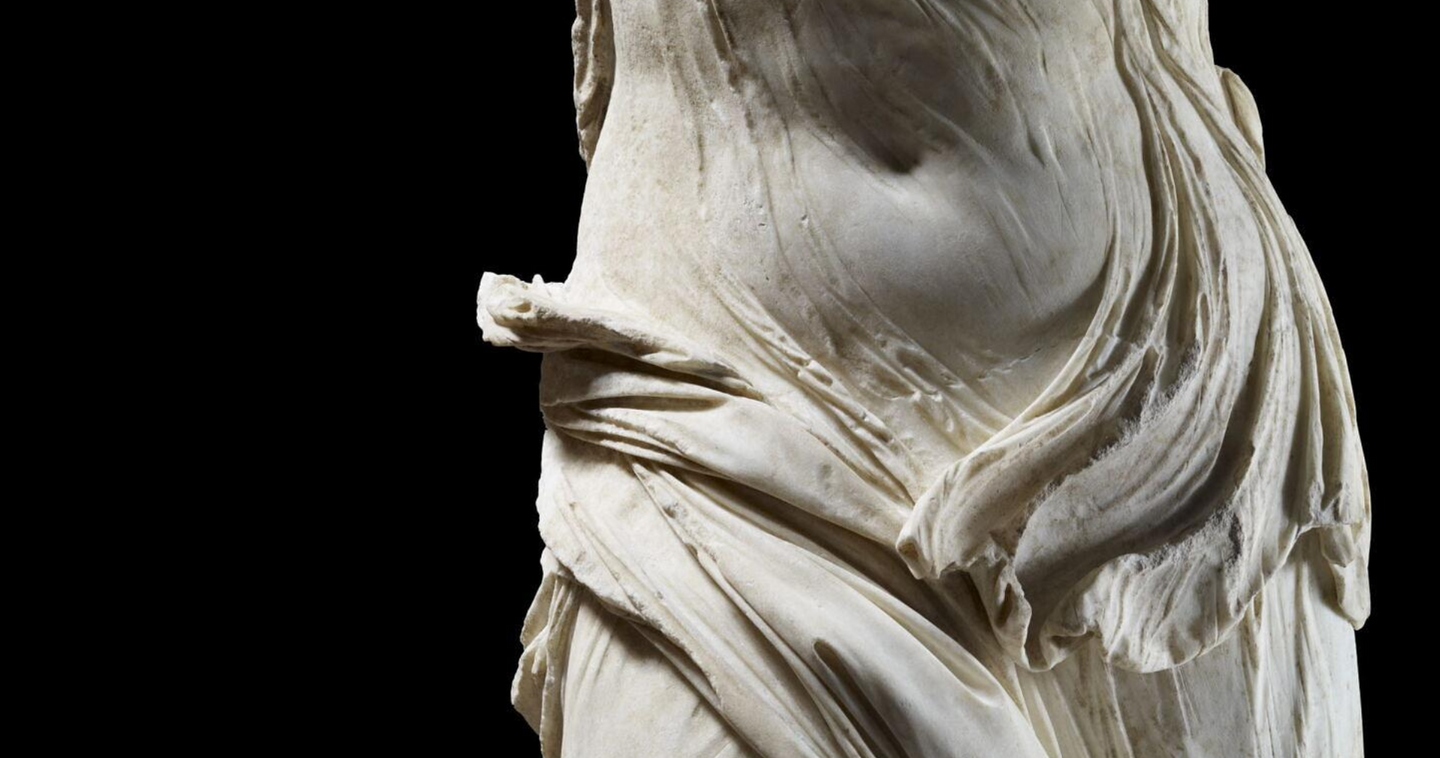
«Nika adjusting her sandal.» Circa 410 BCE. Pentelic marble. Acropolis Museum, Athens.
One of the most compelling examples for my topic was the sculpture of Nike adjusting her sandal. It is a section of a marble relief that once decorated the parapet of the Temple of Athena Nike on the Athenian Acropolis.
The goddess is depicted in an unusual pose: she is leaning down to adjust her sandal. Even though the figure is not entirely preserved, the sense of movement is strongly evident. However, I was most captivated by the drapery. The thin fabric almost mirrors the contours of her body. Through it, one can distinguish the curves of her chest, abdomen, and legs. Simultaneously, the folds accentuate the figure’s posture and help convey its volume.
The contrast between the upper and lower parts of the garment is particularly striking. On the shoulder, the fabric drapes downward, revealing part of the body, while below, it forms larger, looser folds. This creates the impression that different areas of the clothing have varying densities and interact with the body in distinct ways.
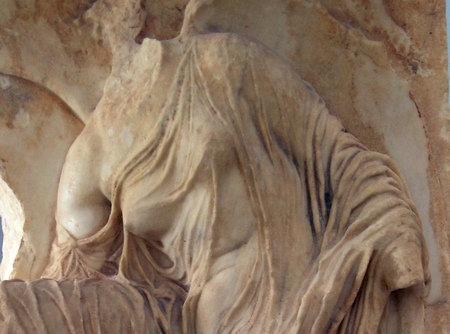
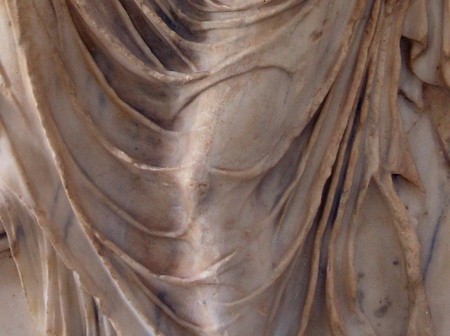
When examining this sculpture, it becomes clear how vital even small folds are. They do more than just denote clothing; they help convey the form of the body and lend life to the figure. It strikes me that it is precisely through this interplay of fabric and anatomy that the marble surface begins to feel like a genuine soft material.
How folds help convey the body’s form
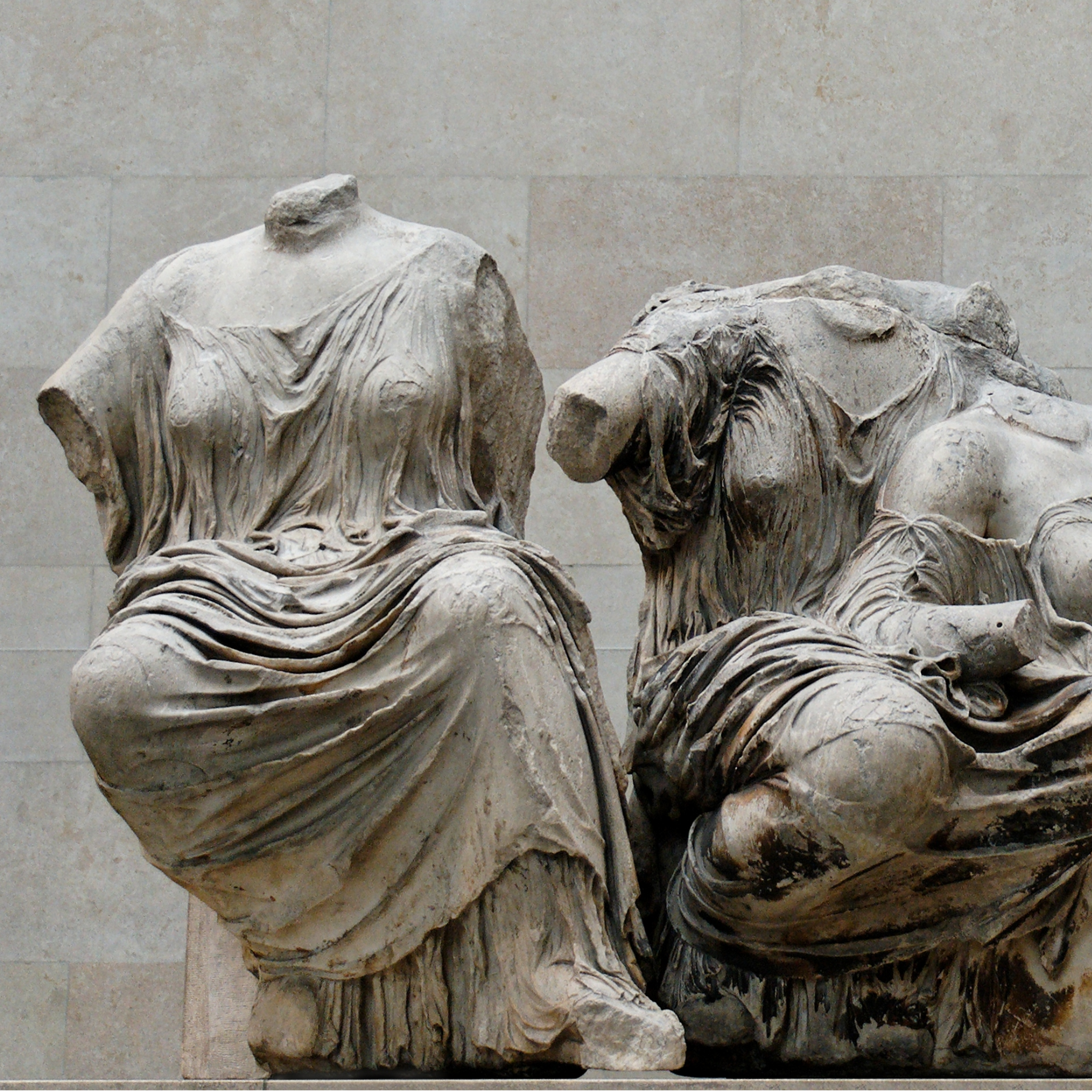
A similar interest in the depiction of the body beneath clothing can be seen in the sculptures of the Parthenon. Here, the fabric does not always cling tightly to the figure. In some areas, it falls freely, forming large folds, while in others, it mimics the shape of the legs and torso.
«Seated Woman» from the West Pediment of the Parthenon. 437–432 BCE. Pentelic marble. Acropolis Museum, Athens.
What attracted me to this sculpture was how the clothing is draped around the bent legs. The folds mirror the posture of the body and help to convey precisely how the figure is seated. Moreover, the fabric does not appear completely taut; instead, it gathers in several places, forming a quite voluminous surface. There is no longer the pronounced effect of transparency found in Nika’s work. Nevertheless, the body is still perceptible beneath the garments. This is achieved through the direction and placement of the folds relative to the figure.