Navigator
- Concept ———
- The Medieval City as a Historical and Artistic Environment 2.1. Layout and Structure of Medieval Settlements 2.2. Architecture and Organization of Urban Life 2.3. Historical Reconstruction and Artistic Stylization ———
- Kingdom Come: Deliverance — Historical Reconstruction of Rattay 3.1. Historical Prototype and Game Layout 3.2. Architecture, Materials, and Urban Fabric 3.3. Authenticity and Artistic License ———
- Baldur’s Gate 3 — The Fantasy Portrayal of the Lower City 4.1. Spatial Structure and Urban Planning 4.2. Architecture and Social Organization of Space 4.3. Historical Motifs and Fantasy Stylization ———
- A Knight’s Story — The Medieval City in Cinema 5.1. The Artistic Image of London 5.2. The Set Design of Rouen and Tournament Spaces 5.3. Real Locations and Cinematic Transformations ———
- Comparative Analysis
- Conclusion
- Bibliography and Image Sources
Concept
Medieval cities and settlements occupy a significant place in the visual culture of contemporary film and video games. Their architecture, layout, and material environment are used not only to denote a historical era but also to establish atmosphere, define the character of the space, and shape narrative elements.
However, the on-screen depiction of a medieval city is far from always an accurate historical reconstruction. Production designers and environmental designers may alter the scale of buildings, building density, architectural details, and spatial organization depending on the artistic goals of the piece.
This study examines three examples that demonstrate various approaches to creating medieval urban environments: the video game Kingdom Come: Deliverance (2018), the video game Baldur’s Gate 3 (2023), and the film Knight’s Tale (2001).
The research aims to identify how the historical characteristics of medieval settlements and towns are utilized and transformed when creating artistic environments in cinema and video games. Special attention is given to urban planning, architectural forms, materials, the scale of structures, and the visual organization of space.
The research begins by examining the fundamental characteristics of the historical medieval urban environment necessary for subsequent visual analysis.— Kingdom Come: Deliverance examines the reconstruction of the Czech town of Rattay and its connection to historical prototypes.— Baldur’s Gate 3 features the Lower City as an example of fantasy interpretation of medieval architecture.— In the film The Knight’s Story, the creation of images of London and Rouen is analyzed using real filming locations, sets, and visual effects.
The primary research method will be visual comparative analysis. Frames from films and video games will be compared with photographs of historical structures, architectural plans, and materials detailing the creation of artistic environments.
However, verifiable historical prototypes, confirmed by primary sources, will be distinguished from assumed visual analogies. External architectural resemblance alone will not be treated as proof of direct borrowing.
The core question of this research is how the historical features of the planning and architecture of medieval settlements and cities are transformed when creating artistic environments in film and video games.
The research hypothesis is the premise that the artistic representation of a medieval city is formed through a combination of historically recognizable architectural elements and modifications driven by the objectives of a specific work.
In historically focused games, the primary emphasis may be on the fidelity of the urban structure, whereas in fantasy works and cinema, architecture is more often stylized to enhance atmosphere, expressiveness, and the narrative function of space.
This visual study aims to test this hypothesis by comparing specific urban locations, their historical analogs, and their artistic features.
The Medieval City as a Historical and Artistic Environment
2.1. Planning and Structure of Medieval Settlements
The layout of a medieval city depended on the topography, trade routes, defensive needs, and the conditions of its founding. Some settlements gradually grew around castles and fortifications, while others were constructed according to a pre-planned design.
The marketplace, main streets, city gates, and fortifications became vital elements of the urban structure. Their placement determined the flow of people and the organization of daily life.
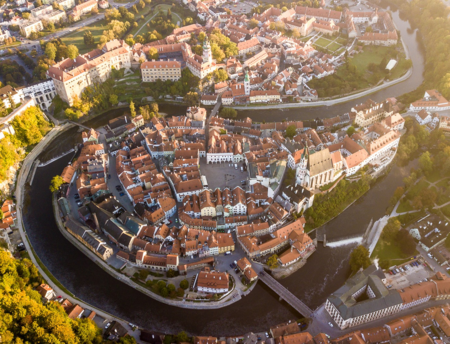
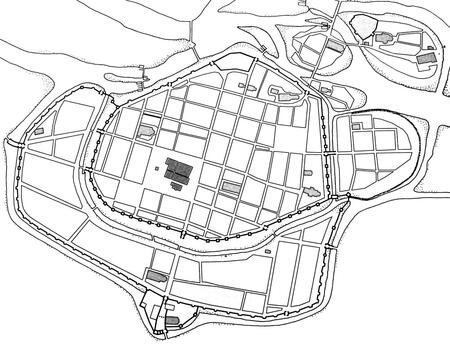
1. The city of Cheb Krumlov, Czechia 2. A plan of the city of Wrocław circa 1300
2.2. Architecture and the Organization of Urban Life
Medieval city architecture reflected its social and economic structure. Market squares combined commercial spaces, residential homes often neighbored workshops, and churches, town halls, and castles became important landmarks of the urban environment.
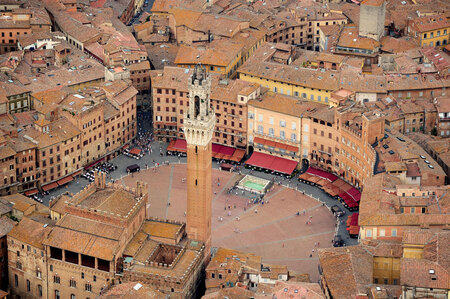
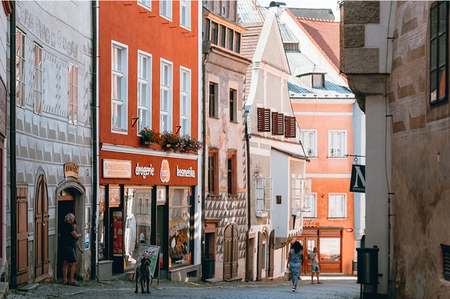
1. Bird’s-eye view of Piazza del Campo in the historic city of Siena. 2. Lateran Street. A narrow passage with dense buildings and varied facades.
Variations in building size, materials, and placement established an architectural hierarchy. Monumental structures stood out against the backdrop of everyday construction, designating religious, administrative, and civic centers.
2.3. Historical Reconstruction and Artistic Stylization
In cinema and video games, the historical urban environment becomes the foundation for creating artistic space. During reconstruction, creators draw inspiration from preserved structures, historical plans, and the architectural characteristics of the era.
However, the screen city does not necessarily replicate a real-life prototype literally. Altering the scale, street composition, building density, and architectural accents allows the space to become more expressive and adaptable to the narrative or gameplay.
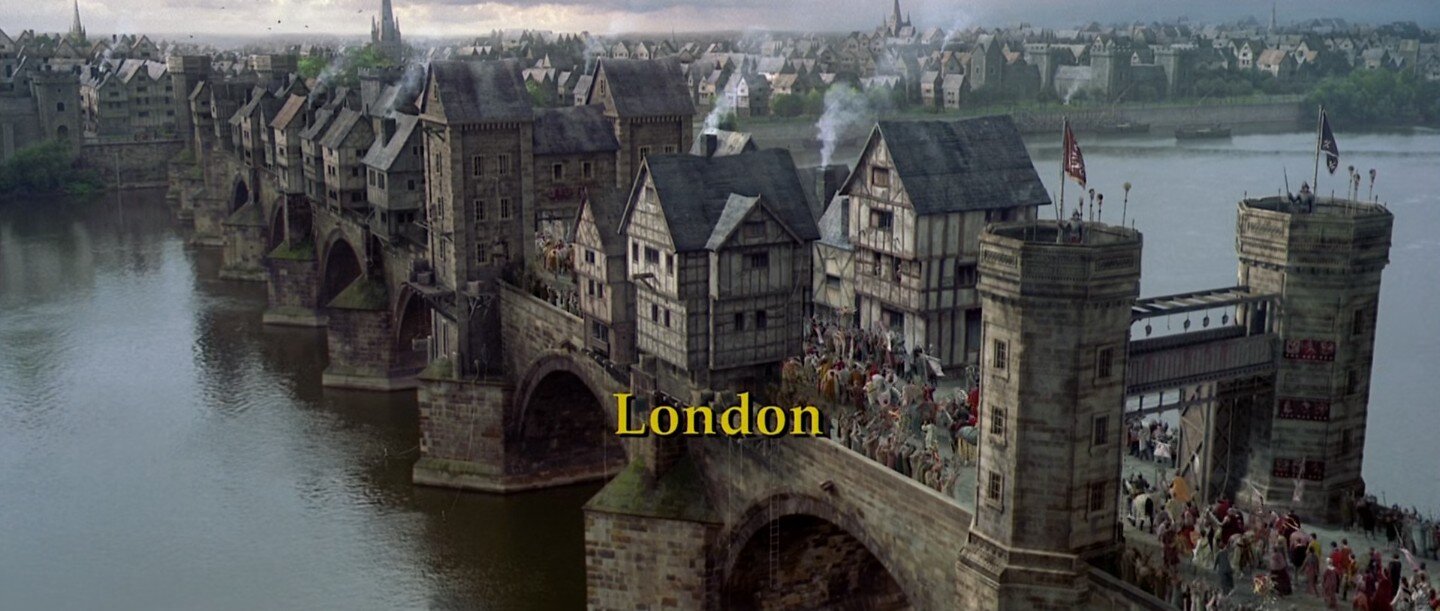
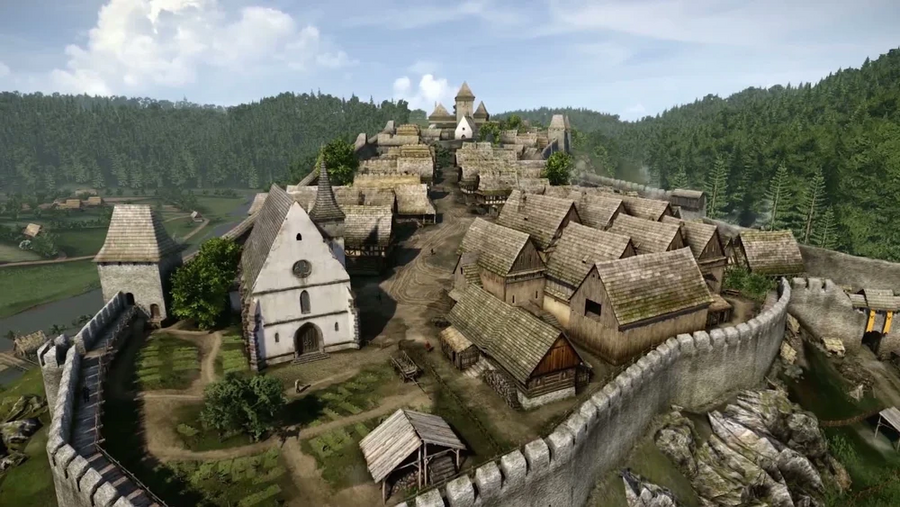
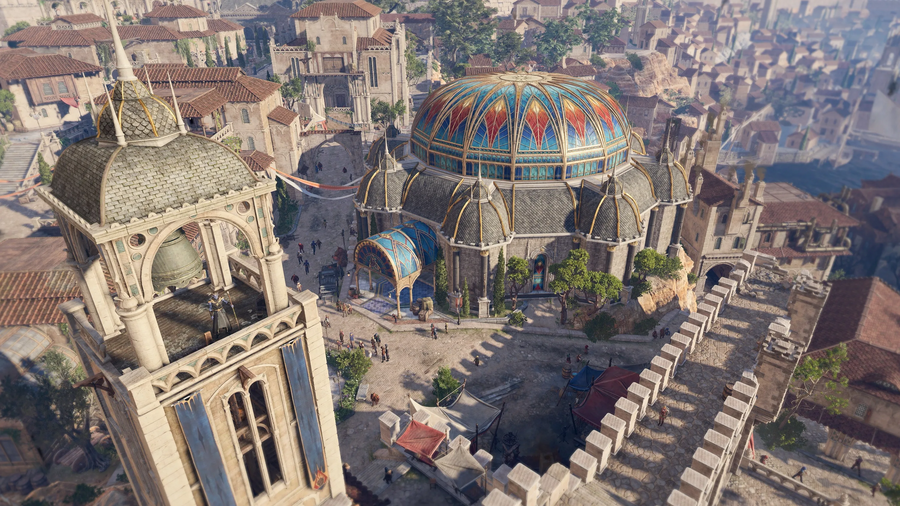
1. Reconstruction. 2. Stylization. 3. Cinematic Interpretation.
These approaches manifest differently in the selected works: ranging from the historically oriented reconstruction of Rattay in Kingdom Come: Deliverance to the fantasy urban environment of Baldur’s Gate 3 and the cinematic set design of The Knight’s Tale.
Kingdom Come: Deliverance — Historical Reconstruction of the Rattay
3.1. Historical Prototype and Gameplay Layout
The action of Kingdom Come: Deliverance takes place in Bohemia in 1403. Rattay, a fortified settlement modeled after the real town of Rattay nad Sasawou, becomes one of the central locations.
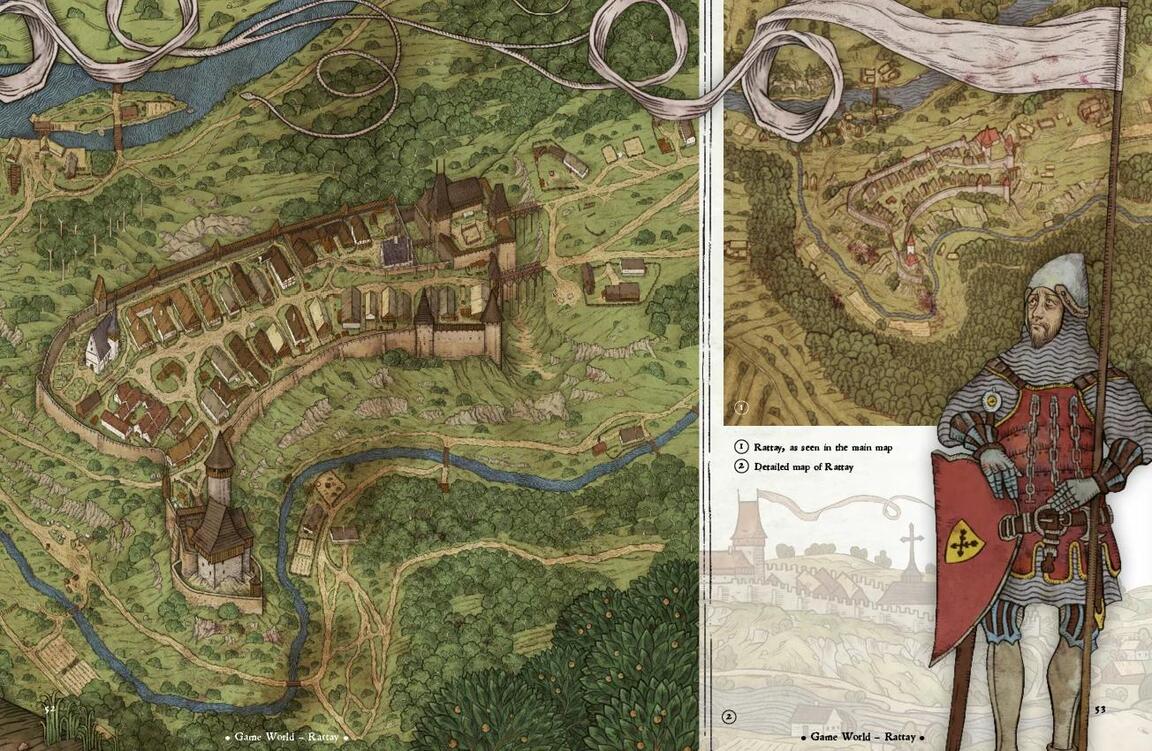
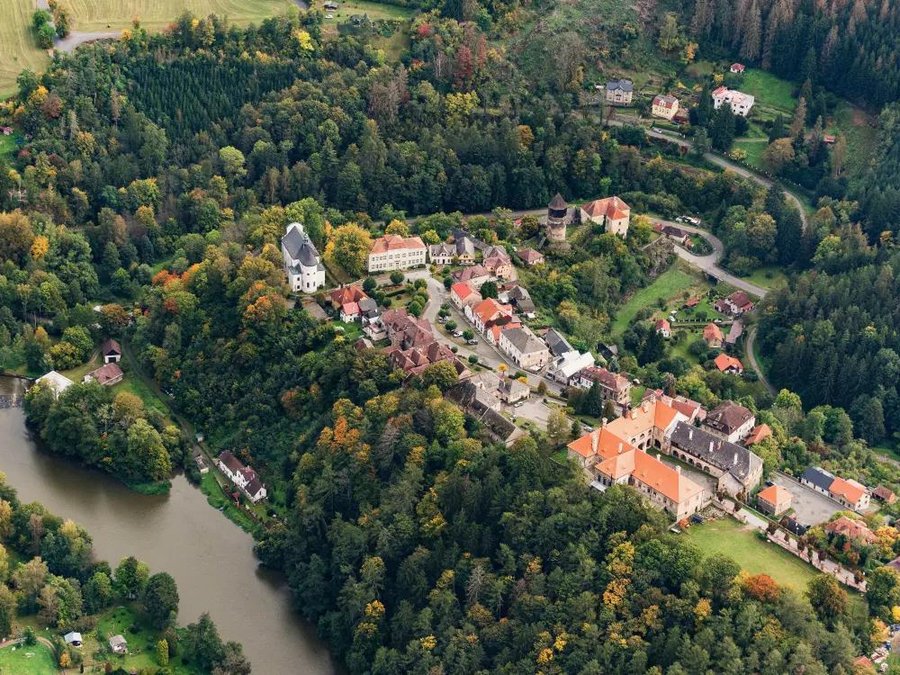
1. Real City. Rataje nad Sasavou, Czech Republic. Overall settlement structure. 2. Game Layout. Map of Rataje featuring two castles and a main street.
The developers preserved the recognizable features of its layout: the elongated plan, the main street, the terrain relief, and the two castle complexes. Because of this, the gameplay area reproduces not only individual historical structures but also the overall structure of a medieval settlement.
3.2. Architecture, Materials, and Urban Fabric