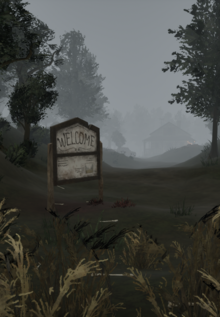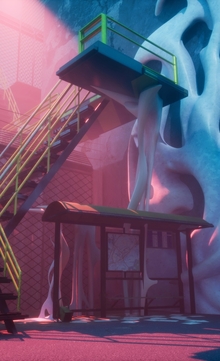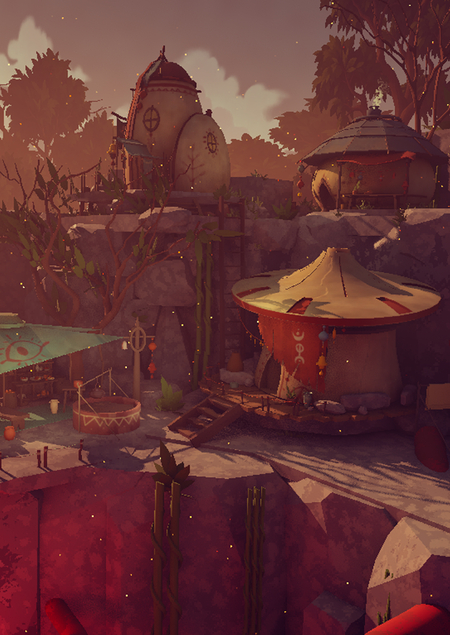
The network takes the pain. With it vanishes everything that made people close.
In the village where people gradually cease to feel pain, life becomes easier with each passing day. No one suffers from past mistakes anymore. No one is afraid of losing loved ones. Old wounds heal on their own.
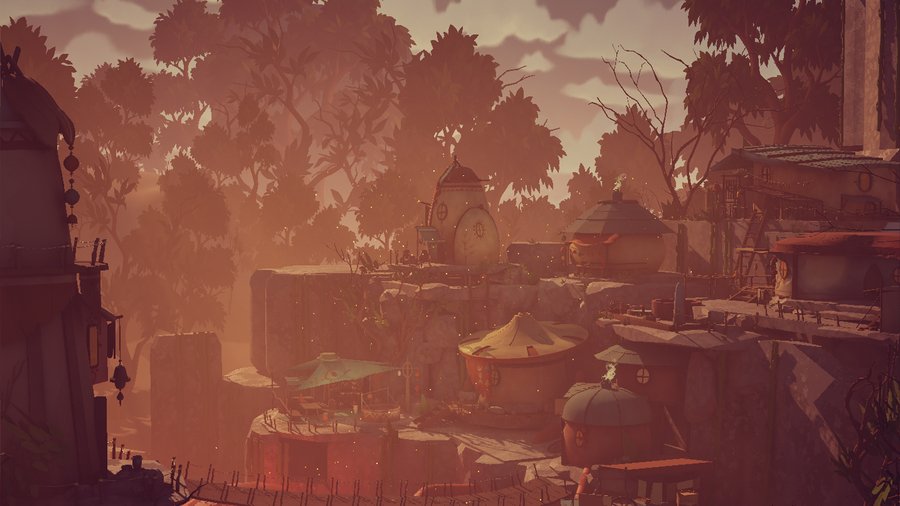
Yet, along with suffering, is lost the memory of what once mattered.
Can a person truly cherish something they no longer fear losing?
HISTORY
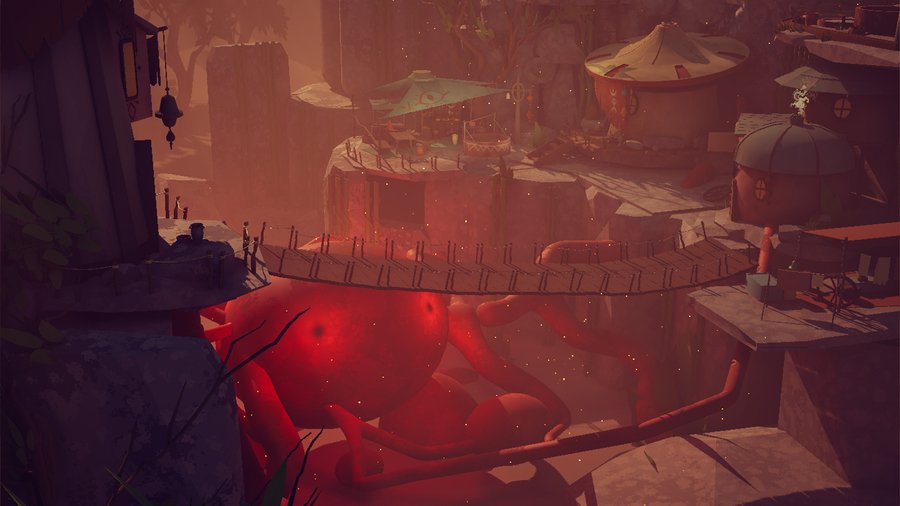
Many years ago, people first encountered the Network—a strange, living phenomenon that feeds on human experience. The Network does not destroy homes. It absorbs pain. People stop suffering from losses, mistakes, and old resentments. The past no longer torments them at night. Life becomes easier. But along with the pain, memories, attachments, and the sense of responsibility gradually disappear. People forget what once mattered to them. When the Network arrives in a village, most residents greet it as a blessing.
The Prefect is one of the few people able to resist her influence thanks to his own Scars—traces of experienced pain. To help a person resist the Net, the Prefect turns to his own Scars—the pain he himself could not forget.
Each day, the Head Student chooses whom to help as the Network penetrates deeper into village life. And the further he delves in, the more often he questions: if people truly become happier without pain, does he have the right to bring it back?
REQUIRED
Без чего игрок не поймёт происходящее
The Network gradually spreads among people. It does not cause harm directly. Instead, it frees people from painful experiences. The stronger the Network’s influence, the easier life becomes—and the harder it is to remember what once mattered.
Every inhabitant has their own Node—an experience they are trying to rid themselves of. Nodes are divided into several types: loss, guilt, betrayal, and fear of responsibility. To work with a Node, the Elder uses a Scar of the same type. The matching amplifies the intervention’s effect. It is through these Nodes that the Network infiltrates people’s lives.
People who remain under the Network’s influence for too long begin to dissolve. They continue to live ordinary lives, but gradually lose attachment to those around them. In the final stages of dissolution, the person remains near others but no longer feels like a part of their lives. Each inhabitant has a Network influence rating from 0 to 100.
All inhabitants are connected to each other. Each connection has a strength from 1 to 5 and can strengthen or weaken during the game. These relationships form the human network. The player does not control it directly, but every decision changes its structure. Therefore, saving one person can affect dozens of others.
What choice does the player make?
Every day, the Steward selects several residents whom they attempt to help. To do this, they use a limited supply of Scars. When intervening, the player must decide: whom to help, which Scar to use, and what effect to achieve. After a successful intervention, the player can choose only one outcome: reduce the Network’s influence on the resident or strengthen one of their connections.
Each resident resists intervention in its own way. Bringing back a painful memory helps weaken the Network’s influence, but it may trigger fear, anger, or refusal of aid. Therefore, the player never knows for certain whether the intervention will yield the desired result. It is impossible to save everyone.
EVENTS
Potential Incidents
Events arise during gameplay that reflect changes within the community’s life.
For instance, a resident might begin distancing themselves from family, an old conflict might lose its relevance, refusing aid could accelerate dissolution, and restoring one connection could strengthen several others. These events are generated by the residents' states, the structure of the human network, and the player’s decisions. For example, if a resident is in a state of deep dissolution and has several strong connections, an event such as «Memory Recall» might occur, temporarily strengthening their relationships with others.
If two connected residents are simultaneously approaching complete dissolution, an event like «Shared Oblivion» may arise, weakening several bonds within the community at once. Thus, events are shaped by a system of states rather than a pre-scripted narrative.
Probability Factors
The probability of events depends on the current state of the village. Several factors influence this: the extent of the Network’s influence on residents, the quantity and strength of existing connections, the past decisions of the Elder, the available Scars, and the Network’s current spread.
The more isolated an individual becomes from their surroundings, the easier it is for the Network to completely dominate them. Conversely, strong connections slow the Network’s spread and increase the chance of an individual retaining their autonomy.
Required Events
The Network’s influence grows daily, regardless of the player’s actions.
The Elder receives new information about the village’s state, makes decisions, and watches how those decisions change the lives of the people around them.
The Network cannot be stopped entirely.
The player can only decide which people, memories, and connections can be saved before its influence reaches its limit.
COLLISIONS
Чем рискует игрок и к чему стремится
The main conflict of the game is the impossibility of saving everyone. Every choice the Prefect makes helps one group of people while leaving others unprotected, meaning every decision involves a loss.
The main risk becomes the cascading failure of connections. The loss of one important resident can weaken several others, and their weakening can accelerate the Network’s spread throughout the village. As the Network expands, the residents drift further apart, old bonds weaken, and the consequences of individual losses begin to affect more and more people. The closer the village gets to dissolving, the more severe the consequences of mistakes become, and the harder it is to reverse already made decisions.
The Village Elder observes the life of the village and notices signs of the Network’s influence. He sees how the residents' behavior is changing, how relationships between people are weakening, and how some of them are gradually losing touch with those around them. However, this information is never complete. The Elder can see the consequences of what is happening, but is not always able to predict what those consequences will lead to.
The player views a schematic of the village where each resident is represented by a node with a Network influence level ranging from 0 to 100, and the connections between residents have a strength from 1 to 5. Based on these values, they understand which relationships are holding the village together and which are at risk.
Desired Outcome
The player strives to keep the human network robust enough for the village to continue existing as a community. To achieve this, they must maintain meaningful connections between people and prevent the Network from completely dissolving them.Undesired Outcome
The player attempts to avoid a situation where the residents permanently lose connection with one another. The village may outwardly persist, but the people cease to feel attachment, responsibility, or a need for each other. At this point, the human network disintegrates, and the Network’s influence becomes irreversible.Potential Consequences
The consequences of decisions rarely limit themselves to the fate of one individual. Restored connections can strengthen the relationships among multiple residents, helping them resist the Network. The loss of an important person can weaken an entire group and accelerate further dissolution. Therefore, the player is constantly choosing between providing short-term help to individuals and ensuring the long-term preservation of the community as a whole.MECHANICS
ACTIONS
Что может делать игрок
The player controls the Elder and lives the village’s life day by day. There are only four in-game days. Each day consists of four sequential phases.