This project is either a student coursework assignment from the School of Design or a research project from a School of Design faculty member. This project is not commercial and serves educational purposes.
Project Description
Dragons, mermaids, minotaurs, centaurs, and other fantastic creatures have long become familiar figures in modern animation. They can be found not only in cartoons and animated series but also in medieval art created long before the advent of cinema.The project focuses on finding visual parallels between fantastic creatures in medieval art and characters in modern animation. Its goal is to trace which visual archetypes endure across centuries and how their appearance and interpretation evolve.
Fantastic Creatures in Medieval Art
During the Middle Ages, fantastic creatures held a significant place in artistic culture. They were depicted in manuscripts, bestiaries, religious painting, architectural sculpture, and decorative arts. Their imagery was shaped by mythology, religion, and folk legends.Their expressiveness stemmed from unusual anatomy and the combination of human and animal features—wings, horns, tails, and extra limbs. Through these figures, artists conveyed their understanding of the world and the supernatural.
Fantastic Imagery in Contemporary Animation
Many similar archetypes continue to appear in cartoons and animated series. Contemporary artists and animators either retain the recognizable features of mythological characters or reimagine them.Proportions, anatomy, and details change: a monster can become a protagonist, a dangerous creature a loyal companion, and a mythical figure a comedic character. Yet, certain visual traits are repeated, allowing parallels to be drawn between works from different eras.
Relevance and Objective of the Study
The project allows for an examination of contemporary animation within the context of visual culture history, identifying which features of past fantastic imagery persist in the present.The goal of the project is to uncover visual parallels between the fantastic figures in medieval art and characters in modern animation, tracing their preservation and transformation.
Research Methodology
The core methodology involves comparative visual analysis of appearance and anatomy—including proportions, body structure, the combination of human and animal characteristics, and the forms of limbs, wings, horns, and tails. Analogies will be sought in both directions: from a medieval artwork to a contemporary character, and vice versa.The investigation is not limited to cases of direct borrowing. It also considers apparent coincidences and free artistic analogies that allow for a sense of similarity without a documented connection. The project demonstrates how fantastical visual archetypes persist across centuries, adopting new forms and meanings.
Section I. Hybrids and Anthropomorphic Figures
Сочетание человеческих и животных черт в облике фантастических существ.
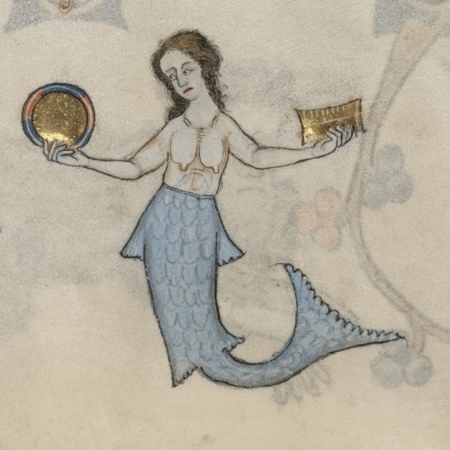
«Коробейник и русалка» (The Pedlar and the Mermaid), Luttrell Psalter, лист 70v, неизвестный английский мастер, Линкольншир, Англия, около 1325–1340 годов.
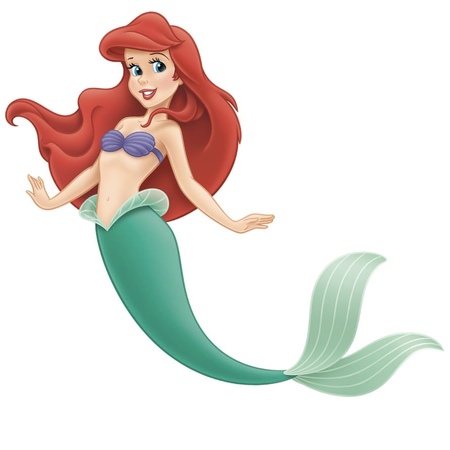
Ариэль (Ariel), «Русалочка» (The Little Mermaid), Рон Клементс и Джон Маскер, Walt Disney Feature Animation, 1989 год.
Ariel’s image continues the traditional portrayal of a mermaid, a depiction solidified long before the advent of modern animation. In both cases, the female torso connects with a fish tail, creating a recognizable figure that has become firmly established in mass culture.
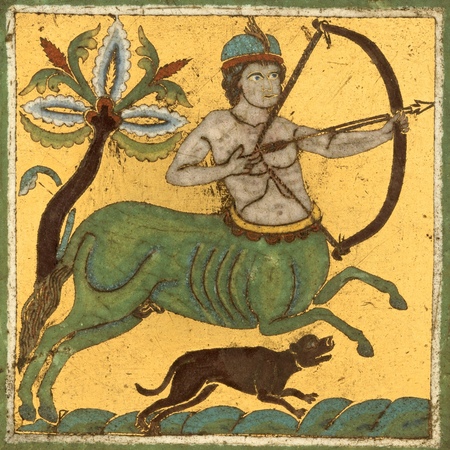
«Арка с фантастическими существами» (Arch with Beasts), фрагмент с кентавром, неизвестный мастер, Лангедок, Франция, около 1150–1175 годов.
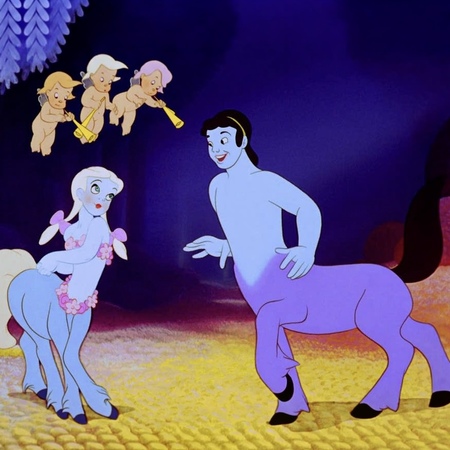
Кентавры и кентавриды, «Фантазия» (Fantasia), эпизод Pastoral Symphony, Джеймс Алгар, Walt Disney Productions, 1940 год.
In both works, the centaur is depicted with a human torso connected to the body of a horse. Medieval sculpture and animation retain the same classical anatomical model of the mythical creature.
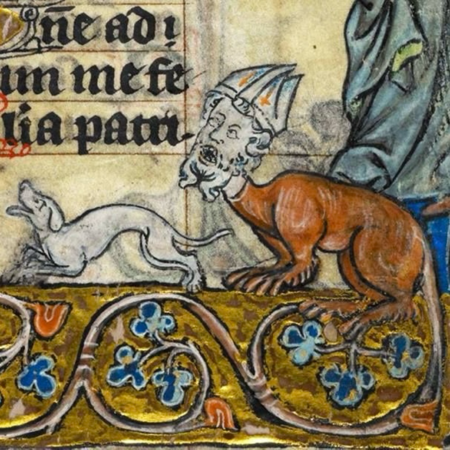
«Собака в облачении епископа» (Dog dressed as a Bishop), Macclesfield Psalter, неизвестный мастер, Восточная Англия, около 1330–1340 годов.
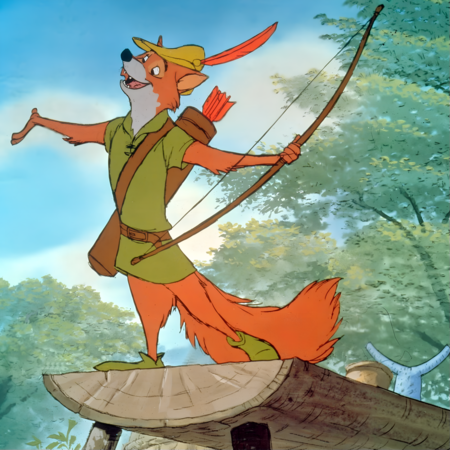
Робин Гуд (Robin Hood), «Робин Гуд» (Robin Hood), Вольфганг Райтерман, Walt Disney Productions, 1973 год.
These images feature animals endowed with human characteristics and social roles. The resemblance in the use of clothing and human attributes—which transforms the animals into participants in human society—is particularly noticeable.
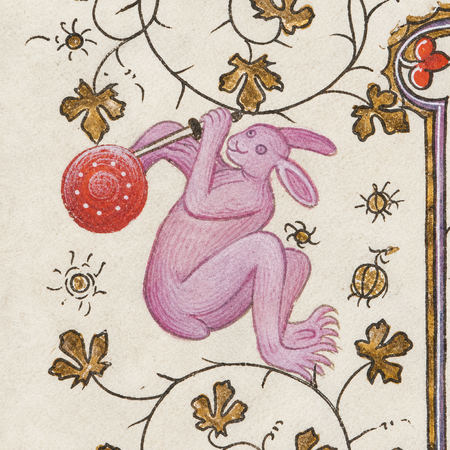
«Инициал D с женщиной, держащей сосуд с мазью; гибридное существо на полях», неизвестный немецкий мастер, Кёльн, Германия, конец XIII века.
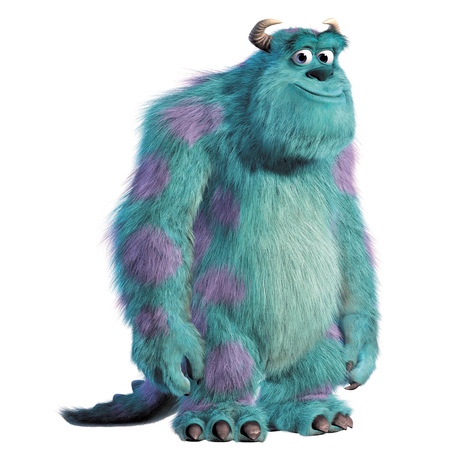
Салли (James P. Sullivan), «Корпорация монстров» (Monsters, Inc.), Пит Доктер, Pixar Animation Studios, 2001 год.
Examples showcase anthropomorphic creatures that possess a human-like body structure and move on two legs, while retaining distinct animal characteristics: fur, claws, a tail, and horns.
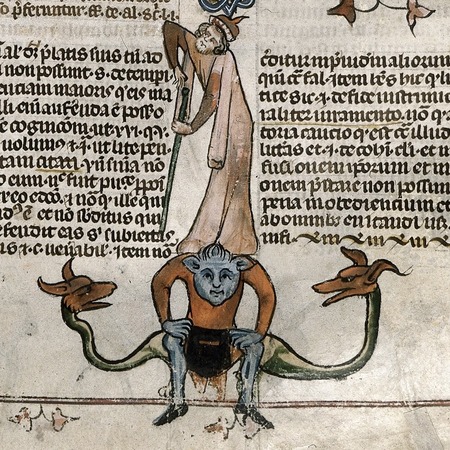
«Инициал D: глупец, обличаемый Богом» (Initial D: A Fool Rebuked by God), гротескные гибриды на полях рукописи, Франция, около 1300–1320, Cleveland Museum of Art.
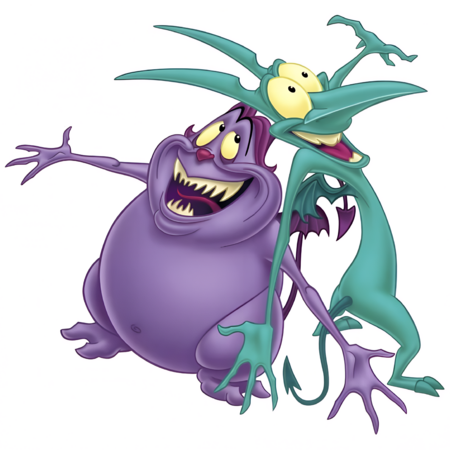
Боль и Паника (Pain and Panic), «Геркулес» (Hercules), Disney, 1997.
Both examples utilize the image of a small, demonic creature with grotesque features. The visual similarity lies in the exaggerated proportions, the unusual body shape, and the comic expressiveness of the characters.
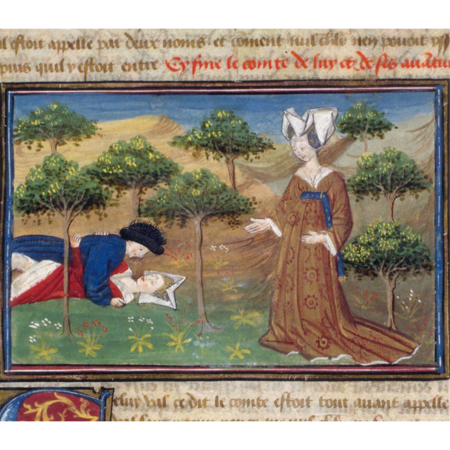
Прозерпина, королева фей, «Книга о малом Артуре» (Livre du Petit Artus Fils du Bon Duc Jehan de Bretiagne), Франция, 1440–1460, Spencer Collection, NYPL, MS 34.
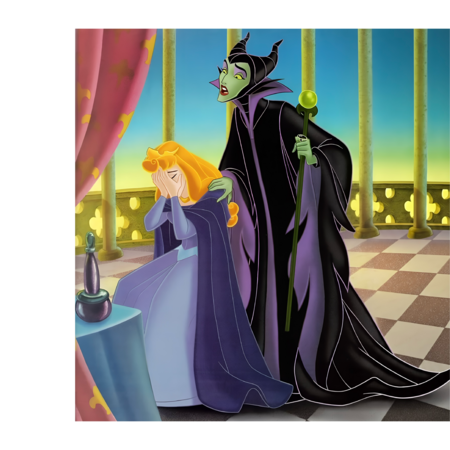
Малефисента (Maleficent), «Спящая красавица» (Sleeping Beauty), Disney, 1959.
It is particularly interesting to compare the medieval image of a fairy queen with the image of Maleficent, as both heroines belong to a world of powerful sorceresses who intervene in human destiny. Their visual similarities lie in their silhouettes, clothing, and unusual headdress shapes.
Section II. Fantastical Creatures
Образы мифических животных, чудовищ и фантастических зверей.
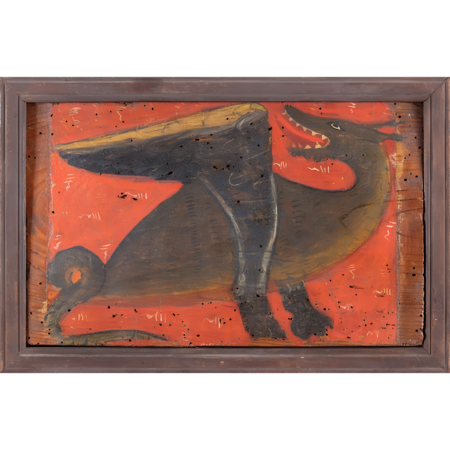
«Потолочная панель с изображением дракона» (Ceiling Seal with a Dragon), Каталония, Испания, XIV–XV века, неизвестный мастер
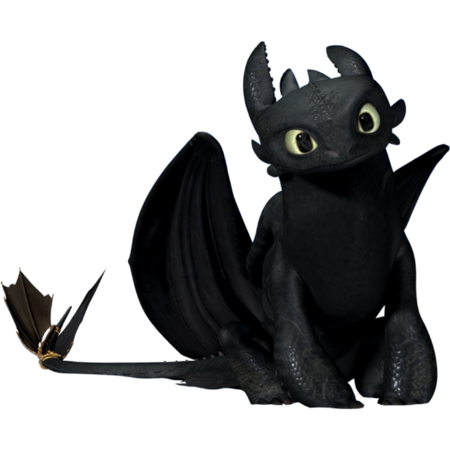
Беззубик (Toothless), «Как приручить дракона» (How to Train Your Dragon), DreamWorks Animation, 2010.
Despite the variety of dragon depictions, these works exhibit similar physical characteristics. The resemblance in the shape of the head, ears, and wings is particularly noticeable, lending the creatures an expressive and recognizable silhouette.
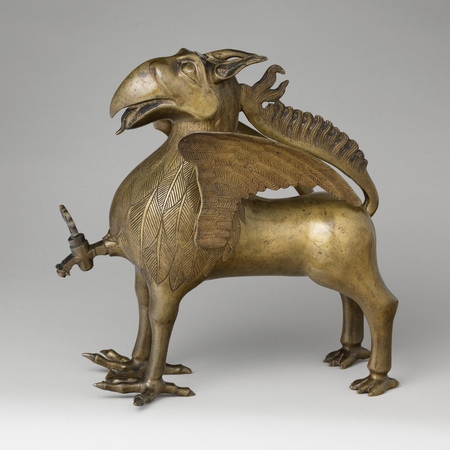
«Акваманила в форме грифона» (Aquamanile in the Form of a Griffin), неизвестная мастерская, Нюрнберг, Германия, около 1425–1450 годов.
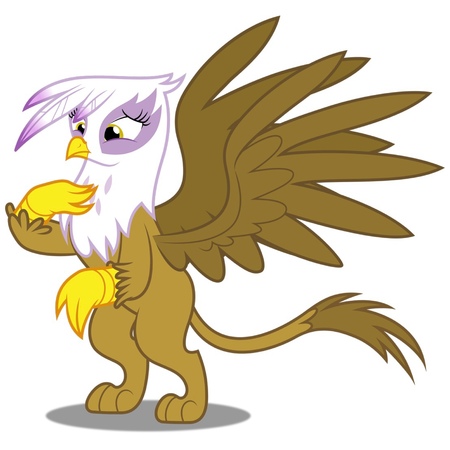
Гильда (Gilda), «Мой маленький пони: Дружба — это чудо» (My Little Pony: Friendship Is Magic), Лорен Фауст, Hasbro Studios, 2010 год.
The visual similarity between these images lies in the characteristic anatomy of the griffin, although in the cartoon it is depicted in a more anthropomorphic form.