Navigation
Concept I. The Color Blue in the Material and Spiritual Culture of Gothicism 1.1 Light in Architecture: From Romanesque Gloom to Gothic Radiance 1.2 Material as Philosophy: Blue as an Expression of Faith II. Cobalt Glass: Origin and Characteristics 2.1 History and Technology of Producing Blue Glass 2.2 Optical Properties and Interaction with Light 2.3 Saturation and Variety of Blue Tones III. The Color Blue in Stained Glass Color Composition 3.1 The Combination of Blue and Red in Gothic Stained Glass IV. Analysis of Monuments 4.1 Saint-Denis Basilica 4.2 Chartres Cathedral 4.3 Canterbury Cathedral 4.4 Sainte-Chapelle 4.5 Reims Cathedral V. Comparative Analysis and Conclusions 5.1 Variations in the Use of Blue in the Monuments Examined Conclusion Bibliography Image Sources
Concept
Research Hypothesis: How did the color blue—its shades, saturation, and combination with other hues—along with the chemical composition of the glass, its optical properties, the architectural features of the cathedrals, and religious symbolism influence the artistic perception and meaning of Gothic stained glass? The architects of the Gothic era perceived interiors differently. They utilized engineering discoveries to glass vast wall surfaces, transforming stained glass into the primary element that shaped the atmosphere within the sanctuary, where light constantly altered the spatial appearance. Sunlight was colored as it passed through the barrier. Artisans particularly valued the blue tone, which in the minds of the congregation signified the heavens or the purity of the Virgin Mary. The study details precisely how past artisans sourced cobalt and the technical methods they used to melt glass panes to achieve deep shades of blue. The metal was incorporated directly into the glass mass. The final appearance of the blank material was entirely determined by which specific chemical elements the craftsperson mixed and how intensely they heated the kiln, as these conditions altered the material’s structure and final tone. Physics dictated the rules for the craft. Artists employed cobalt to solve compositional challenges. The blue tone never existed in isolation, as it constantly interacted with red or green details, helping to establish a proper hierarchy among all the color patches in the stained glass. The masters meticulously calibrated the tonal depth. By distributing the patches across the glass, they illuminated the faces of saints and emphasized details, allowing different narratives to unify under a shared rhythm while the viewer still perceived the clear boundaries of each segment. The practical section of the research is based on a comparative analysis of five architectural monuments: the Basilica of Saint-Denis, the Cathedral of Chartres, the Cathedral of Canterbury, the Chapel of Saint-Chapelle, and the Cathedral of Reims. The masters worked with the color blue in the Basilica of Saint-Denis and the Cathedral of Chartres to more accurately reveal the artistic intention of each structure. In Saint-Denis, the azure embodies early Gothic ideas about heavenly light. While in Chartres the cool tone highlights the face of the Virgin Mary, the masters of Canterbury used paint to connect fragmented elements of the stained glass narrative. The architects of Saint-Chapelle filled the entire space of the chapel with this pigment. In Reims, however, blue shades organize the complex geometry and rays of the rose window.
The relevance of this research lies in the opportunity to examine medieval art through an interdisciplinary approach that unites architectural history, art history, material science, and optics. Comparing these monuments allows us to identify not only general principles in the use of blue but also individual artistic solutions. This is important because it helps study monuments from different eras using contemporary technical data. The artistic language of Gothic architecture would be impossible without the blue tone. It extended far beyond mere decoration, influencing the image’s composition, conveying profound doctrines of faith, and completely transforming cold stone with its inner luminosity. The glass itself creates a complex image of the sanctuary. The craftsmanship of the glaziers and the calculations of the architects transformed an ordinary material into an integral part of the complex image of the medieval cathedral.
I. Blue Color in the Material and Spiritual Culture of Gothicism
1.1 Light in Architecture: From Romanesque Shadows to Gothic Radiance
In Romanesque architecture (10th–12th centuries), natural lighting played a more restrained role. Massive stone walls, small window openings, and heavy vaulted structures limited the penetration of sunlight into the churches. As a result, the space acquired a subdued character—light filtered in as distinct streams, emphasizing the depth and monumentality of the interior. This type of lighting cultivated an atmosphere of focus and mystery.
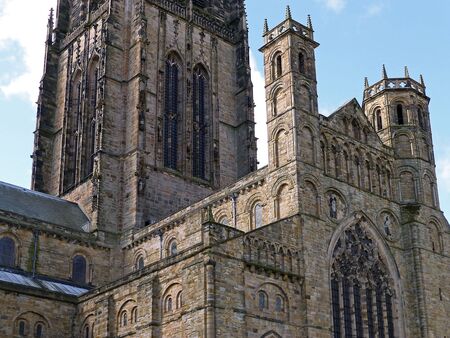
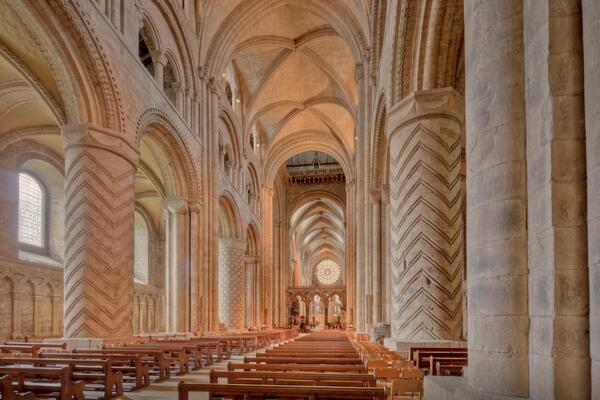
Daremsky Cathedral, England, 11th–12th centuries. The interior of the Romanesque church features massive supports and small window openings.
Darems Cathedral, England, 11th–12th centuries.
Gothic architecture transformed the masters' perception of the role of sunlight. In the 1140s, Abbot Suger rebuilt the Basilica of Saint-Denis, creating a spacious choir with exceptionally tall windows for stained glass. The glints on the walls gained meaning. When the glass radiates deep hues, it conveys the energy of God to the faithful—an energy that transforms the earthly world and guides people toward heaven.
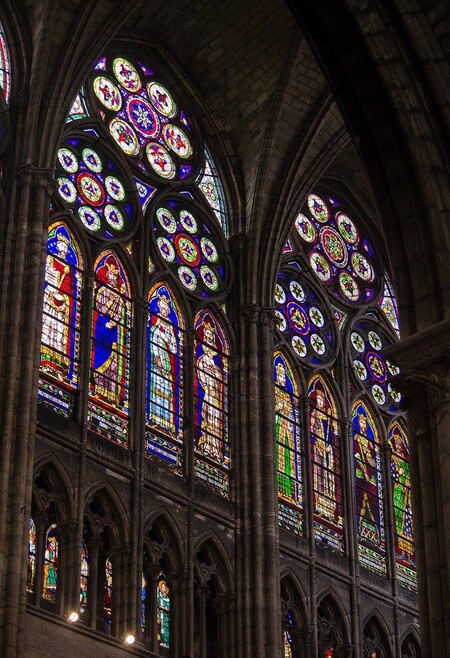
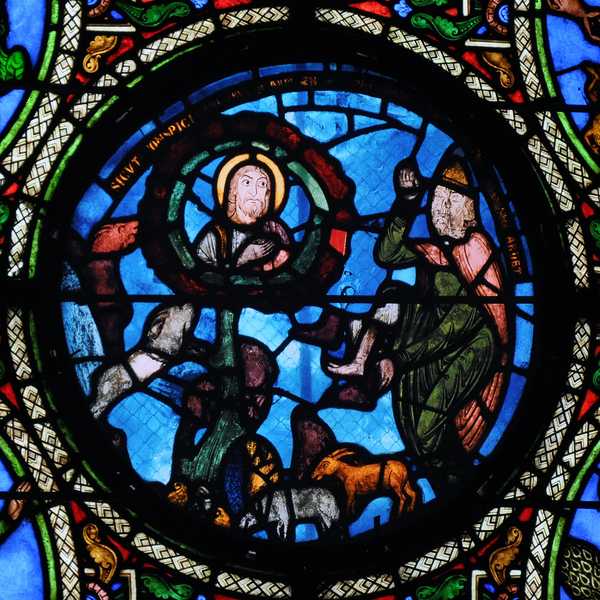
Saint-Denis Basilica, France, early 12th century. The first Gothic stained-glass windows.
Architectural techniques made light play in a new way. Builders employed pointed arches to transfer the weight of the stone through external supports, allowing them to abandon solid, massive walls. Window openings were noticeably expanded. Colored stained glass now dictates how people perceive and feel the interior space.
1.2 Material as Philosophy: Blue as an Expression of Belief
Beginning in the 12th–13th centuries, blue became one of the dominant colors in Gothic stained glass art. It was one of the brightest and most saturated glass colors and also possessed excellent light permeability, which made it one of the most popular in medieval European stained glass. Blue was also used according to the religious beliefs of the era.
Sainte-Chapelle (Paris, France). 13th-century stained glass windows.
Medieval masters frequently chose blue pigment when decorating church vaults or illustrating religious narratives, striving to convey the majesty of the boundless sky with maximum accuracy to the viewer. Mary was depicted in azure. Beginning around the twelfth century, artists started dressing the Theotokos in blue garments, which cemented her role in Christianity and visually confirmed her connection to the heavenly realm.
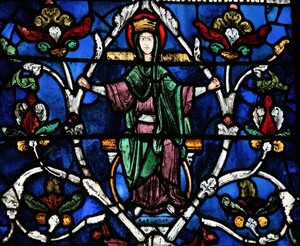
Chartres Cathedral (France). Stained Glass Window «The Beautiful Madonna» (Belle Verrière), 12th–13th centuries. Depiction of the Virgin Mary in a blue robe
The blue stained glass panes were imbued with profound meaning. As sunlight passed through the colored glass, the rays were transformed into an artistic instrument that defined the religious character and the overall atmosphere of the church hall. Color was no longer merely decorative on the walls. The deep azure helped visibly express faith: it unified streams of light with sacred narratives, compelling parishioners to feel a sharper sense of spiritual purity.
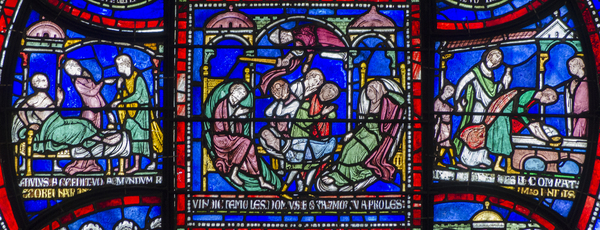
Canterbury Cathedral (England). Medieval stained glass from the 12th–13th centuries. Use of blue glass in religious narratives.
II. Cobalt Glass: Origin and Characteristics
2.1 History and Technology of Blue Glass Production
Cobalt has been used since antiquity. Archaeologists have found goblets colored with this metal in Egypt and Babylon—the artisans knew of such secrets long before the Gothic period. However, the technology was most fully developed in Europe, although sourcing high-quality components and bringing them to France was extremely difficult, making the creation of blue glass incredibly expensive.
Stained glass art underwent a significant transformation when artisans learned to create rich, viscous glass. Cobalt set the tone. The compound was mixed directly into the furnace, and even a small fraction of this metal allowed the pieces to achieve a deep, cool saturation still visible in the windows of ancient cathedrals today. Masters would add only 0.05–0.15% of the chemical compound, resulting in a dense color.
Cobalt Glass.
During the Middle Ages, artisans blew long hollow cylinders. These tubes were carefully cut and flattened to create smooth sheets. The color of the material depended on chemical additives. The melt was mixed with copper oxides to achieve red, or iron was used for yellow, and cobalt introduced a vibrant, rich blue hue to the masters' palette.The glass quickly took on a light blue color. When the artisans combined quartz with potassium carbonate and added a small amount of cobalt, they obtained a very dense and uniformly colored azure mass. The finished piece was carefully ground. After this, the colored sheets were transformed into stained-glass details.
2.2 Optical Properties and Light Interaction
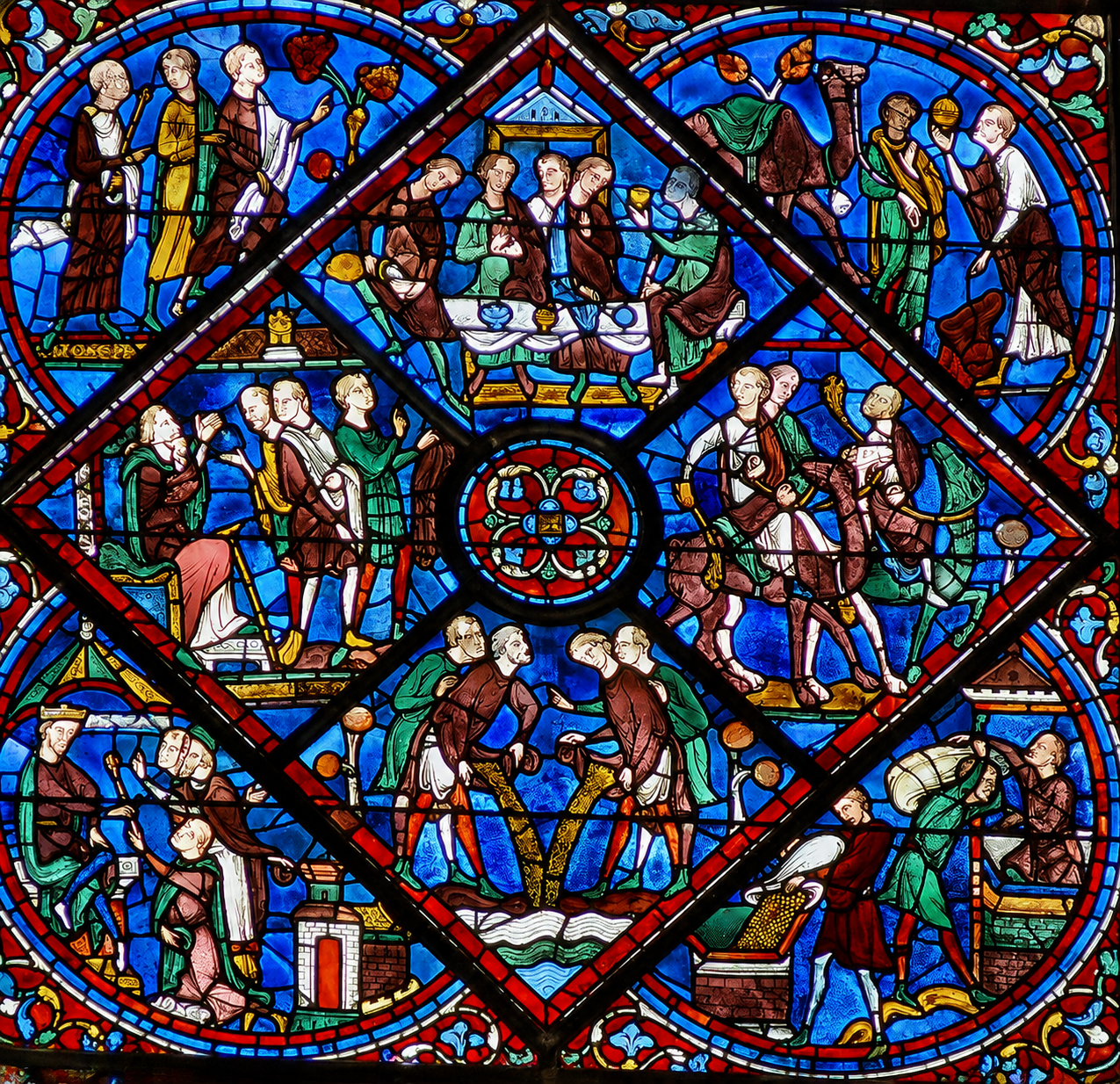
The hue of medieval glass is determined by its composition. The material transmits and refracts light rays in a particular way. Unlike pigment applied to the surface, the color is born within the mass itself.Cobalt ions are used to create the blue material. These active particles selectively capture light waves of varying lengths. One part of the spectrum simply dies out inside, while other rays pass freely through the transparent glass barrier. This physical interaction is what generates the color. The shade appears darker if the master intentionally increases the thickness of the glass or adds significantly more coloring powder to the melt.
Fragment of the stained glass window from Chapter 140 of the Chartres Cathedral. 13th century. Variations in the intensity of the blue color within a single composition.