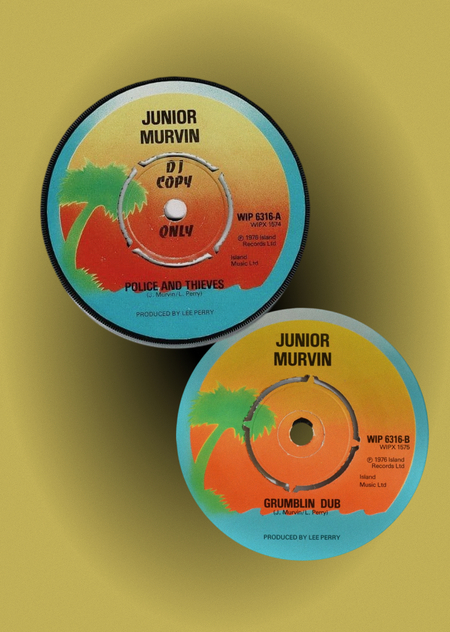
On one side of Junior Murvin’s 1976 single is «Police And Thieves,» and on the other is the dub version, «Grumblin’ Dub.» What changes in the song when the vocals vanish and reappear, when the bass moves to the forefront, and when the echo trails off after the end of a phrase? To answer this, I will compare four 1970s reggae songs with their dub versions. I will demonstrate how the sound of the same segments shifts and correlate my observations with other studies. Thus, I will attempt to determine the precise moment when the mixing fundamentally alters the song’s form.
Hypothesis
I suspect that in the dubbed version, the transition point between one segment of the recording and the next can be heard differently. In a song, you can notice this through the vocals—for example, when a verse ends or a chorus returns. In the dub, this boundary might be marked by the return of the bass, the disappearance of the guitar, or the echo of the final vocal phrase. I will compare the same sections in the songs and their dub versions to determine where the mix changes the recording’s structure versus where it only changes its sonic character.
Navigation
- How Dub Versions Evolved from Reggae Songs.
- Four Pairs of Recordings. Changes in Vocal Delivery, Rhythm, and Instrumental Sound. 2.1. King Tabby and Augustus Pablo. Voice in Pieces 2.2. Lee «Scratch» Perry. Sound After the Hit 2.3. Joe Gibbs and Earl Thompson. How the Bass Comes Forward 2.4. Burning Spear. How Instruments Occupy Space
- Conclusion. How Mixing Transforms a Song.
1. How Reggae Songs Got Dub Versions
On Junior Murvin’s 1976 British single, «Police And Thieves» is on Side A, and «Grumblin’ Dub» is on Side B. I think it is significant that both tracks appeared on the same record. The listener could remember the song by the vocals, flip the single, and then recognize it by the rhythm or the bassline. In this comparison, it is especially noticeable how much is happening in the song beyond the vocal performance.
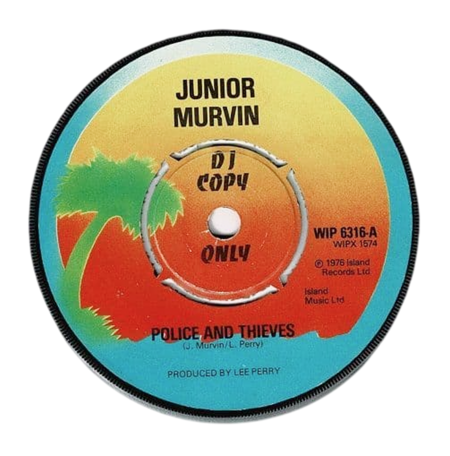
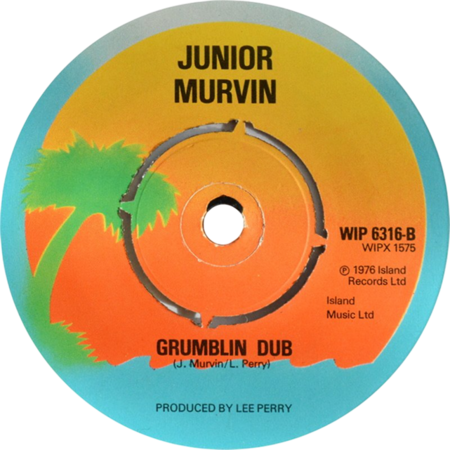
A-side and B-side of Junior Murvin’s single «Police And Thieves / Grumblin’ Dub»
As audio recording researcher Sean Williams explains, separating the vocal and instrumental tracks allowed the same parts to be used across multiple versions. For the producer, this was a way to release the B-side of a single without recording an entirely new song [1]. For the sound engineer, this opened up another possibility. If the bass and drums support the vocal phrase in the song, they can fill the space previously occupied by the voice in the dub. The parts remain recognizable, but their role changes. The bass, which previously sounded like accompaniment, can now capture the listener’s attention on its own.
«Police & Thieves (Single Version)» and «Grumblin’ Dub.» When comparing them, listen closely to the bass and drums. How does their role change when the vocals recede into the background?
Williams connects King Tabby’s studio work with his Home Town Hi-Fi sound system. The fresh mix could be transferred to a test pressing—a dubplate—and immediately played in the dance clubs that same day. Based on the audience reaction, Tabby could gauge how the mix worked [1]. This helps us understand why the absence of the vocal track alone says relatively little about the version. For dance tracks, what happens in the vacated space is crucial: does the bass continue to drive the music, is the pulse still audible, and how noticeable is the return of the section after the pause?
In Michael Vila’s description of the book, the reworking of pre-recorded material is called the basis of the dub [2]. For my research, this raises the question of when mixing begins to change the course of the music itself. Suppose the echo lengthens a vocal phrase, but the next section enters exactly where it did in the song. Then, primarily, the sound changes. However, if the phrase cuts off, its echoes fill the pause, and the return of the drums is perceived as the beginning of a new section—in this case, the mix also influences how we hear the form. I will test this difference using four pairs of recordings.
2. Four sets of recordings. What changes in vocal tone, rhythm, and instrument timbre.
In each pair, I pay attention to what connects the dub to the song and what begins to sound different. With King Tubby, it is particularly interesting to listen to what remains of the vocals; with Lee Perry, what happens to the sound after the impact; and with Errol Thompson, how the bass moves to the foreground. In the Burning Spear pair, the stereo manipulation is also important. These differences will help to understand the role of mixing in each recording.
2.1. King Tabby and Agustes Pablo. Voice in Parts
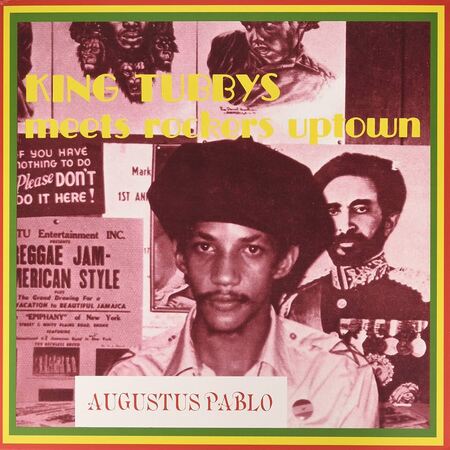
«King Tubby Meets Rockers Uptown» is based on Jacob Miller’s «Baby I Love You So, ” which was produced by Ogastes Pablo [3]. Michael Vil compares Miller’s first verse to what remains of Tubby’s mix. In the song, the vocalist manages to express a complete thought. From the verse dub, two short fragments remain, making it difficult to reconstruct the phrase’s content [4]. David Katz noted in FACT that sound is also discernible between these fragments: drum fills, bass, and isolated appearances of melody and keyboards [5].
In this example, I am interested in the moment of the break. When Miller sings, the beginning of the phrase makes you anticipate its continuation. Tabby leaves the beginning but withholds the continuation, and attention shifts to the drums or the melody. If you know the song, you can mentally complete the missing lyrics. If you hear the dub first, the voice is easily perceived as a short vocal interjection among the instruments. Here, the mix changes what the listener expects from the next second of the recording.
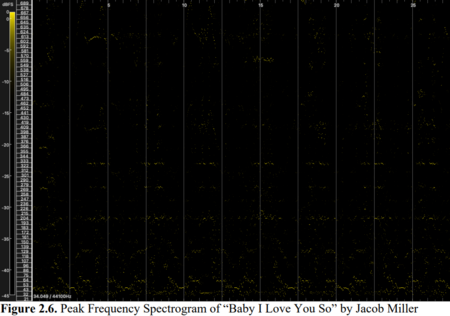
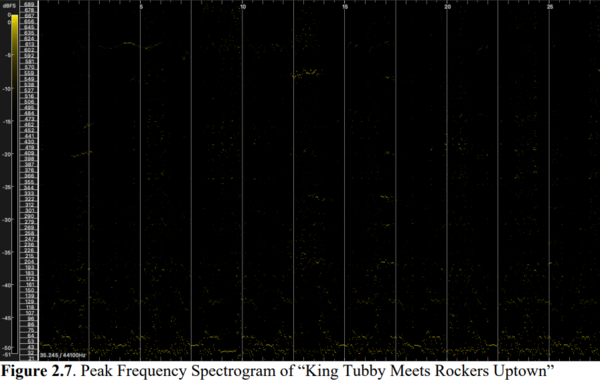
Spectrograms of two recordings.
Comparing the spectrograms of the two recordings, Nicholas Burton notes that in the Tabbie track, frequencies in the 200–350 Hz range are less pronounced than in Jacob Miller’s song. He attributes this to the rhythmic accompaniment, including the guitar, receding into the background [6, p. 54]. This helps explain why it is easier to follow the bass line in the Tabbie track: neighboring instruments do not obscure it as much.
2.2. Lee «Scratch» Perry. Sound After Impact
«Police And Thieves» by Junior Murvin and «Grumblin’ Dub» are on opposite sides of the same single, as I mentioned above. The vocal version is easily identifiable by Murvin’s high-pitched voice. In the dub, the focus can shift to the drums to listen to what is audible immediately after the impact. Music journalist Nick Coleman, in his piece on Perry, highlights «Grumblin’ Dub» among the versions of this track and suggests paying attention to how Perry’s kick drum sounds [7]. This offers a specific point of comparison: the same rhythm can first be heard as support for the vocals and then as an independent element of the mix.
It is important to distinguish between two auditory effects here. When a sound returns in distinct repetitions, you can distinguish an echo. When a gradually fading trail remains afterward, you hear reverberation. The description of the British reissue of «Grumblin’ Dub» notes both effects [8]. What interests me most here is that the transient impact and its decay are perceived differently. The attack helps one hear the pulse, while the decay fills the gap leading to the next sound. Therefore, the sense of rhythm can change even when musicians continue playing at the same tempo.
Lee «Scratch» Perry working in the Black Ark studio, Kingston, 1970s.
The effects also alter the perception of distance. When I listen to «Grumblin’ Dub, ” a short, crisp beat feels close, while its echoes seem to recede into the depths. Yet, both the beat and the echoes are heard against the backdrop of the same rhythm. I am curious that the sensation of movement here arises from the mixing itself: first, the sound sharply draws attention, and then it gradually drifts away.
2.3. Joe Gibbs and Earl Thomas. How the base comes forward
When the bass comes to the forefront, it’s easier for me to hear how it connects with the drums. The bass line repeats, and the drums help delineate where it restarts. I can track this in the vocal version too, but I return to the lyrics more quickly there. In the dub, I have the time to listen to several repetitions in a row and notice how much of the recording relies on the interplay between the two parts.