Navigation Menu
I. Concept. II. Counter-reliefs III. Tower IV. Object Design V. Letatlin VI. Conclusion. VII. Image Sources. VIII. Bibliography.
Concept
At the beginning of the 20th century, art in its conventional sense—the depiction of reality on canvas—began to take a backseat. Creators sought experiments and ways to break free from traditional painting, aiming instead to bring art closer to real life. One of the most telling examples of this upheaval was Vladimir Tatlin. He moved away from the traditional understanding of a work of art and gradually created his own form of art, utilizing real materials—such as entire engineering structures made of paper, glass, plaster, wood, and many other substances—that at first glance seemed completely unrelated to art.
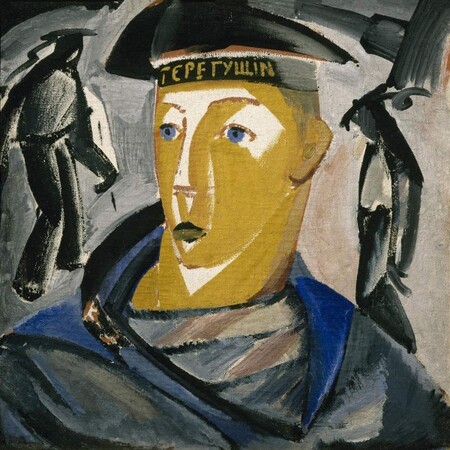
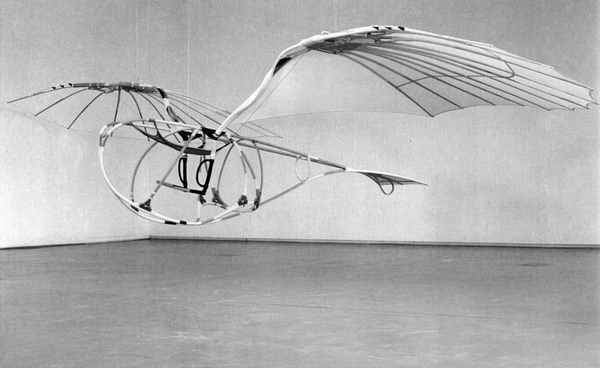
The objective of this study is to analyze the artistic journey of Vladimir Tatlin and trace how his approach to art transformed—from painting to engineering and architectural objects—in order to understand the boundary between art and practical application.
Although Tatlin’s experiments demonstrated that the boundary between art and everyday life could practically be eliminated, he did not reject art in principle. On the contrary, Vladimir Tatlin denied the hierarchical division of art into «low» and «high» forms. He believed that all spheres of life were open to the application of the artist’s creative labor.
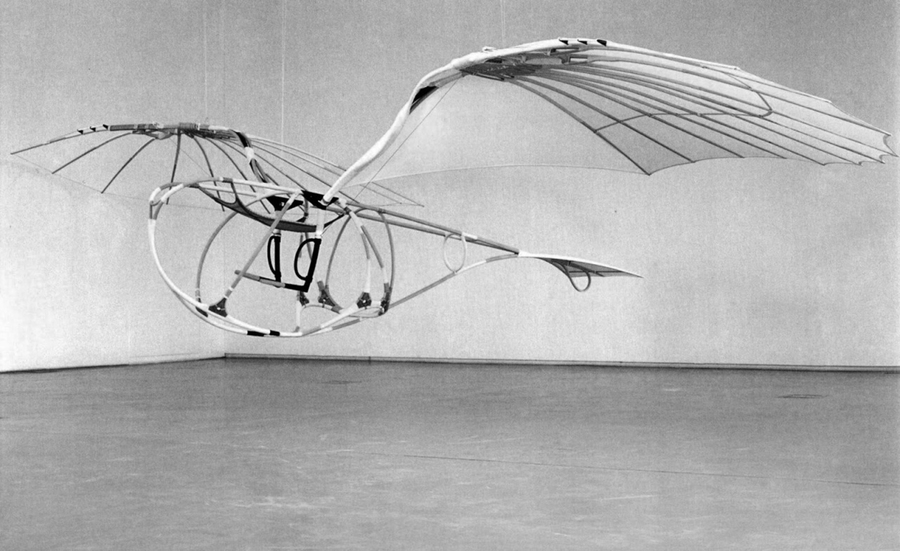
Hypothesis—Vladimir Tatlin completely revised the approach to art and its goals: he shifted from creating visual imagery to designing real objects capable of existing in our everyday lives while performing practical functions.
The topic selection is based on an interest in unconventional approaches to art and the development of the Russian avant-garde. Of particular personal interest to me is how Tatlin managed to push the boundaries of the conventional in art and discover a new way to interact reality with artistic vision. Through the example of his works, one can trace how the artist’s drive to move beyond established boundaries led to the emergence of new art forms, many of which were ahead of their time.
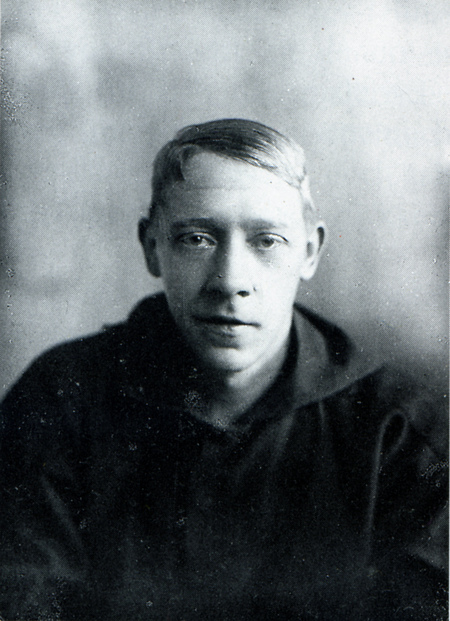
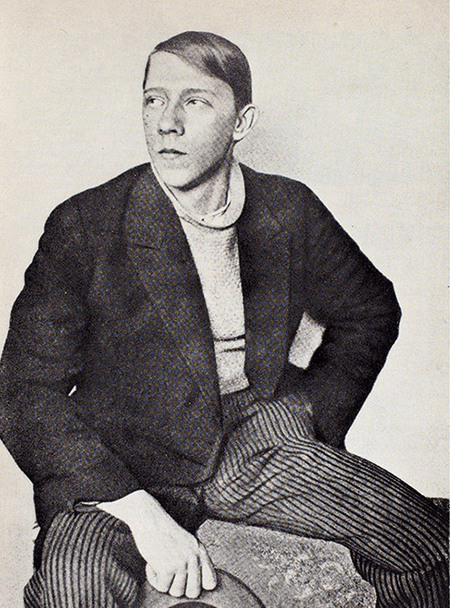
This study involves a sequential analysis of Vladimir Tatlin’s artistic trajectory through his key projects, which reflect the stages of his development as an artist—from counter-reliefs to architectural constructions. This approach is taken to provide a clear illustration and a better understanding of how Tatlin’s conception of art evolved and how it gradually moved beyond the boundaries of the traditional artwork.
Low Reliefs
The most interesting aspect of bas-reliefs is how they emerged. To understand the context, we must look at the artistic experiments taking place in Europe at the beginning of the 20th century. Cubism became one of the most significant artistic movements during that period; it encouraged artists to abandon traditional representations of reality by breaking it down into geometric forms, resulting in a complete work that unified multiple viewpoints within a single composition.
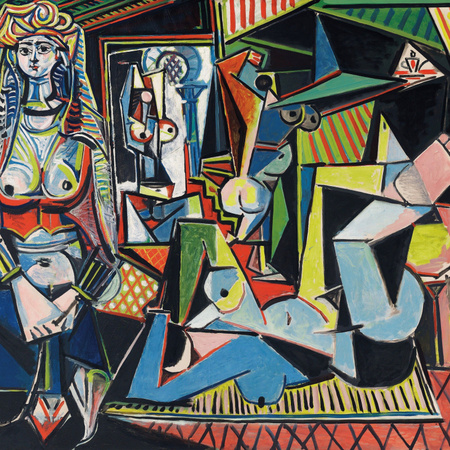
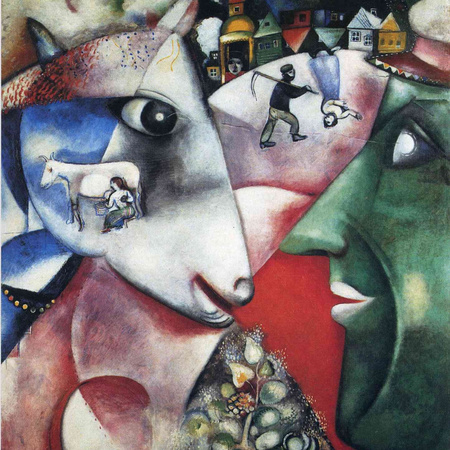
In 1914, Vladimir Tatlin managed to visit Pablo Picasso in Paris. At that time, Picasso’s collages and constructions—such as three-dimensional depictions of musical instruments made from paper, cardboard, and other materials—were a significant innovation in Cubism. The circumstances of the meeting between Tatlin and Picasso remain mysterious, accumulating countless legends, but one thing is certain: for Tatlin, this encounter was momentous. After this, upon returning to Russia, he himself began to experiment with relief compositions made of metal, wood, paper, and glass. Unlike painting, volume in his works now existed not through chiaroscuro, but physically, which imbued the pieces with texture and brought them closer to real life—something the artist would later strive for.
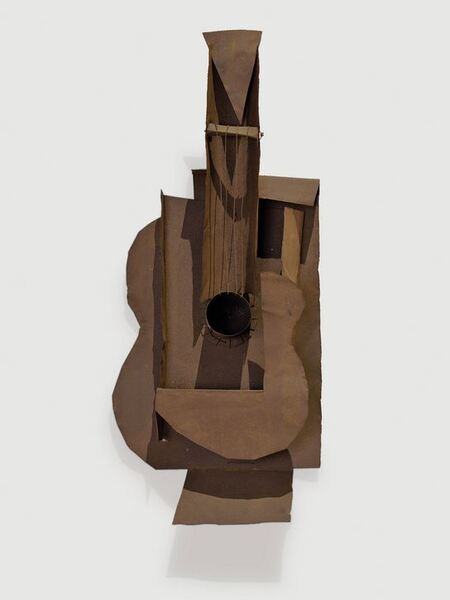
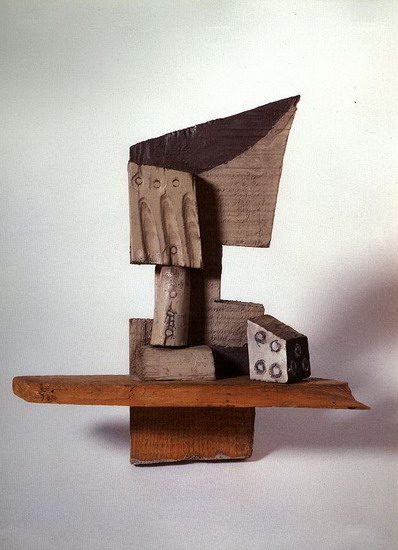
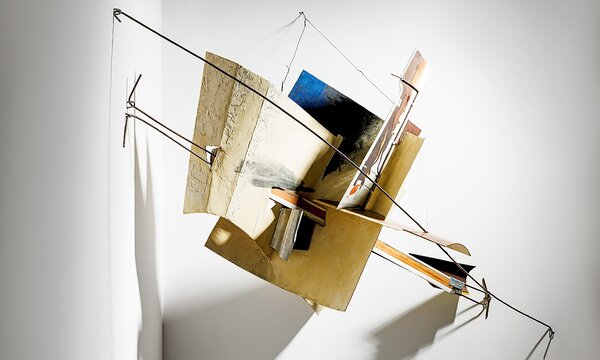
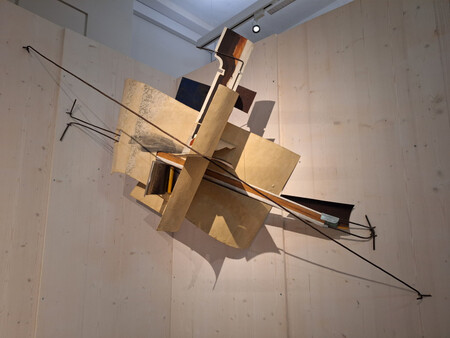
Following his relief compositions, Tatlin moves on to counter-reliefs, which, unlike conventional paintings, exist not only in a single plane. Their elements possessed actual volume, interacted with each other, and engaged with the surrounding environment. A particularly interesting example is the «Angular Counter-Relief, ” which was presented at the „0,10“ exhibition in 1915.
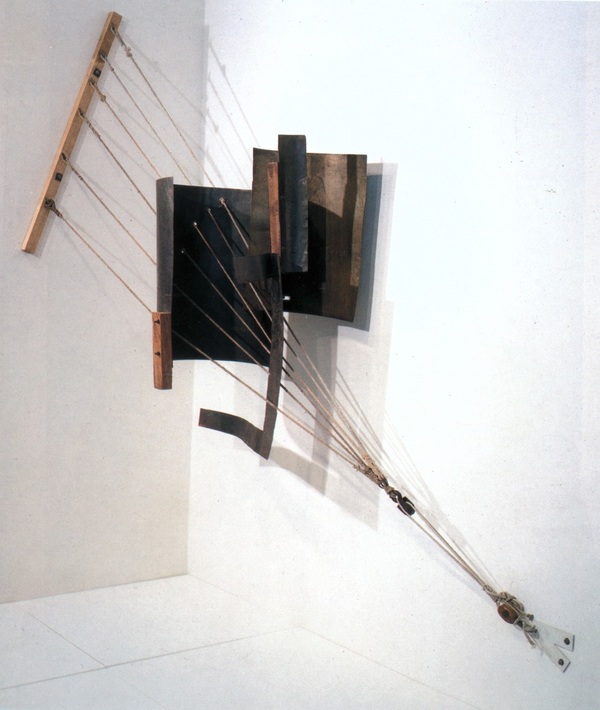
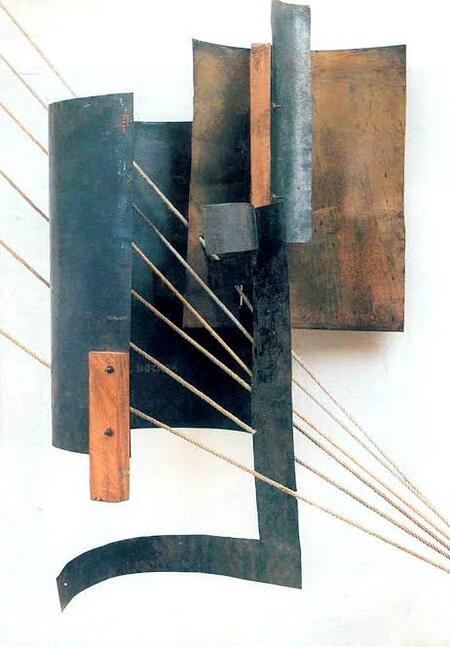
The work is constructed from metal parts, wood, and tensioned cables, situated in the corner between two walls to capture as many different planes around as possible. It exists in space, not in a single projection, which is fascinating from the perspective of how the viewer perceives not just a flat image from the front, but a volumetric structure with its own character and texture.
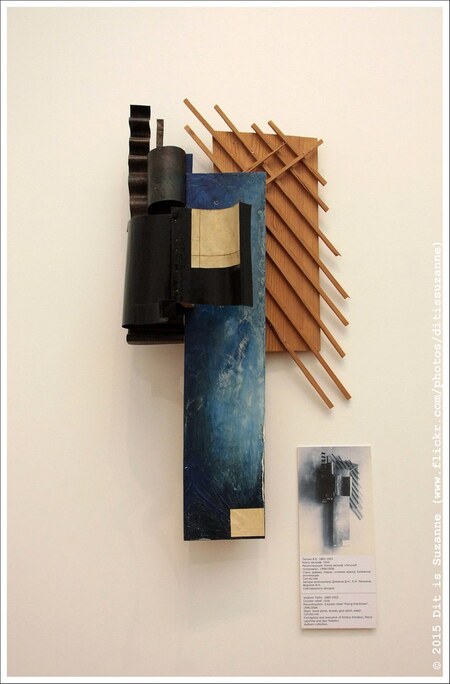
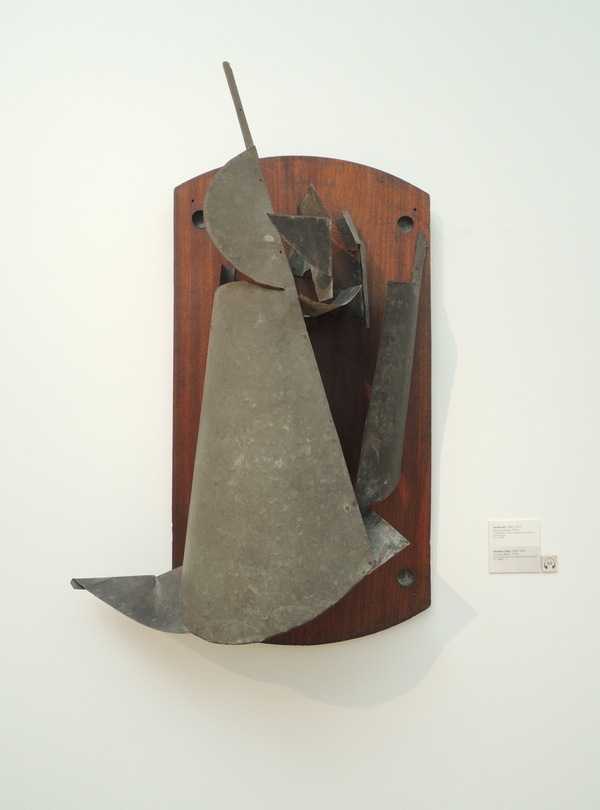
Tatlin does not conceal the origins of the objects; their materials play a role in the work. For example, the metallic elements and the flexible tensioned cables are meant to create a sense of resistance and contrast between the materials.
Tower
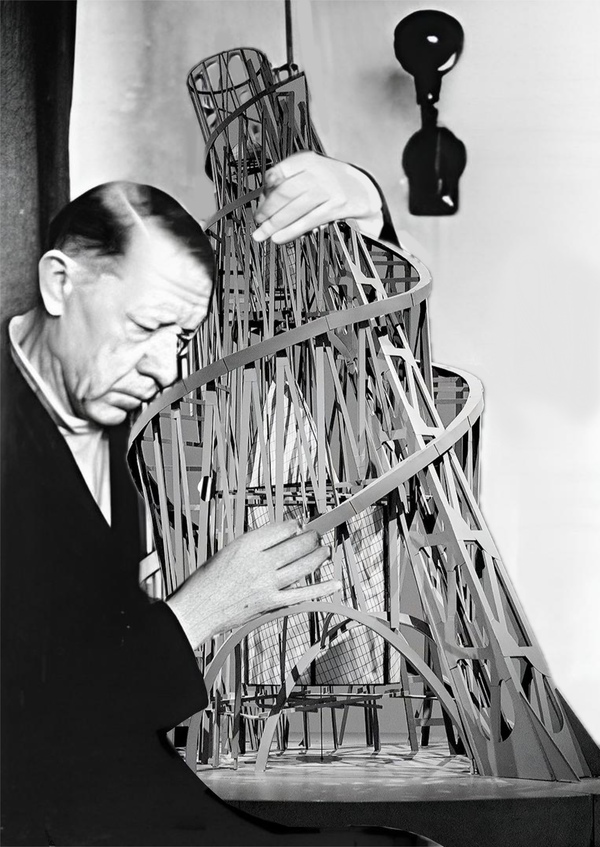
Following successful experiments with bas-reliefs, Tatlin moves on to more monumental structures. In 1919, he was commissioned to design a monument for the Third International, which was intended to symbolize a new era and the revolutionary restructuring of society.
The monument was intended to be a slanted spiral tower with geometric figures inside; this form would give the structure dynamism, distinguishing the tower from traditional static monuments. Tatlin conceived of it not only as a memorial to the revolution in the conventional sense but also as an active space that would serve public and administrative functions.
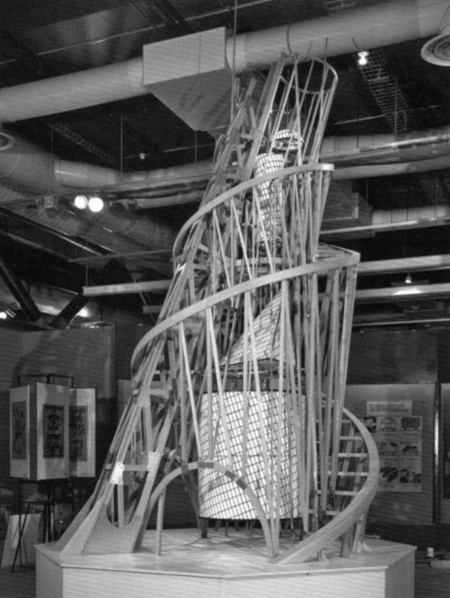
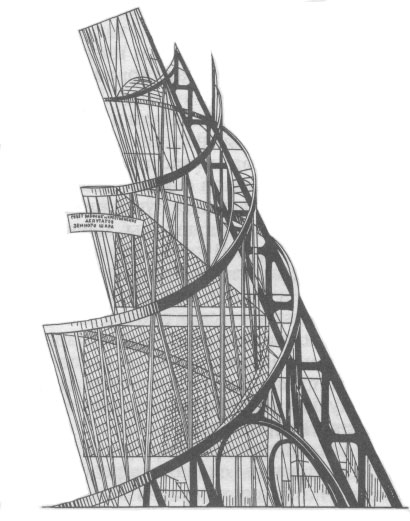
According to the design, the tower should have featured three primary functional levels: a lower level shaped like a cube, a middle level shaped like a pyramid, and an upper level shaped like a cylinder. Each level was intended for a specific purpose (legislative assemblies, executive bodies, and an information center) and rotated on its axis at a different speed (annually, monthly, and daily), thereby connecting the structure to the concept of time.