Concept
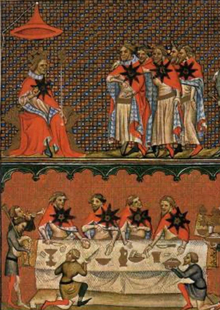
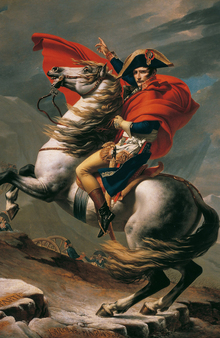
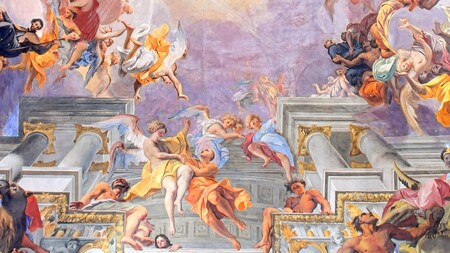
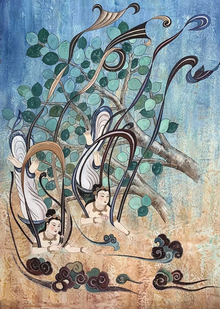
Color holds a distinct place in the art of Ancient Rus'. In icon painting, it becomes a medium for understanding biblical narratives and divine meaning. Every color helps convey a specific «message» to the viewer. My research is dedicated to the significance of color theory in ancient Russian icons and its hierarchy within compositions. The formation of Christian culture is interesting from the perspective of how religious painting was gradually created—a means by which artists conveyed sanctity, power, sacrifice, and other religious meanings. What did the artists of these artworks associate with one particular shade? I hypothesize that every color possessed its own set of functions and symbols, which allowed ancient Russian icons to acquire a recognizable identity and high, divine meaning. The study examines works of ancient Russian icon painting from the 11th to 14th centuries: icons, mosaics, and frescoes. Each chapter is dedicated to a specific color.
Golden
The first association with gold is wealth. However, in the modern mind, this immediately suggests material possessions—whereas in religious art, it does not signify monetary superiority; instead, it carries a deeper, spiritual meaning.
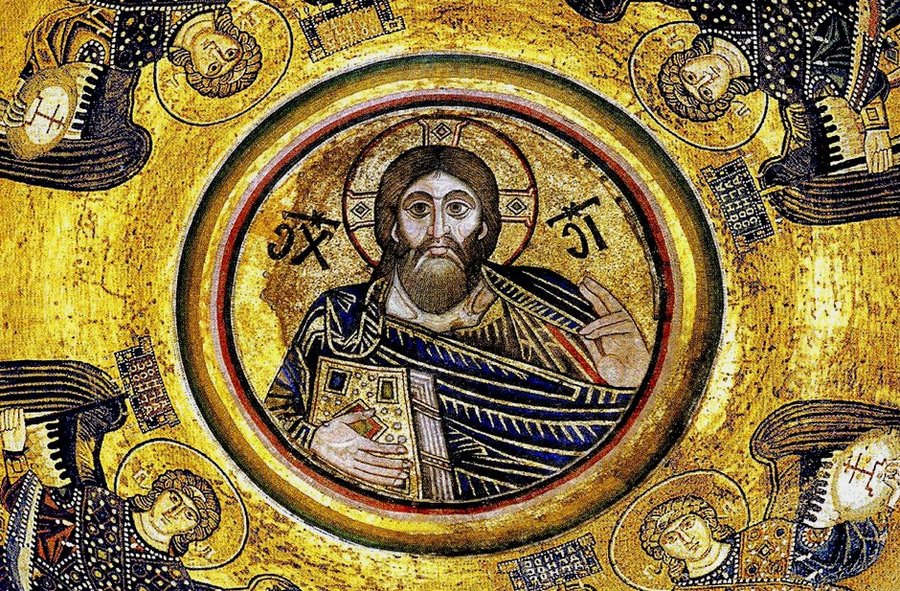
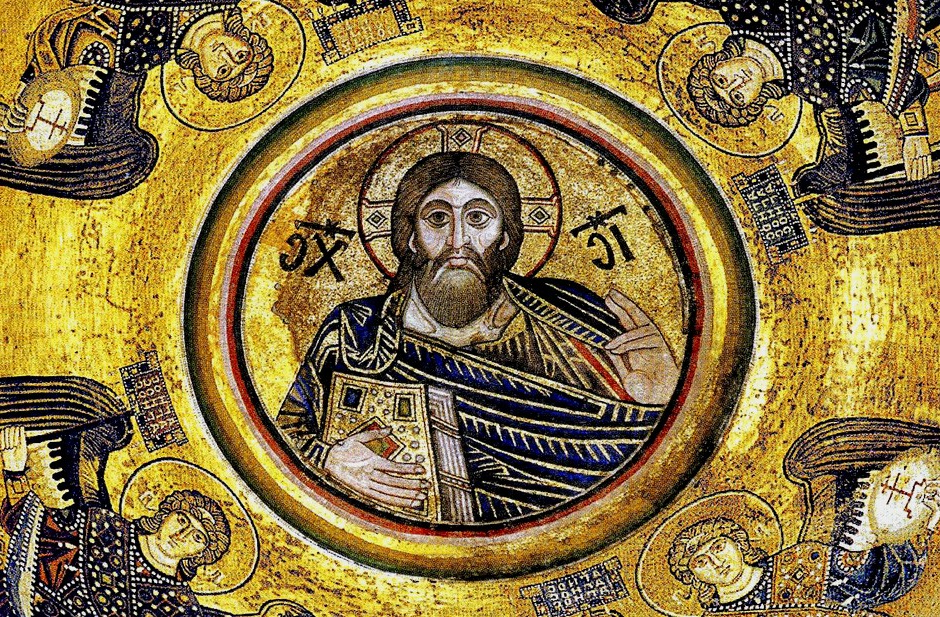
Christ Pantocrator, 1043–1046
In the mosaic «Christ Pantocrator, ” gold is used as the background for the vaulted space. The composition itself is positioned above the viewer, and the figure in the center becomes an observer of the human world. The gold vaulted background conveys the impression of infinite space contained within the walls of the building. In this case, this color plays the role of eternal divine radiance, and its combination with the composition’s placement creates an unforgettable impression.
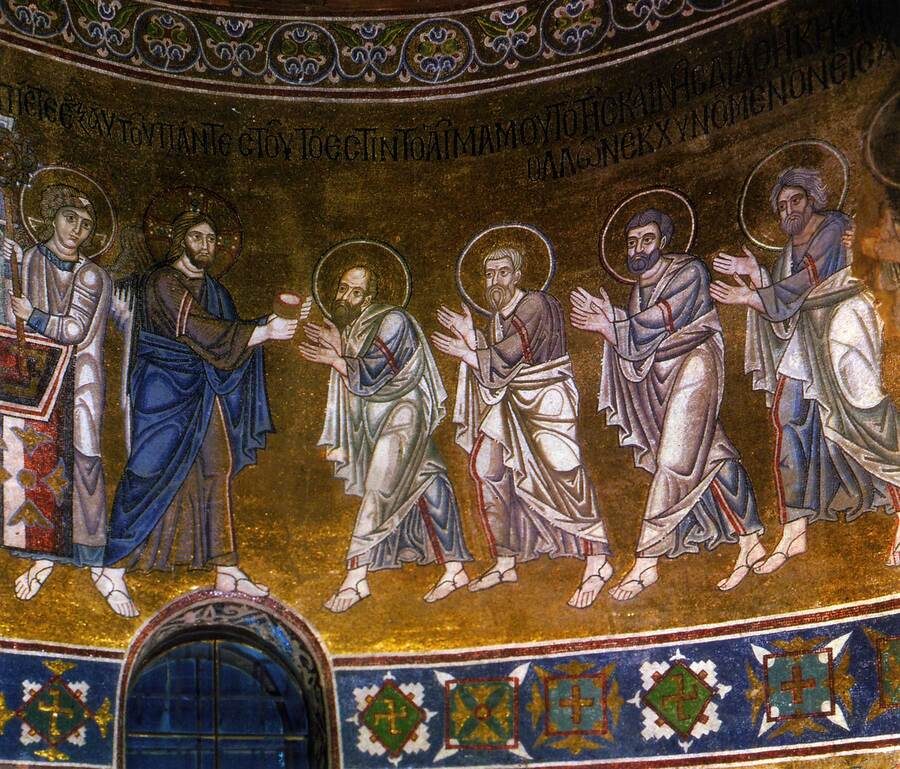
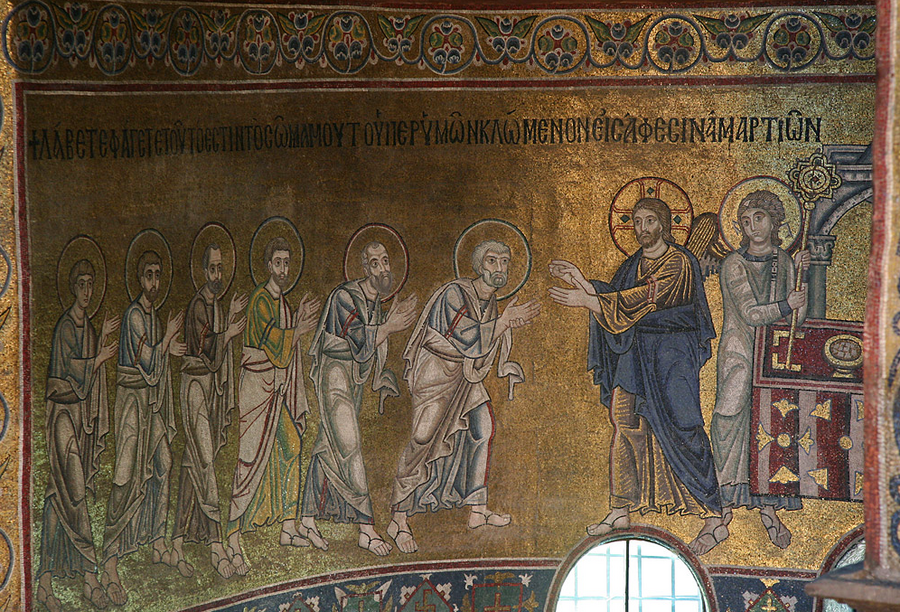
Eucharist, mid-11th century
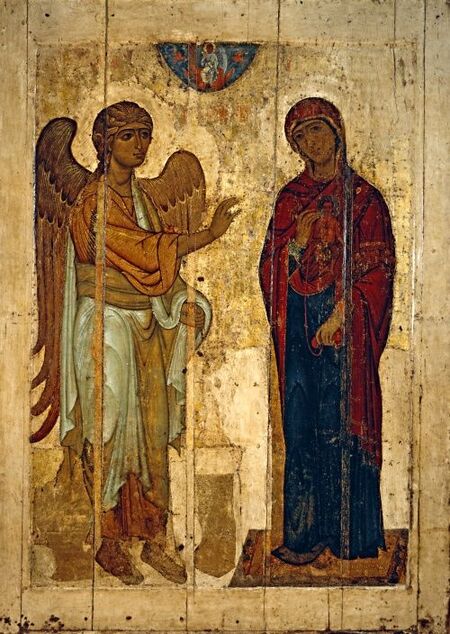
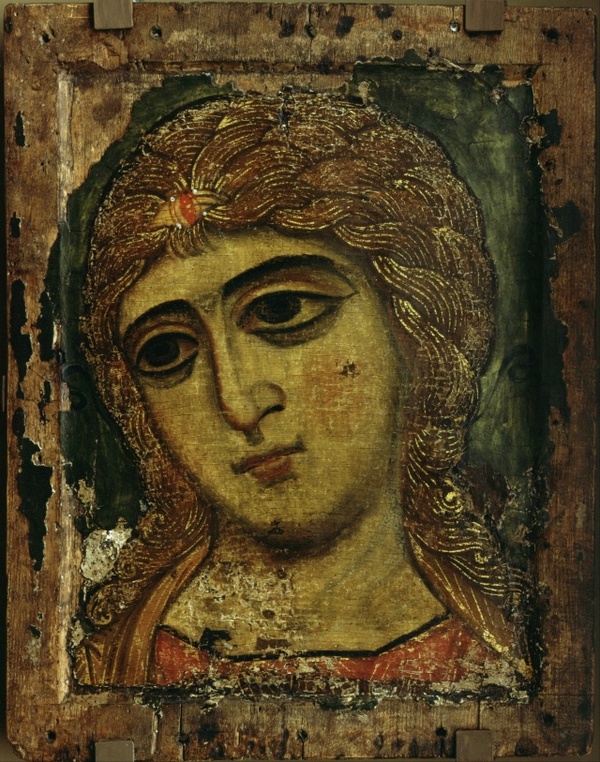
The Annunciation at Ustyuzh, 1120s–1130s / Archangel Gabriel, 1130s–1190s
White
White color reflects spiritual purity, innocence, and divine light. It creates a contrast that transforms the composition, making it more engaging for the viewer.
Frescoes of the Dmitrovsky Cathedral, 12th Century
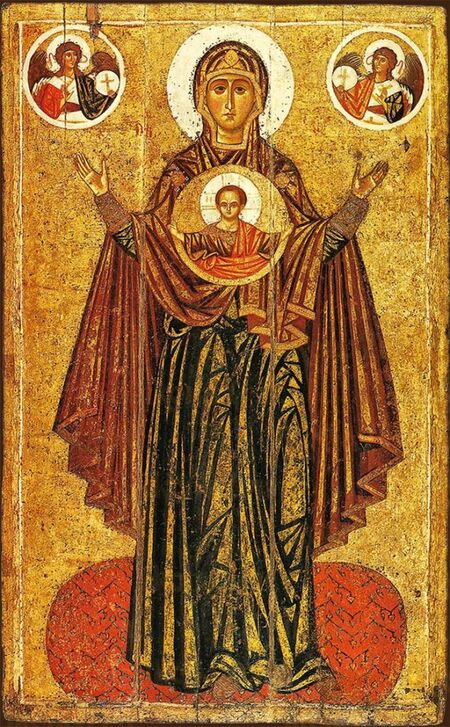
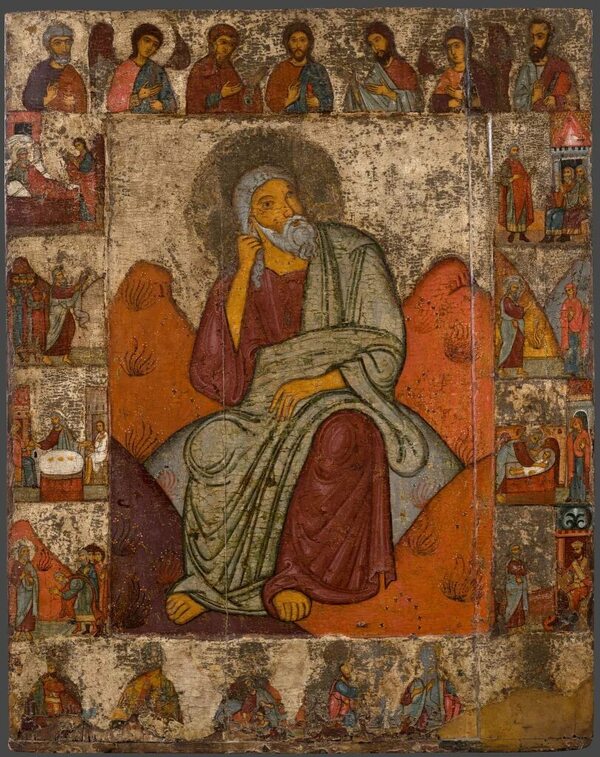
The Great Panagia of the Mother of God, early 13th century / Elijah the Prophet in the Desert, late 13th — early 14th century
Blue
Blue, light blue, and their hues evoke a sense of calm and serenity in art. They are also associated with lightness, the sky, and the element of water.
Fresco of the Savior Transfiguration Cathedral in Mirozhsky Monastery, 12th–13th centuries
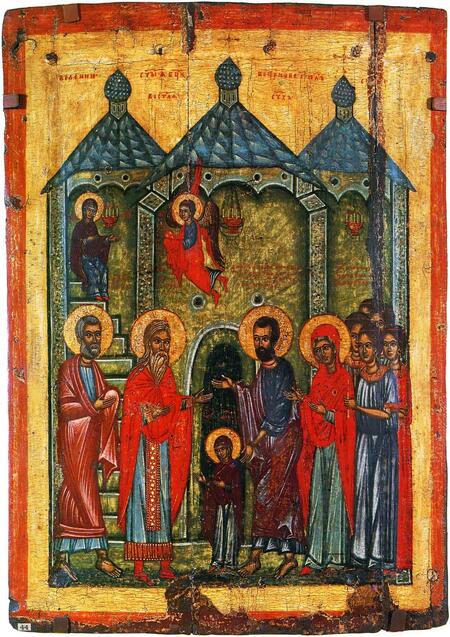
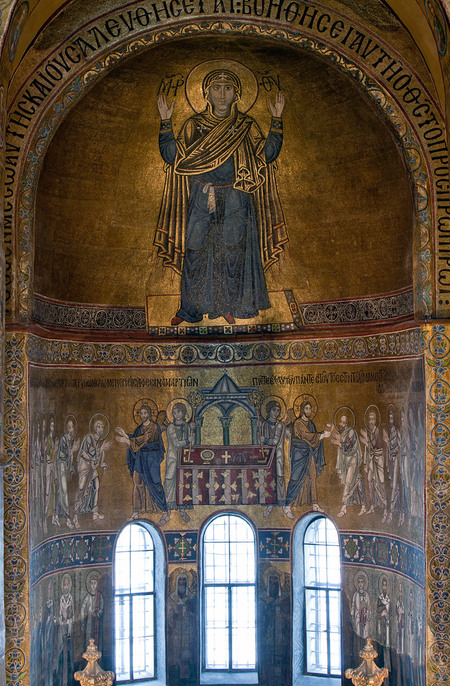
Entry into the Temple, 14th Century / The Orant Mother of God, 11th Century
Red
Red, in my opinion, possesses a broader semantic spectrum. It acquires symbolic meanings related to danger, the color of blood, love, power, and supremacy in a sense.
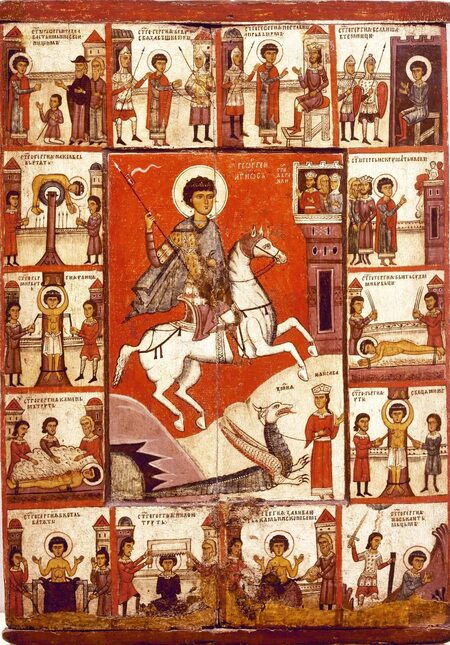
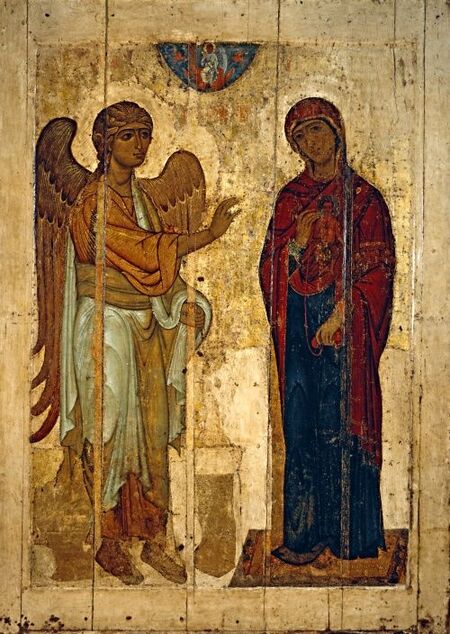
The Wonder of George and the Dragon, with a life in 14 panels, early 14th century / Ustyuzhoye Annunciation, 12th century
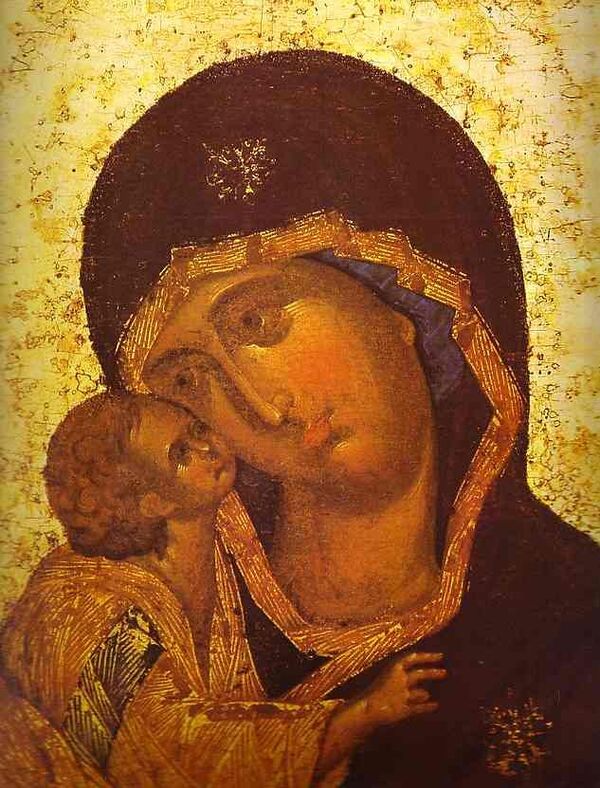
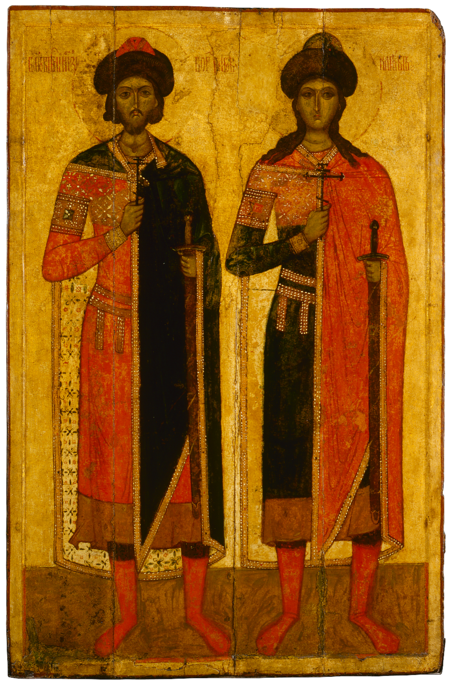
Don Icon of the Mother of God, 14th century / Holy Righteous Princes Boris and Gleb, 11th century
Green
Green is the color of nature, of foliage, of the earthly essence. In religion, it also signifies rebirth and hope.
Mosaic of Sophia of Kyiv, first half of the 11th century
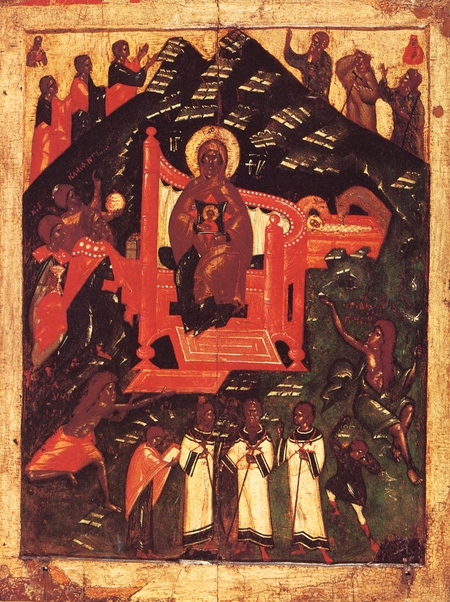
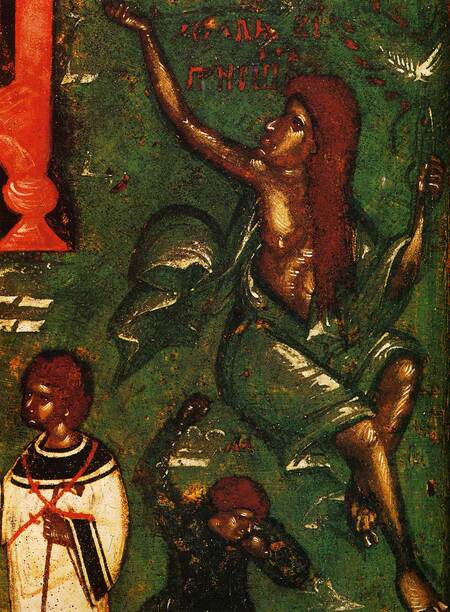
Cathedral of the Mother of God, 14th century
Conclusion
Summarizing the research, color symbolism in religious art presents a system of artistic imagery that is inseparable from the plot and composition. The same hue can be perceived in different ways and serve various functions. In ancient Russian icon painting, color ceases to be a means of conveying reality and becomes a method of communicating with the viewer and transmitting divine meaning. The artists' decisions are based on sensory associations that are understandable to every person. By using colors familiar to the viewer and their emotional impact, icon painters achieved a closeness and accessibility of religious imagery for perception. Through different shades, emotions understood by everyone were conveyed: love, hope, sorrow, purity, and spiritual joy. Thus, color plays a vital role in the semantic context of religious art.
Bibliography
Dulneva, T. M. Color in Old Russian Icon Painting: Its Symbolism and Meaning / T. M. Dulneva // National Priorities of Russia. — 2018. — No. 4 (31). — pp. 92–99.
Gudimova, S. A. The Symbolism of Sacred Art in Ancient Rus' / S. A. Gudimova // Vestnik Kulturologii. — 2019. — No. 2 (89). — pp. 48–72. — DOI: 10.31249/hoc/2019.02.01.
Romashkina, S. I. Color in Old Russian Icon Painting: Its Symbolism and Meaning / S. I. Romashkina // Vestnik Kuzbass Spiritual Seminary. — 2022. — No. 4 (11). — pp. 83–88. — DOI: 10.56859/29490847_2022_4_83.