Concept
Dadaism is one of the most unconventional and fascinating art movements. It emerged during World War I as an artistic movement that challenged conventional notions of art, beauty, and rationality. Dadaists employed absurdity, irony, provocation, and chance as tools of critique and indictment against social and cultural norms. By rejecting traditional artistic canons, they sought to dismantle established structures and reveal the inherent contradictions of the surrounding world. Thus, Dadaism can be defined as a mode of thinking that rejects conventional logic.
«Any product of disgust capable of becoming the negation of the family is Dada—expressing the furious protest of its entire self-destructive essence…Freedom: DADA DADA DADA; the cry of contorted colors in spasms, the interweaving of opposites and contradictions, grotesques and inconsistencies: LIFE.» [9]
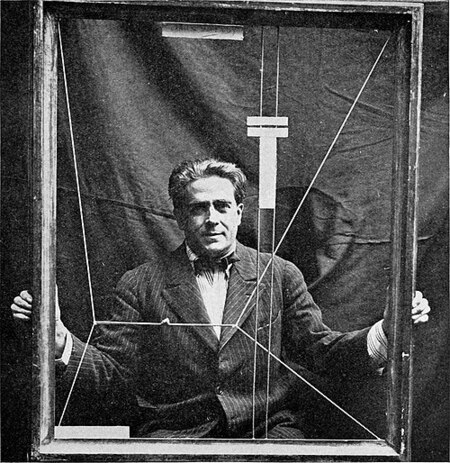
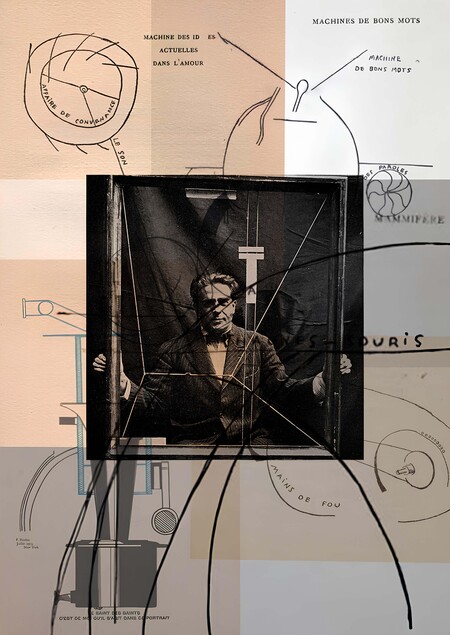
Francis Picabia plays a pivotal role in Dadaism, transforming mechanisms into an independent visual language for the human figure. During the 1915–1920s, the artist created a series of mechanomorphs—works in which human figures, portraits, erotic imagery, and psychological states are represented through technical details. Pistons, gears, cylinders, and tubes become, for him, body parts, human desires, pain, and identity. Picabia demonstrates a visual symbiosis between the human and the technical: the machine acquires human traits, while the person is presented as a collection of mechanical functions.
This turn toward mechanics is tied to the contradictions of the Industrial Age. Previously, technological progress was associated with the development and rational organization of the world. However, during World War I, it revealed its destructive potential. Humanity becomes an element within a massive, manufactured system. Picabia shifts this context into an ironic examination of human nature. Mechanomorphs can be viewed as a peculiar alternative anatomy. Instead of conventional body parts, the artist utilizes engineering components, transforming technical systems into images of the human organism. In this context, mechanical forms acquire not only corporeal but also erotic significance. In the works Portrait d’une jeune fille américaine dans l’état de nudité (1915), Voilà la femme (1915), Fille née sans mère (1916–1918), and L’Enfant carburateur (c. 1919), the machine becomes a metaphor for sexuality, birth, desire, and physiological processes. The boundary between the natural and the artificial gradually dissolves: the human body is perceived as a construct, and the technical object—as a carrier of life and feeling.
In Picabia’s works, the interaction between image and title plays a vital role. Externally, mechanical schematics resemble engineering drawings, conveying an impression of precision and rationality. However, the captions translate them into an entirely different semantic realm—one of love, pain, sexuality, and human relationships. A conflict arises between form and content: cold, technical graphics become a means of expressing the irrational and the emotional. The title does not explain the image; rather, it amplifies the ambiguity, provoking the viewer to seek the human within the impersonal construct and build new connections of meaning. Thus, the absurdity in Picabia’s work stems from the clash of two opposites: the rational nature of the machine and the irrationality of human existence. The artist simultaneously humanizes mechanisms and mechanizes humans, dismantling the familiar dichotomy between the living and the inanimate. His works can be seen as an ironic commentary on a person who, in striving to subject the world to logic and function, becomes part of the mechanical system. Beneath the external order of the constructions, however, one discovers desire, contradiction, vulnerability, and the human inability to fully control one’s own nature. This visual investigation aims to explore how Picabia uses mechanical forms to depict human anatomy, corporeality, and psychology.
Key research question: «Why do the mechanical images of Francis Picabia often acquire human characteristics?»
The research hypothesis is that mechanical imagery in Picabia acquires human characteristics because the artist consciously juxtaposes the visual language of the machine with human bodily, erotic, and affective experience. By placing the mechanism and the human in a single image, Picabia illustrates the irony of the human condition in the early 20th century: a person striving for rationality, efficiency, and technological progress ultimately finds themselves dependent on machines, functions, and repetitive desires. The machine ceases to be a symbol of order and becomes an image of vulnerability, and the human becomes a mechanism incapable of fully controlling themselves. This dismantles the familiar boundary between the living and the inanimate—the human surfaces where the mechanism should operate, but instead exposes desire, helplessness, and absurdity.
Visual Mechanism of Humanization
In Francis Picabia’s mechanomorphic works, the human figure gradually liberates itself from conventional anatomy, adopting the form of a technical construction. The artist uses engineering graphics as a qualitatively new way to depict personality: instead of a face, body, or facial expressions, mechanisms, individual parts, and functional elements emerge. Yet, the connection to humanity is maintained through the titles of the works, visual associations, and the symbolic meaning of the objects.
Francis Picabia / Portrait of an American Girl in a State of Nudity /1915.
The painting’s title translates to «Portrait of a Naked American Girl, ” but instead of Picabia depicting a nude female body, he portrays a car spark plug. The contrast between the technical object and the title, which promises a portrait of a girl, compels the viewer to search for human features in a completely unexpected form. The spark plug becomes a metaphor for the female image, and its function—creating a spark—acquires additional associations with vital and sexual energy. The inscription „FOR-EVER“ intensifies the irony, transforming a technical detail into something resembling an individual portrait. The painting can be perceived as an advertisement promising longevity, but in the context of the title, it gains an ironic and erotic nuance. The spark plug creates the spark necessary for the engine to run, making its function a metaphor for energy and excitement. Researchers also draw attention to the sexual connotations inherent in the very terminology of the automotive device.
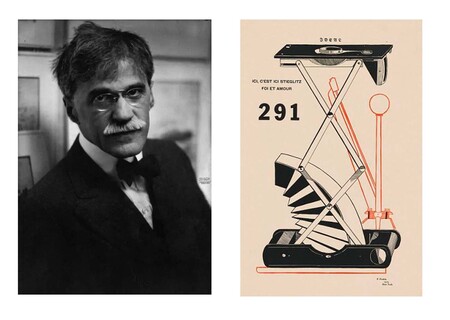
In the 1915 work, «Ici, c’est ici Stieglitz / faith and love, ” the artist creates a mechanical portrait of photographer Alfred Stieglitz, merging the image of a camera with automotive parts. The person’s character is revealed through objects related to their work, yet the construction appears flawed: the camera’s folding mechanism droops, and the automotive elements suggest a standstill. This results in an ironic depiction of a person whose professional identity has literally been transformed into a machine. Picabia rejects external likeness, conveying character through the object’s structure. This allows the mechanism to be viewed as a distinct model of human individuality.
Francis Picabia/Voilà la femme/ 1915.
The title of the work («Here is a Woman») directly points to the human form; however, instead, Picabia presents a symmetrical mechanical construction. The central cylinders and piston form a composition with pronounced sexual associations. The mechanical parts here do not merely resemble body parts; they become a means of depicting feminine sexuality. The artist intentionally juxtaposes engineering graphics, which appear asexual at first glance, with an intimate context. The absurdity lies in the way the human manifests through the function and form of the mechanism.
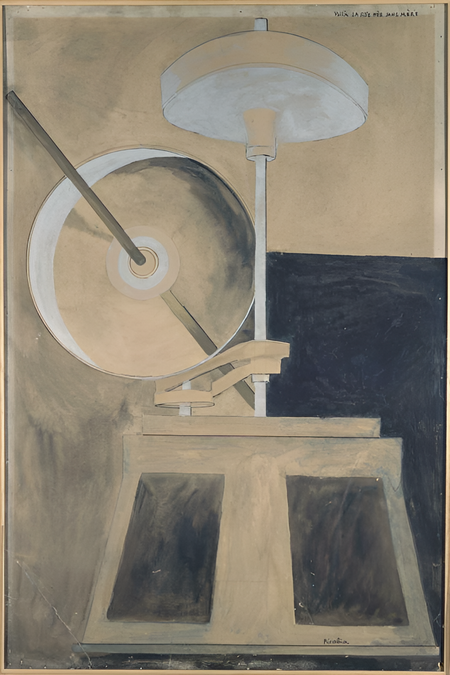
In the work «Voilà la fille née sans mère» (1916–1918), with the evocative title «Here is the girl born without a mother, ” Picabia addresses the theme of artificially derived life. The mechanical construction becomes the image of a being that emerged outside the natural process of birth. By utilizing elements of industrial machinery, the artist creates the paradoxical image of an artificial organism. Of particular importance is the conflict between the title and the image itself: the viewer subconsciously searches for a human figure but is presented with a technical schematic. Thus, Picabia calls into question the boundary between the natural and the artificial, transforming birth into a mechanical process. A significant contradiction arises here: the machine was created by a human, yet it simultaneously begins to be perceived as an autonomous entity capable of replicating human actions. Picabia reverses the conventional sequence of origin: if a human creates a machine in his own likeness, the machine can, in turn, become an image of a human. Consequently, the mechanical body turns out to be a peculiar artificial extension of the human.
Francis Picabia /Universal Prostitution/ 1916
In this work, mechanical forms acquire a more complex social and sexual meaning. Picabia depicts two interconnected constructs that can be interpreted as masculine and feminine principles. Their joining resembles a mechanized sexual act, yet simultaneously evokes associations with economic exchange and dependence. Human intimacy is presented here as an impersonal system of interacting parts. The title, «Universal Prostitution, ” expands the meaning of the image: sexuality is linked not only to the body but also to power relations, consumption, and exploitation. The mechanism becomes a metaphor for a society where even intimate relationships are subject to specific functions.
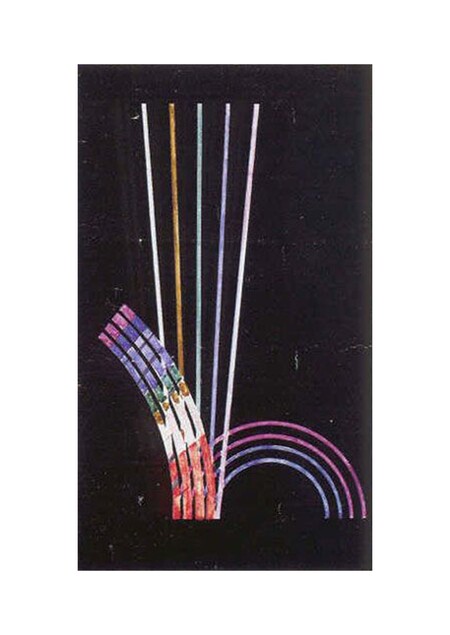
The work, «Music is Like Painting,» from 1916–1917, differs from the other pieces in this chapter because it lacks a direct depiction of a body or a mechanical device. However, it helps to understand how Picabia transforms scientific language into artistic language. The composition is based on a diagram of the movement of alpha, beta, and gamma particles in a magnetic field. The artist transfers this scientific diagram onto a pictorial plane, replacing the monochrome scheme with multicolored lines and arcs. The title, «Music is Like Painting,» points to an aspiration to find common ground among different art forms. The movement of the particles is transformed into something resembling a musical composition, where the lines and color trajectories serve as rhythm and melody. Thus, the scientific diagram loses its original executory function and becomes an independent artistic statement. This work is important for studying a broader Picabia method: he uses the visual language of science and technology to create new systems of reflecting the human condition. While this method allows him to discover the human element in the mechanomorphs, here it demonstrates the potential to transform a rational diagram into an emotionally perceived image.
Francis Picabia /Ballerina on a Transatlantic Ship/ 1913
In this work, which precedes the main mechanomorphs, Picabia merges the image of a dancer with the large-scale structure of a transatlantic liner. Human movement and the energy of dance are reinterpreted through the absurdly contrasting image of a massive machine. While the connection to corporeality and movement is still present here, the artist’s growing tendency to convey human qualities through mechanical imagery is already noticeable. The piece demonstrates an early stage in the formation of an artistic method that would later develop in the mechanomorphs.
Thus, Picabia creates a different understanding of the human being—one in which the body is viewed as a system of interconnected mechanisms, and the machine becomes a carrier of human qualities. Humanizing the technical object allows the artist to reveal the contradictions of human nature and uncover the irrationality hidden behind the external rationality of the mechanical structure.
Language as a Trigger: Signature, Pun, and Irony
At Picabia, the mechanical image rarely remains purely an image. A title, signature, or pun translates a technical diagram into the realm of the body, desire, pain, and the absurd. The word doesn’t explain the painting; rather, it confronts it with an alien meaning: the cool engineering form acquires human, erotic, or emotional significance. This very mismatch triggers the irony.
Francis Picabia / Paroxysm of Pain / 1915.
In Picabia’s Paroxysme de la douleur, the image depicts a construction resembling a technical instrument or a machine schematic. It is composed of a cylinder, a spiral, and side elements resembling handles. The device’s function, however, remains ambiguous: the viewer sees discrete parts but cannot determine how the mechanism operates. One might hypothesize that it is a complex apparatus capable of compressing a central element. The title, «Paroxysm of Pain, ” shifts the perception of the image. The mechanical components begin to associate with physical tension, compression, and suffering. The viewer seems to complete the mechanism’s action internally, imagining how it inflicts pain. Thus, human characteristics emerge not from the form itself, but through the linguistic cue and subsequent associative sequence. The work’s irony is built upon the clash between the cool, technical rendering and the emotional content of the title. The machine itself is incapable of experiencing pain or pleasure, yet the word compels the viewer to imbue it with human sensations. Picabia demonstrates that anthropomorphism can occur not through the depiction of the body, but through language—a language that alters the meaning and perception of the machine.
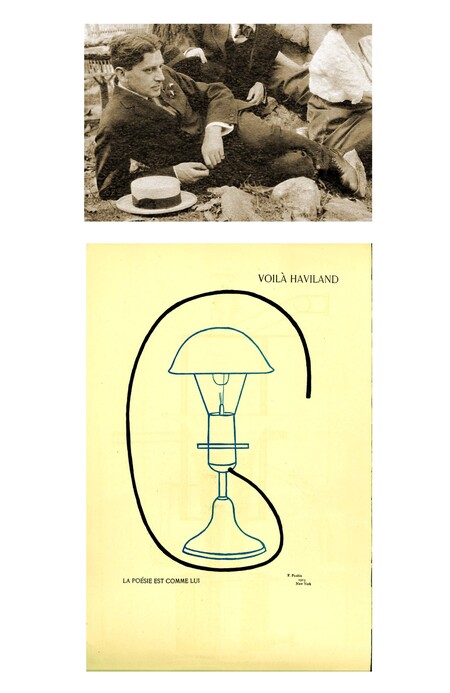
In Voilà Haviland (Poetry is like him) from 1915, Picabia transforms an electric lamp into a portrait of Paul Haviland. The lamp is stripped of its cord and cannot perform its function, yet this is precisely what makes it an image of a person: bright, conspicuous, but useless. The caption, «Poetry—like him, ” establishes a punny connection between the personality, art, and the technical object. Haviland becomes not a portrait in the conventional sense, but a machine ascribed poetic qualities. The irony here is built on deflation: poetry, usually associated with inspiration and subjectivity, is found to be comparable to an electrical appliance.
.Francis Picabia/ Amorous Parade / 1917
In Picabia’s «Parade amoureuse,» a complex structure of cylinders, pistons, wheels, levers, and connecting elements is depicted. It resembles a mechanical apparatus but lacks an obvious function and appears non-operational. The structure itself contains virtually no direct indication of a love scene; the erotic meaning arises primarily from the title. The phrase «Love Parade» creates an expectation of romantic or sensual interaction, but instead of human figures, the viewer sees an intertwining of mechanical parts. The title compels the viewer to perceive these elements as symbolic masculine and feminine components engaged in a peculiar mechanical interaction. Thus, the machine becomes a metaphor for sexual desire, and human relationships are presented as the movement and connection of individual parts. The irony lies in the collision between the sensual title and the cold, absurd construction. Love is stripped of its conventional emotionality and transformed into a mechanical process devoid of intimacy and romance. Picabia uses the word as a tool for reinterpreting the image: it is the title that converts the impersonal mechanism into a metaphor for human relationships and desires.
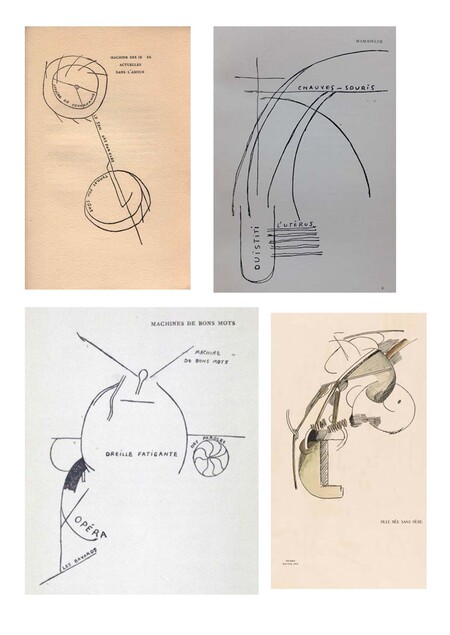
In the 1918 book Poèmes et dessins de la fille née sans mère («Poems and Drawings of the Girl Born Without a Mother»), the text and imagery function as a unified ironic system. The drawings often resemble mechanical diagrams, while the poems introduce bodily, erotic, and absurd meanings. The book’s title itself contains a paradox: being «born without a mother» is impossible from a biological standpoint, yet conceivable within the logic of a machine. A mechanism can be assembled without a point of origin, but Picabia imbues it with the characteristics of a living being. Rather than complementing each other, the text and image argue: the drawing remains technical, while the word renders it corporeal and absurd.