Concept
Today, the combination of pink and blue is perceived as an almost universal way to designate male and female gender. These colors are used in children’s clothing, toys, advertising, interior design, and even in decorating celebrations related to childbirth. It seems as if this division has always existed and has a natural origin.However, the history of European culture shows the opposite.
For centuries, the color of clothing did not have a definitive gender association. Red and its shades, including pink, could be associated with male strength, authority, and high social status. Blue held an important place in religious iconography, primarily in depictions of the Virgin Mary. In the early 20th century, some American stores and publications even recommended dressing boys in pink and girls in blue.
Navigation
- Concept
- Main Body: — The Middle Ages: origins of blue and red — 14th–17th Centuries: color as an indicator of social status — 18th Century: pink as part of men’s attire — Late 18th–19th Century: changing perceptions of clothing — Early 20th Century: historical confirmation of reversed color division — Mid-20th Century: formation of the modern system — 21st Century: modern stereotype and its reinterpretation
- Conclusion: why has the meaning of colors changed?
The Middle Ages: Origins of Blue and Red
In medieval European culture, color held primarily symbolic and religious significance. Its choice in painting depended on the content of the work, the status of the depicted person, and established iconographic traditions. The modern division of colors into masculine and feminine, as we know it, did not yet exist.
Blue held a special place. In Christian art, it gradually became one of the principal colors used to depict the Virgin Mary. Around the 12th century, the Mother of God was increasingly shown in a blue mantle. This color was associated with heaven, spirituality, purity, and holiness. The depiction of Mary in blue became a stable part of the European religious tradition.
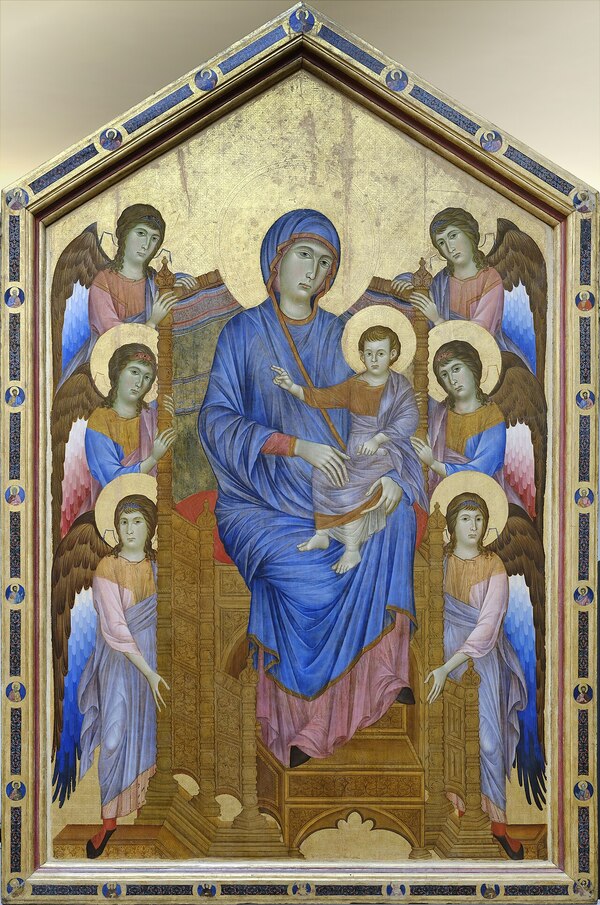
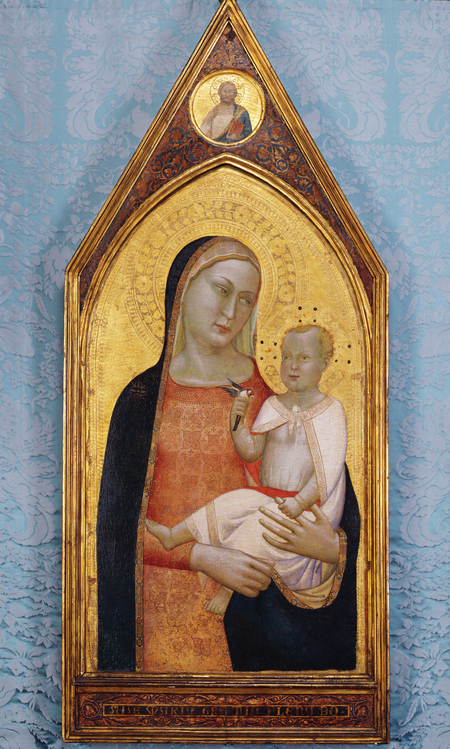
1. Chimaere. «Madonna and Child on a Throne Surrounded by Angels.» 1275–1300. Louvre, Paris. 2. Bernardo Daddi. «Madonna and Child with a Lark.» c. 1342. Isabella Stewart Gardner Museum, Boston.
We will examine works by Chimaere and Bernardo Daddi as examples. In their depictions of the Madonna, the color blue occupies a significant place, helping to accentuate the central figure of the composition.
The association of the color blue with the figure of Mary demonstrates how intimately it was linked to the female sacred image. This significantly differs from its contemporary association with the male gender.
Duccio. Fragment of «Madonna and Child.» Circa 1300. Metropolitan Museum of Art, New York.
At the same time, red occupied an important place in medieval symbolism. In Christianity, red gained special religious significance through its association with the blood of Christ, shed during the crucifixion. It was perceived as a symbol of redemptive sacrifice and the salvation of humanity. Red also became the color of martyrs—people who died for their Christian faith. They were depicted in red garments or with other red elements symbolizing martyrdom and spiritual devotion. This is why, over time, it could come to denote power, martial valor, blood, and martyrdom.

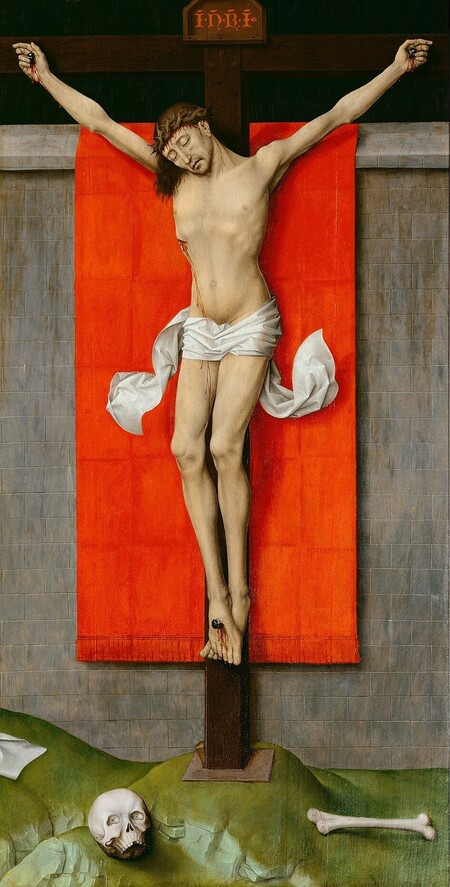
Rogier van der Weyden. Diptych «The Crucifixion.» c. 1460. Philadelphia Museum of Art.

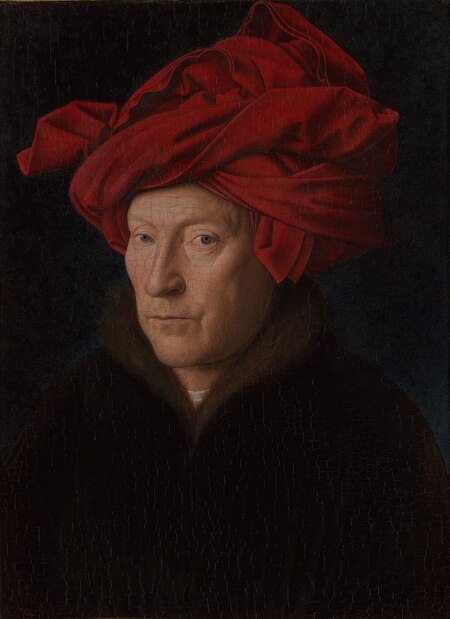
1. Titian. «Portrait of Pope Paul III.» 1543. Cappodimonte Museum, Naples. 2. Jan van Eyck. «Portrait of a Man in a Red Turban.» 1433. National Gallery, London.
The significance of color was determined less by gender than by status and context.
14th–17th Centuries: Color as an Indicator of Social Status
During the 14th–17th centuries, European clothing began to become an integral part of a person’s social presentation. Portraits from this era reveal the significant importance placed on color, fabric quality, and costume details.
In aristocratic circles, clothing served as a means to demonstrate lineage, wealth, and social standing. Expensive materials like velvet, silk, fur, embroidery, and rich dyes were utilized. Consequently, a bright color did not necessarily indicate gender.
Johannes Verspronck’s portrait, «Portrait of a Girl in a Blue Dress, ” is of particular interest.
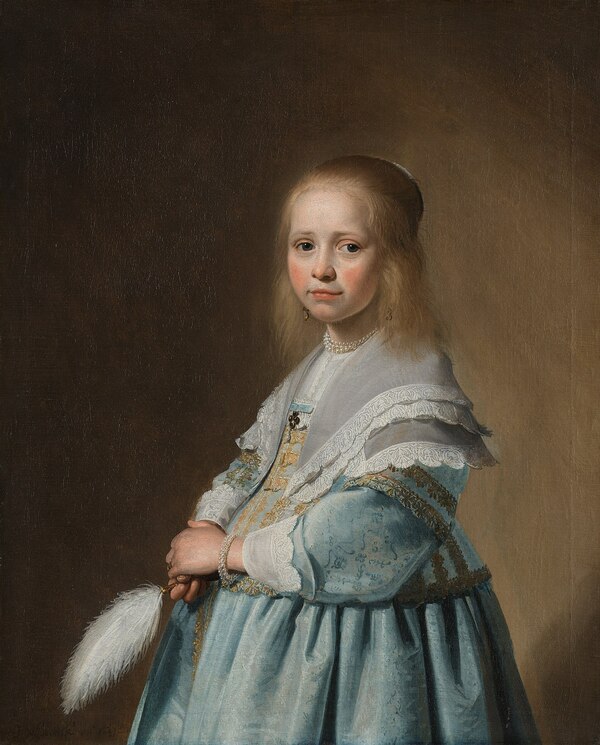
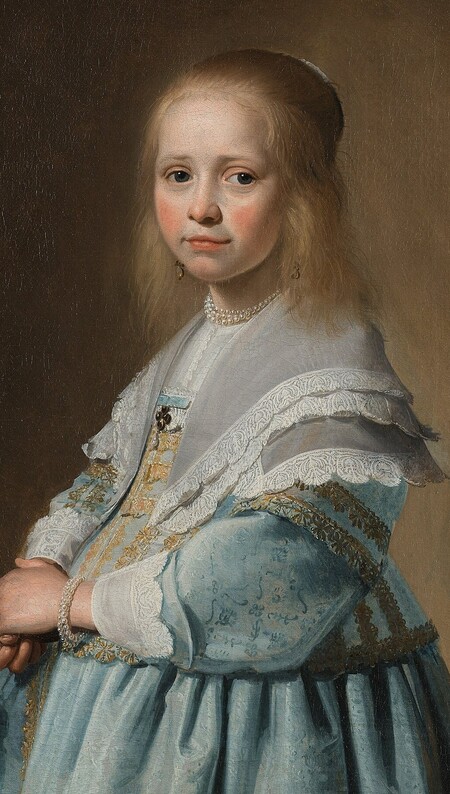
Johannes Corneliszon Verspronck. «Portrait of a Girl in a Blue Dress.» 1641. Rijksmuseum, Amsterdam.
The painting depicts a girl in a blue dress. Her attire appears formal and aligns with the conception of a child’s portrait.
Here, the blue is primarily used to create the image of a young member of an affluent family, rather than to denote a gender division in color.
Philippe de Champaigne. «Portrait of the Children of Aber de Monmor.» 1649. Museum of Fine Arts, Reims.
During this period, we cannot speak of a unified system where pink belonged to men and blue to women. Rather, the gender significance of color was not yet the primary principle in clothing choices. Color could depend on fashion, family preferences, the cost of the material, and the artistic objective.
18th Century: pink as a component of menswear.
The 18th century is particularly significant for understanding the history of the color pink. In European aristocratic culture, it was widely used in clothing and did not exclusively hold feminine connotations. Men’s attire during this period could be bright, decorative, and rich in color. Waistcoats, vests, and formal outfits were embellished with embroidery, lace, patterns, and expensive buttons. Pink, red, blue, gold, and green appeared in men’s fashion alongside other hues. Pink can be viewed as an extension of the symbolism of red.
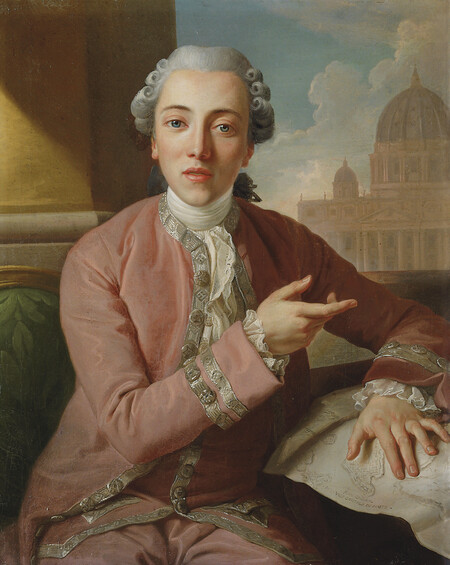
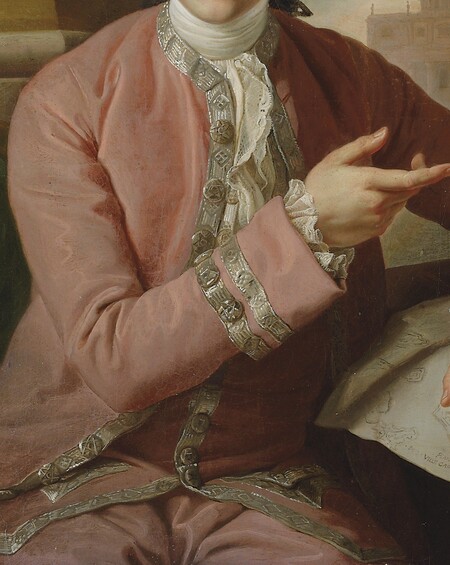
Antoine de Fauré. «Portrait of a gentleman in a silver-pink frock coat and powdered wig, with a view of Valletta and a domed church in the background.»
Red has historically been associated with power, strength, wealth, and martial valor. Therefore, its lighter shades could retain some of these associations while also becoming a fashionable decorative choice.

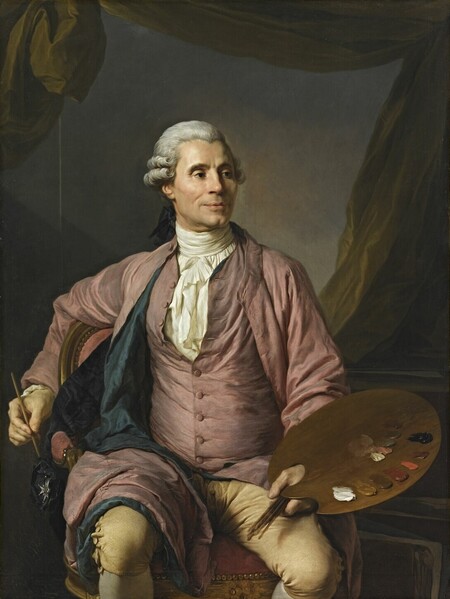
Joseph Duplessis. «Portrait of Joseph-Marie Vien.» 1784. Louvre, Paris.
Pink was also present in aristocratic women’s fashion.
For example, in the portraits by François Boucher, one can see the characteristic attention to pastel shades, decorative elements, and complex fabrics of the era.
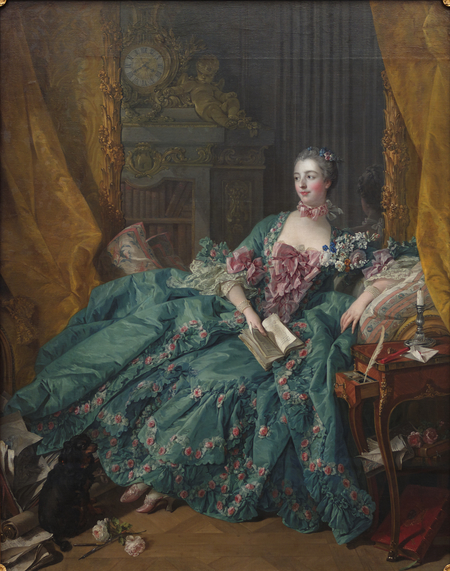
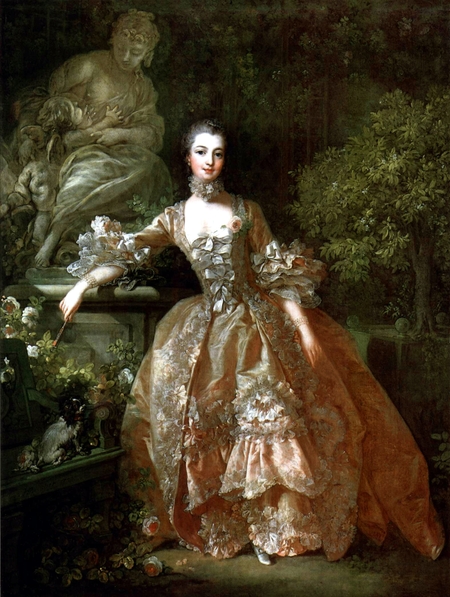
1. François Boucher. «Madame de Pompadour.» 1756. Alte Pinakothek, Munich, Germany. 2. François Boucher. «Portrait of Madame de Pompadour.» 1759. Wallace Collection, London.