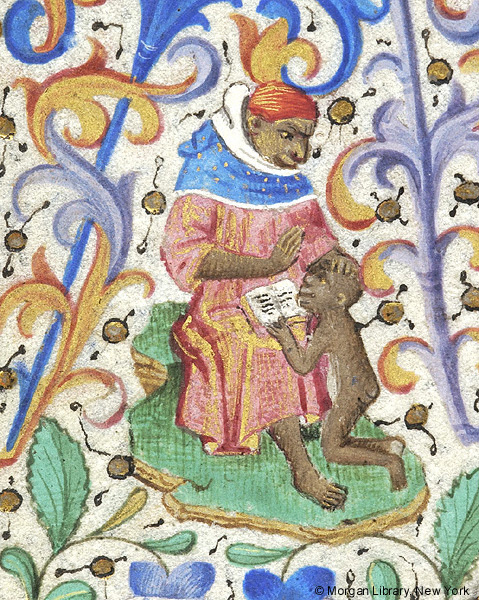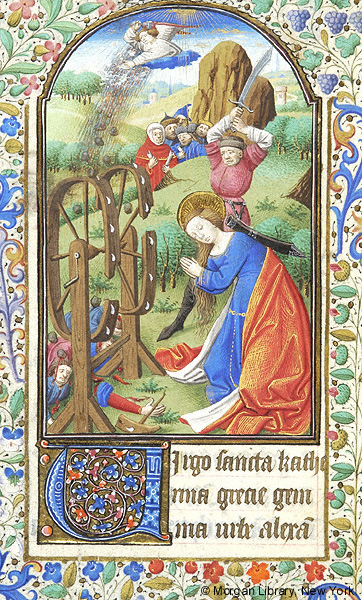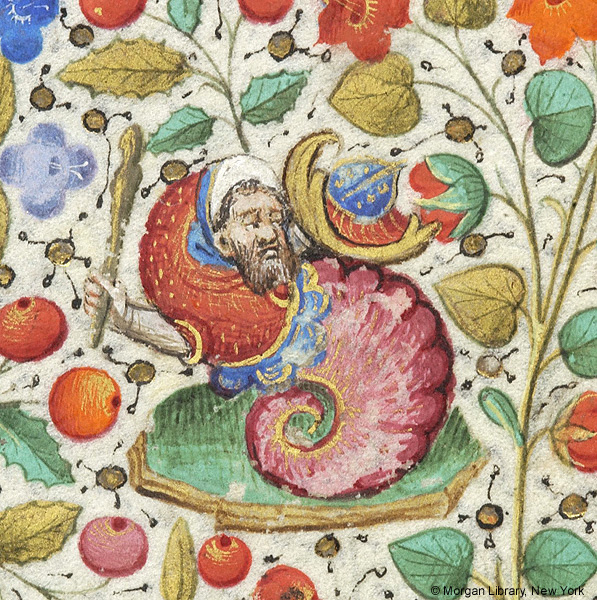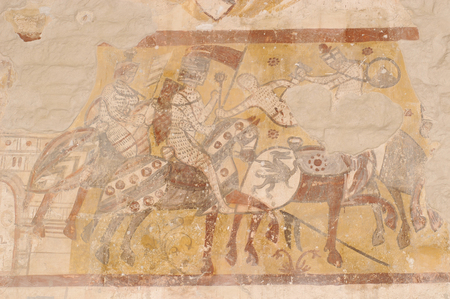
Medieval art is traditionally associated with religious symbolism, a strict hierarchy of images, and canonical ideas of beauty. However, on the margins of manuscripts from the 12th to 15th centuries exists an entirely different world—a space of fantastic, comical, frightening, and paradoxical imagery.
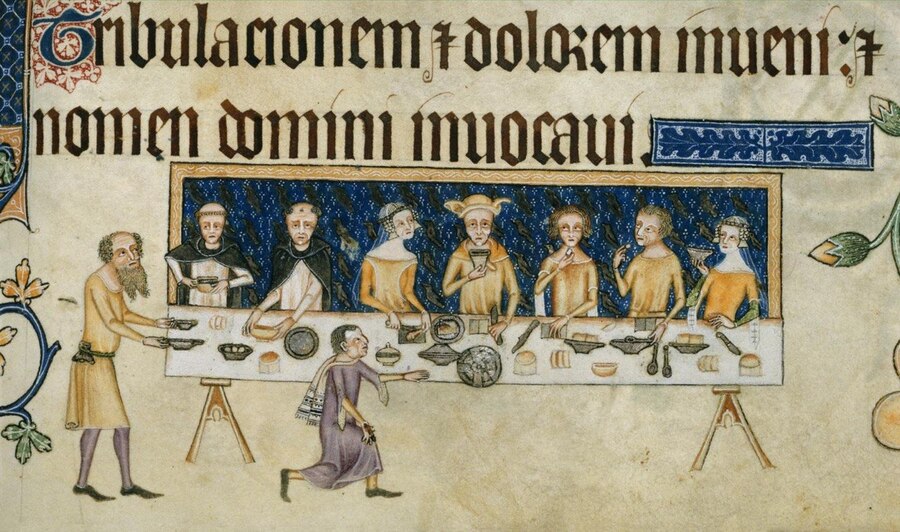
gjkfd
I. Concept and Topic Selection
I chose this topic because I was intrigued by the unusual illustrations found in the margins of medieval books—where fantastic creatures, hybrid figures, and comic scenes coexist with religious texts. I found it fascinating to investigate how a space for artistic fantasy emerged within the strict confines of book culture.
For this research, I selected images from Western European manuscripts dating from the 12th to the 15th centuries, paying close attention to their connection to the grotesque, their placement in the margins, and their artistic characteristics. The material analyzed included psalteries, breviaries, and books of hours. During the analysis, I considered composition, color, figure details, and the interaction between the images and the main text.
My work relied on studies of medieval art history, publications from museums and libraries, as well as digital catalogs of manuscripts. Textual sources helped establish the historical context, while visual materials served as the foundation for the image analysis.
The key question of this research is what role grotesque imagery played in medieval manuscripts and how that role evolved over time. My hypothesis is that marginalia were not merely page decorations, but an independent component of book culture, allowing artists to explore themes of religion, human nature, and the disruption of established order.
Navigation
I. Concept and Topic Selection
II. Margins as a Phenomenon of Medieval Book Culture
III. Morphology of the Grotesque
IV. Inversion and Absurdity
V. Symbolism of the Grotesque
VI. The Evolution of the Grotesque’s Artistic Language in the 12th–15th Centuries
VII. Conclusion and Bibliography
The research moves from the general to the specific: it first examines marginalia as part of medieval book culture, then explores hybrid imagery, the motif of the inverted world, and the symbolism of the grotesque. The final section traces the development of the artistic language of marginalia from the 12th to the 15th century.
II. Marginals as a Phenomenon of Medieval Book Culture
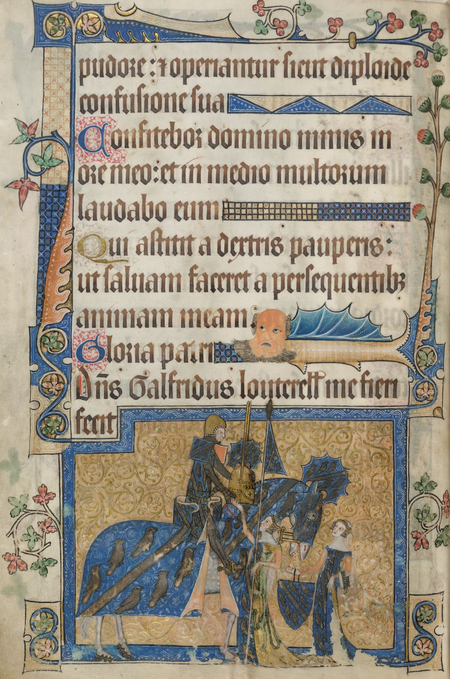
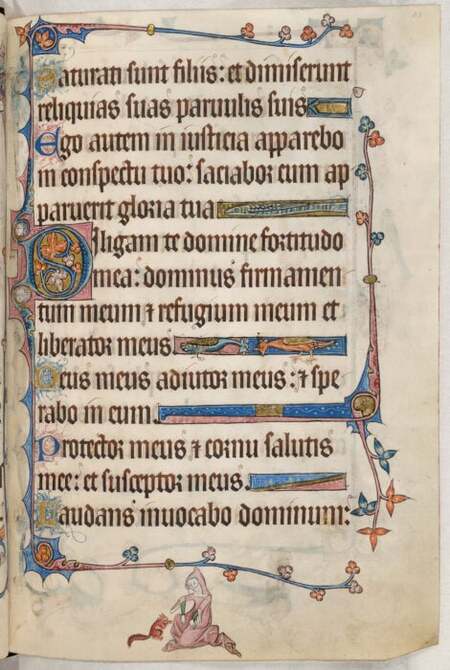
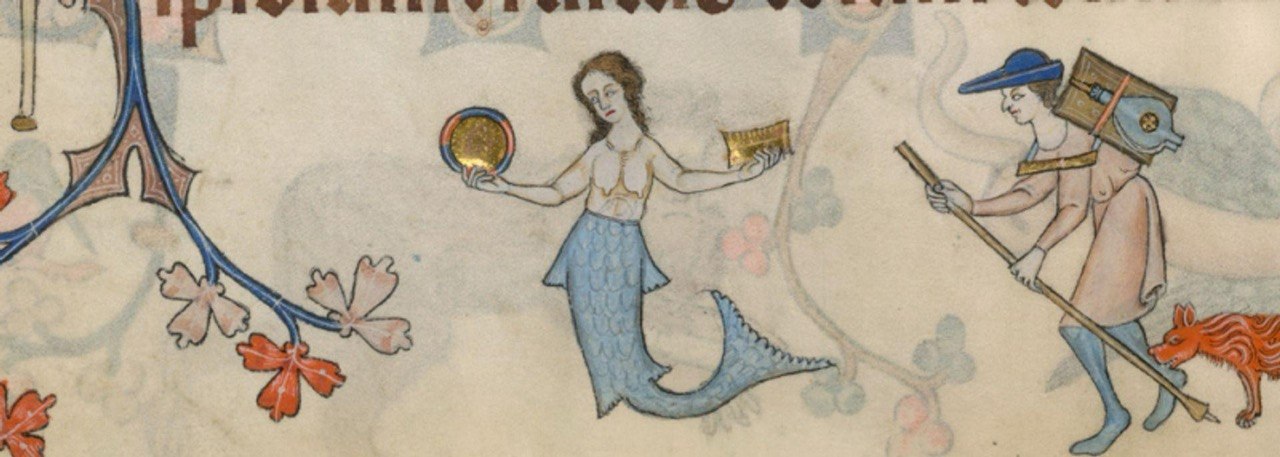
1. «Luttrell Psalter, ” fol. 202v, 14th century 2. „Luttrell Psalter, ” fol. 33r, 14th century
When we open a medieval manuscript, our attention is immediately drawn to the text, large initials, and miniatures. However, if we look closer at the space surrounding the text, we can notice an entirely different world: fantastic creatures, animals with human characteristics, unusual characters, and small domestic scenes. This very space becomes the starting point of my research.
«Estuary of the Holy Grail, ” 6v leaf, France, early 14th century
Such images are typically called marginalia. The word itself originates from the Latin margo, meaning «edge» or «border.» Marginalia are elements placed outside the main body of text: drawings, comments, symbols, and decorative motifs. In the scope of my research, I am particularly interested in these images because they reveal an unusual aspect of medieval artistic thought.It is important to understand that the margins of manuscripts were not originally intended exclusively for fantastical illustrations. The medieval book was a complex work of art, created by scribes, illuminators, and other masters. It not only preserved information but also demonstrated the status of the patron, the value of the text, and the skill of the creators. Therefore, even the open spaces on the page gradually became part of the overall artistic concept.
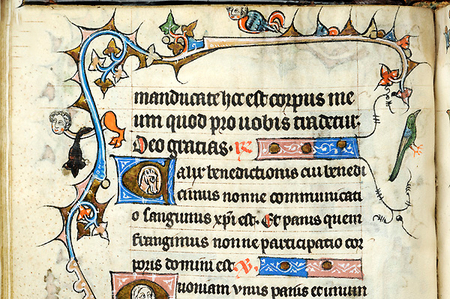
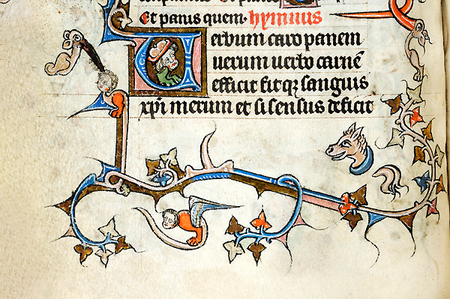
«Chaselov, ” folio 35v, France, early 14th century
In the 13th–14th centuries, the ornamentation of page fields becomes particularly diverse. Botanical motifs are supplemented by human figures, animals, and fantastical creatures. These elements might line the edge of the page, intertwine with decorative foliage, or literally spill beyond the text block. Sometimes the figures are so elongated and curved that it appears as if they are trying to break free from the frame.
In my view, a significant shift occurs here: the field ceases to be merely empty space surrounding the text and evolves into an independent component of the composition. The artist begins to treat it as a complete artistic canvas, utilizing form, movement, and unconventional juxtapositions of imagery.
«Ratland Psalter, ” folio 86v, England, second half of the 13th century, circa 1260.
Special attention deserves the relationship between the marginalia and the main text. It is far from always obvious. Sometimes the illustrations echo the motifs of the writing; sometimes they employ visual metaphors or wordplay; and sometimes they intentionally create a contrast between the serious content and a comical scene in the margins. A fine example is the Rutland Psalter, created around 1260. This English manuscript contains the Book of Psalms, and its margins are filled with animals, fantastic creatures, and small scenes. Some images may correspond to specific words and phrases in the main text, transforming them into independent visual images. Thus, the marginalia do not simply coexist with the text; they engage it in a unique dialogue.
This example illustrates that unusual imagery cannot be interpreted solely as a means of entertaining the reader. Its meaning could be far more complex—the artist might have employed symbolism, visual association, or intentionally created an ambiguous image. Therefore, when analyzing such visuals, it is crucial to consider not only what is depicted, but also where the figure is situated and what text it is adjacent to.