Concept
Navigator
1. French Gothic
2. English Gothic
3. Italian Gothic
4. Brick Gothic
5. Spanish Gothic. Mudejar style
French Gothic
Gothic architecture emerged in France in the mid-12th century when Suger, one of the most influential figures in France at the time, became the abbot of the Abbey of Saint-Denis and decided to renovate the old monastic church. He and his architect combined elements of Burgundian architecture—specifically, the pointed arch—with those of Norman architecture—ribbed vaults. Thus, the Basilica of Saint-Denis was created, marking the beginning of Gothic architecture.
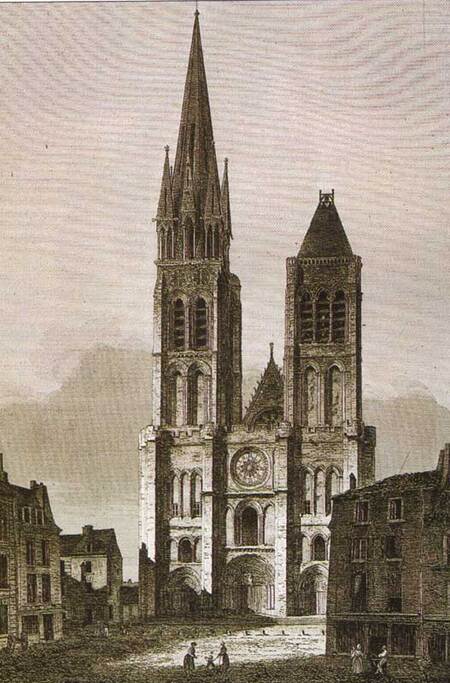
Исторический фасад базилики Сен-Дени с двумя башнями, Ф.Бенуа, около 1844 года
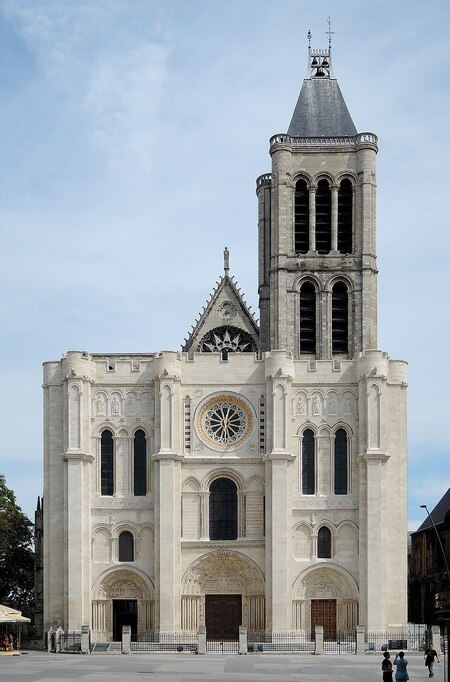
Западный фасад базилики Сен-Дени, наше время
For Suger, it was important that the Basilica of Saint-Denis reflected the sacred significance of the king. He wished to introduce more light into the church, a point he discussed in his treatises on Saint-Denis, because light was perceived as an image of divine presence.
This served as one reason for the emergence of a new skeletal system. The structural engineering elements were now moved to the exterior—beyond the internal naves—which can be clearly seen in the example of Notre-Dame Cathedral in Paris.
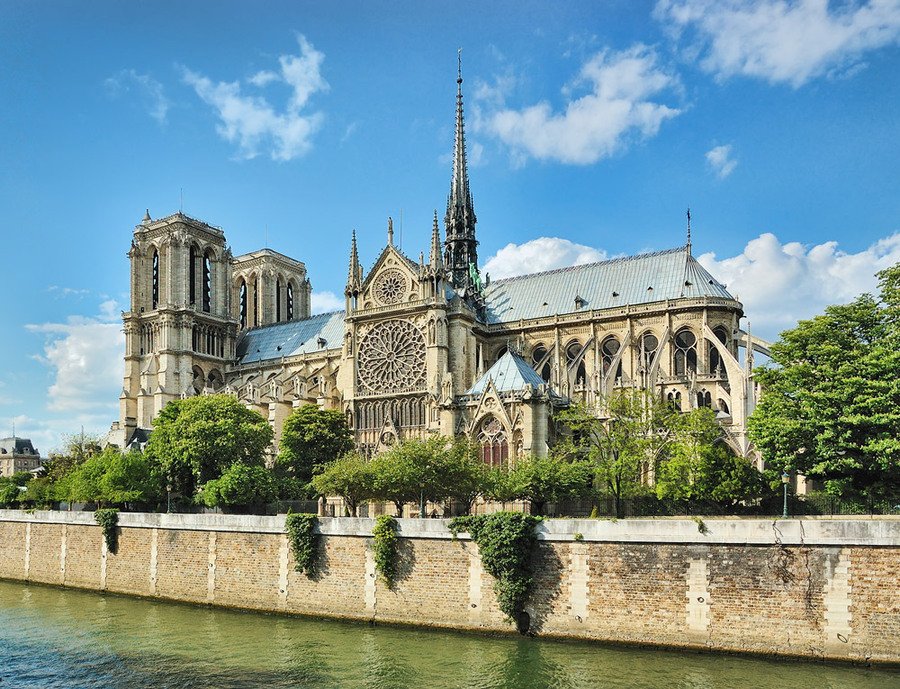
Notre Dame Cathedral
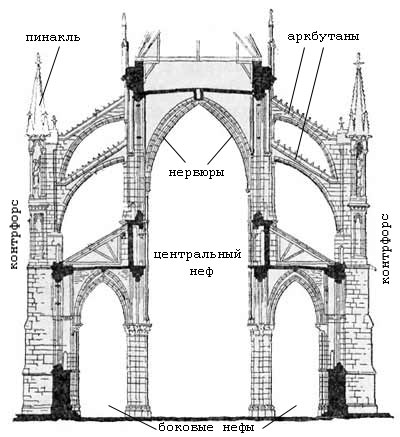
The basic operating principle is as follows: the vault no longer relies on walls, as in Romanesque cathedrals. Instead, the pressure from the ribbed vault on the columns is transferred by arches and ribs, and the lateral thrust is absorbed by flying buttresses and buttresses. This skeletal system allowed for the distribution of loads and the lightening of walls and ceilings, which in turn allowed for the addition of more windows—and consequently, more light.On the left, you can see a schematic of the Gothic cathedral’s structure.
Buttresses and Flying Buttresses of Notre Dame Cathedral
French Gothic architecture also features a striving upward, toward the heavens, aided by sharp spires and pointed arches. Architects sought to avoid rounded forms; therefore, the signature rose windows of Gothic structures were divided into sections with stone tracery to mask the circular shape of the window.
Rose Window of Reims Cathedral
Another key characteristic of Gothic architecture is the rib vault, constructed on a framework of projecting stone ribs—the nervures.
Ribbed vaults of Amiens Cathedral
English Gothic
England became one of the first countries reached by Gothic architecture, but due to uneven relations with France, Gothic took on its own independent characteristics here.
British architects did not abandon their traditions, so they based their work on Anglo-Norman construction methods. Furthermore, in Britain, it was common practice to leave the surviving remains of previous structures. Consequently, Gothic architecture in England was forced to adapt to the established English traditions and the styles that preceded it.
Italian Gothic
«Is this Gothic really Gothic?”—so questioned the historian Paul Frankl regarding Italian Gothic.
Siena Cathedral
Italian Gothic differs significantly from French Gothic because Italian masters, much like their English counterparts, primarily relied on their own heritage and valued the originality of the building’s external appearance. Furthermore, some Italian architects viewed Gothic negatively, such as Giorgio Vasari. He believed that this style emerged because the Germanic tribes responsible for the fall of the Western Roman Empire began erecting their architectural monuments, thereby destroying the monuments of antiquity.
Therefore, Italian Gothic represents a combination of the Romanesque and French Gothic styles. The Romanesque style contributed the monumental quality of the structures. An example is the Basilica of St. Andrew in Vercelli, which features small windows and massive walls.
Change photo
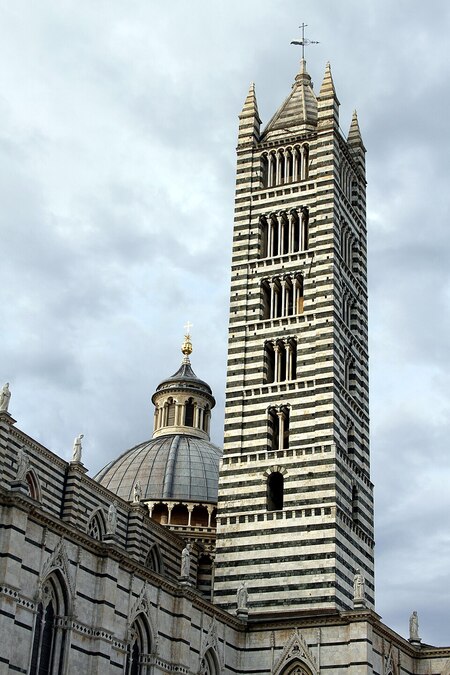
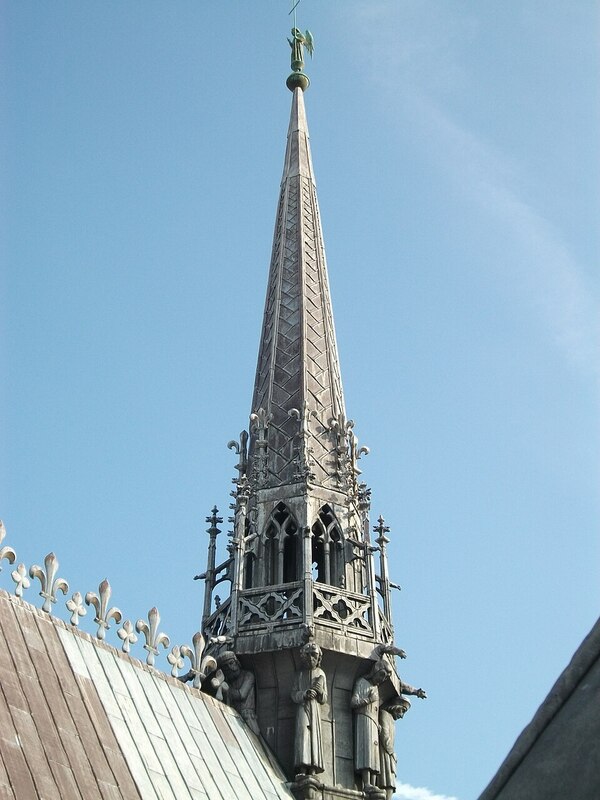
Italian Gothic architecture is also characterized by domes, such as that of the Siena Cathedral. French examples typically culminated in a sharp spire, like the Reims Cathedral. The Siena Cathedral also features a campanile—the Italian version of a bell tower.
Кампанила и часть купола Сиенского собора
Шпиль Реймсского собора во Франции
In addition to its dome and campanile, the Siena Cathedral possesses another distinguishing characteristic of Italian Gothic—it is clad in marble of white, black, and pink colors. This type of wall cladding using marble slabs is known as the inlay style. French Gothic examples were not clad, so the bare stone from which they are made remains visible.
Siena Cathedral with black and white marble stripes
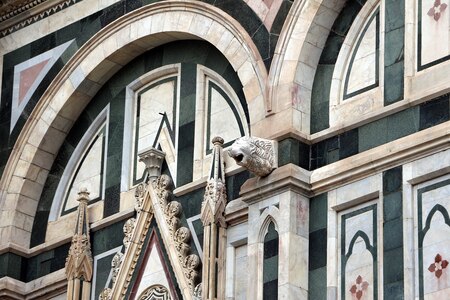
Another famous cathedral shares these characteristics of Italian Gothic—Santa Maria del Fiore in Florence. Its walls are covered in green, pink, and white marble.On the left, you can see details and the marble cladding of the south facade of Santa Maria del Fiore.